Full Article
about Súria
Mining town known for its potash mines and medieval Poble Vell
Hide article Read full article
A Town Shaped from Below
Súria is best understood by looking beneath the surface. In this part of the Bages region, the landscape is defined not only by the River Cardener or the surrounding agricultural plain, but by what lies underground: vast deposits of potash salt. These seams transformed the local economy throughout much of the 20th century and still influence daily life in the town. Mining here is not a distant chapter in a museum display; it forms part of the recent memory of many families.
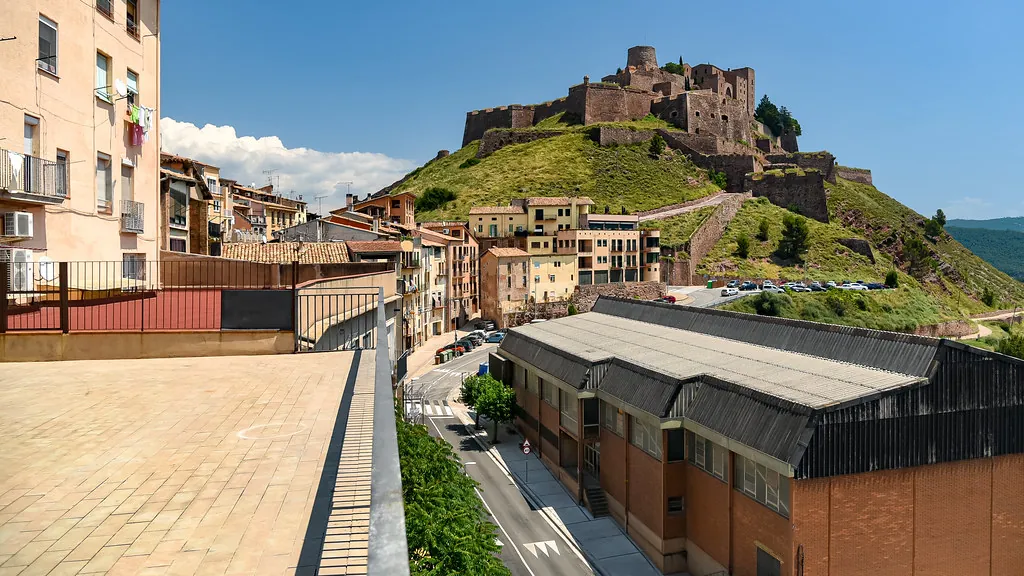
The town sits within a bend of the Cardener, on the edge of the Catalan Central Depression. This tight fit between river and hillside shaped the growth of the historic centre, which climbs towards the hilltop crowned by the parish church and the remains of the castle. The result is a settlement that seems to grow upwards, adapting to the contours rather than imposing itself on them.
The Map and the Salt
References to Súria’s salt appear as early as the medieval period. Documents from the 10th century linked to the comital house of Barcelona mention salt workings in this area of the Bages. At a time when salt was essential for preserving food and circulated as a strategic commodity, such deposits were highly prized.
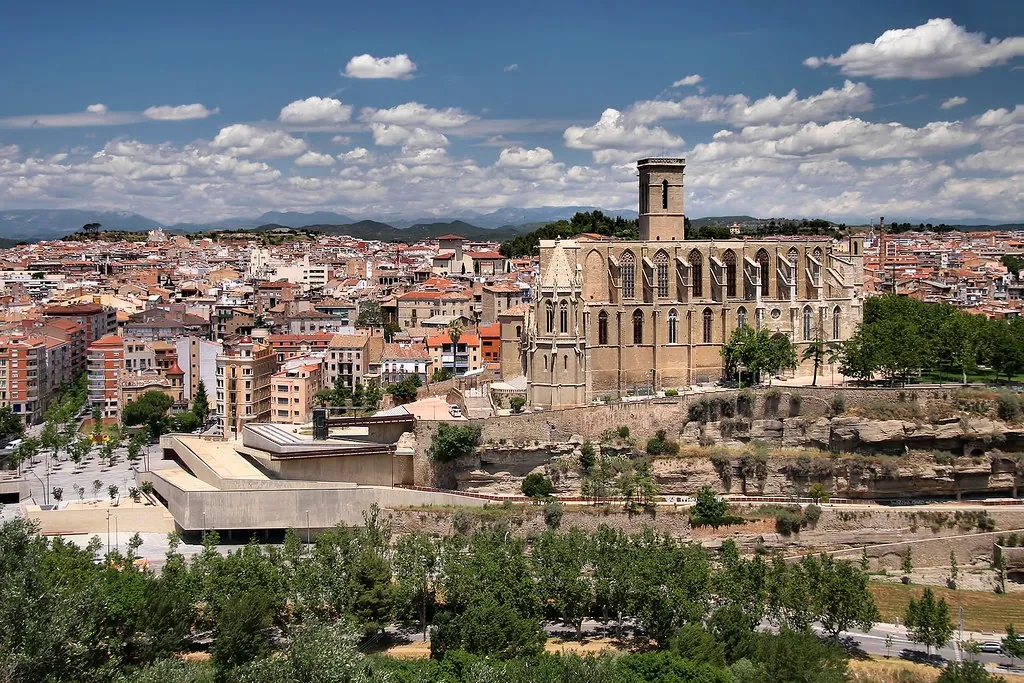
The fortified nucleus took shape from the 12th century onwards. At the summit stood the castle and, close by, the church of Santa Maria. The church has Romanesque origins, although it has been altered over the centuries. Its position was no accident. From this height it was possible to control the crossing over the Cardener and the old road connecting Súria with Manresa and other nearby settlements. In places like this, a church also had a defensive and watchful function, keeping an eye on movement through the valley.
Today, fragments of the castle walls and structures remain, integrated into what is known as the Poble Vell, the Old Town. This is not a solitary ruin on a hilltop but part of a living network of narrow streets that still follow the logic of a medieval settlement.
The Pont Vell and the River Crossing
The Pont Vell links the historic centre with the opposite bank of the Cardener. Medieval in origin, the bridge has been rebuilt and modified several times. Its present width suggests later enlargements, probably when the movement of carts and goods increased in the Early Modern period.
The Cardener has always been the town’s geographical reference point. In times of flooding, the river can rise to brush the base of the arches, something local residents know well. The river did more than determine routes and crossings. It also affected mining activity, as water and underground galleries have never been an easy combination. The relationship between river and subsoil runs through Súria’s history, visible above ground and hidden beneath it.
Sant Salvador del Quer
A few kilometres from the urban centre, perched on a rocky wall overlooking the valley, stands the hermitage of Sant Salvador del Quer. The building has Romanesque origins, though its current appearance blends elements from different periods. What draws the eye is its setting. The church seems embedded in the rock itself, commanding wide views over the Cardener valley.
A traditional spring pilgrimage is associated with this hermitage. During the celebration, the image of Christ is carried between the sanctuary and the town. The carving preserved inside is usually considered Romanesque, although it has undergone restorations and alterations over time.
Archaeological remains have been discovered in the surrounding area, and a Roman inscription was documented during roadworks nearby. This is not surprising. Elevated points with broad visibility over a valley have attracted settlement since very early periods, and Sant Salvador del Quer fits that pattern.
Walking the Poble Vell
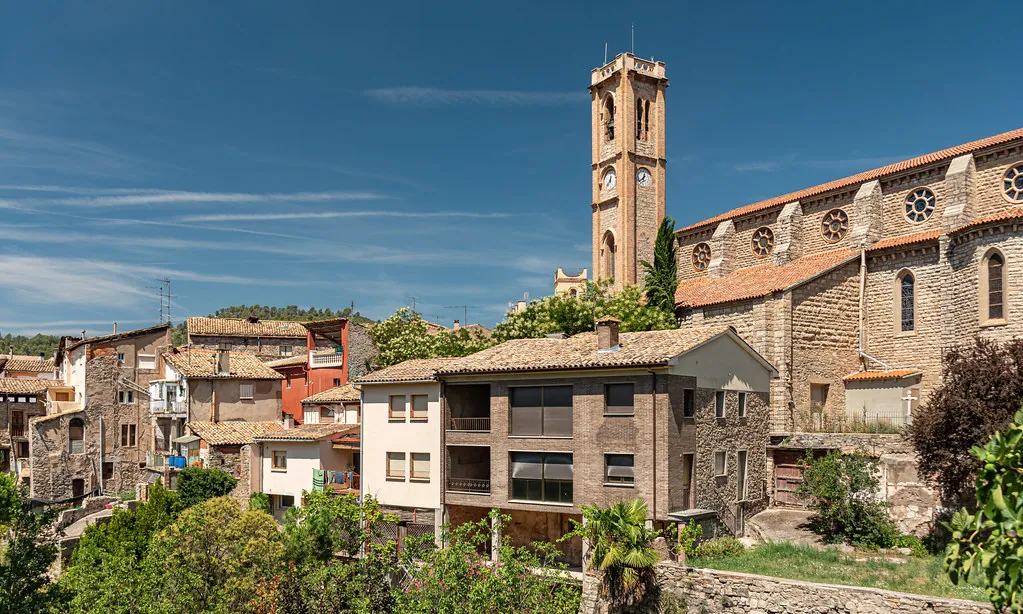
Súria’s old quarter is compact and easy to explore, though it rewards a slow pace. Houses lean against one another as they follow the slope of the hill. Streets narrow into passages where only one person can pass at a time.
Many of the walls are built from local stone, relatively soft and protected with layers of limewash that have been renewed over the years. This pale finish, sometimes with a faint pink hue, forms part of the traditional appearance of the ensemble.
In the Plaça de la Vila and in various corners of the historic centre, traces remain of the town’s long relationship with water and mining. Wells and conduits were reused over time for domestic purposes or storage, a common practice in places where space was limited and each structure often served several lives. In Súria, adaptation has been constant. Medieval fortifications became part of family homes, water systems found new functions, and the fabric of the town adjusted to changing economic cycles.
The Poble Vell does not overwhelm with grand monuments. Its interest lies in how the pieces fit together: church, castle remnants, bridge, river and the streets that tie them into a coherent whole. The climb towards Santa Maria reveals how closely defence, worship and daily life were once intertwined. From the upper levels, the Cardener’s curve and the broader landscape of the Bages come into view, placing the compact old quarter within a wider geographical frame.
Getting There
Súria is located in the Bages region, north of Manresa. The most direct approach from Barcelona is by road, usually following the Llobregat axis before connecting with the local network that runs along the Cardener valley.
It is also possible to travel by public transport to Manresa and continue from there by road. Once in Súria, the historic centre is best explored on foot. The streets are narrow and steep, so it is generally more practical to leave the car in the lower part of town and walk up.
Súria does not separate its past into neat layers. The medieval references to salt, the consolidation of the fortified centre, the presence of the Pont Vell and the more recent mining era all overlap within a small area. To understand the town is to read both its skyline and its subsoil: the hilltop church and castle above, the potash deposits below, and the River Cardener threading between them.