Full Article
about Botarell
Quiet town between the sea and the mountains, surrounded by olive and almond groves.
Hide article Read full article
Botarell: A Village in the Baix Camp
Botarell sits on a gentle rise of land, roughly two hundred metres above sea level, between the city of Reus and the first slopes of the pre-coastal range. The geography is decisive. For centuries, the village has existed within an agricultural plain defined by olive groves, hazelnut trees, vineyards, and almond orchards. This is dry farming country, the secà typical of the Camp de Tarragona. With just over a thousand inhabitants, Botarell’s scale is human and its growth measured. The relationship with Reus is constant; part of the population works there, creating a daily link between rural life and the commercial pulse of the city.
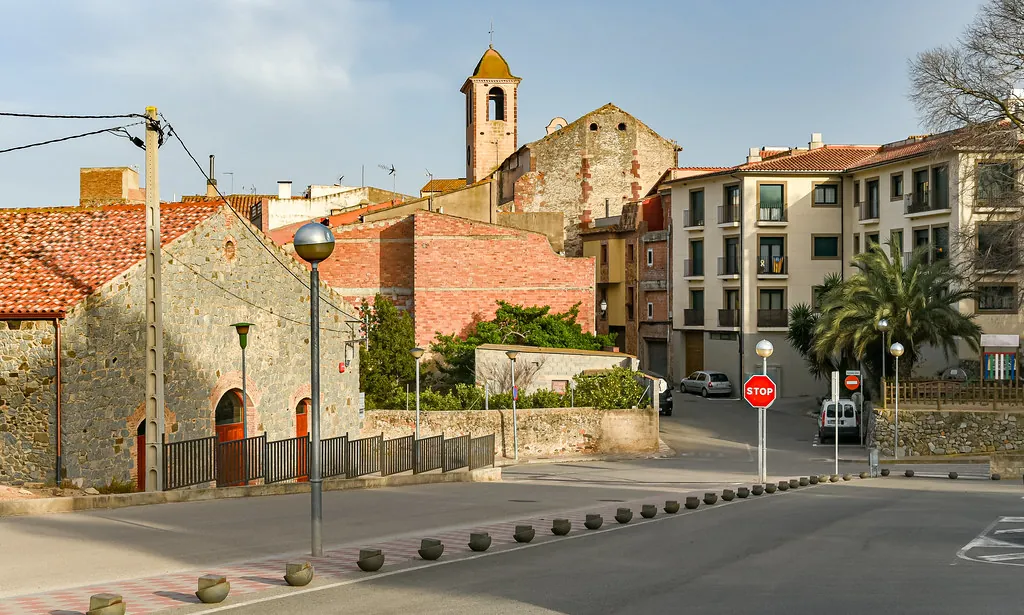
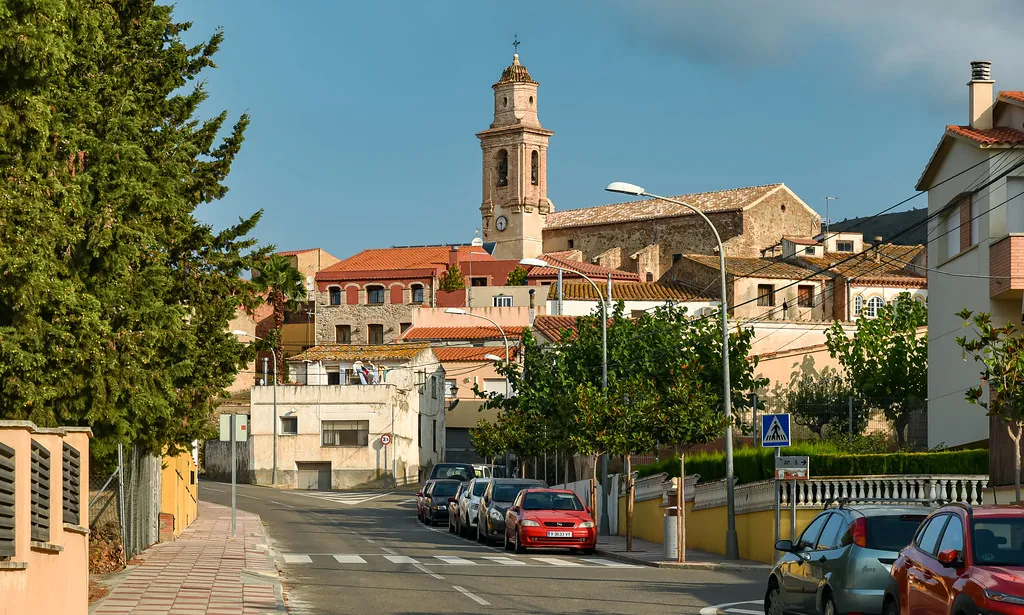
The built environment reflects this practicality. Narrow streets are lined with two or three-storey houses, many retaining their original stone doorframes even as interiors are updated for modern living. There is no preserved historic quarter in a museum sense. Instead, you see a coherent collection of structures that speak to the area’s vernacular architecture. Former barns have been adapted into homes, and carved dates on lintels mark the passage of generations tied to the land.
The Parish Church and the Village Centre
The parish church of Sant Bartomeu dominates the low skyline. Its foundations are from the 16th century, with modifications made in later periods, likely the 18th century. It is not an architectural monument of great ambition. Its significance lies in its proportion to the village and its longstanding role as a community anchor. The building’s simplicity feels appropriate here.
From the church, the entire core of Botarell unfolds quickly. You can walk from one end to the other in a matter of minutes. The transition is abrupt: the last house gives way directly to cultivated fields. There are no sprawling suburbs. This immediate contact with the land is perhaps the village’s most defining characteristic.
Walking the Agricultural Tracks
To understand Botarell, you need to leave its streets. A network of wide, unpaved tracks, still used by tractors, connects the village to its fields and to neighbouring towns like Riudoms and La Selva del Camp. These are working paths, not scenic trails designed for visitors.
The landscape is gentle, with no strenuous climbs. The views are horizontal, a succession of plots demarcated by drystone walls and lines of trees. In late winter, the almond blossom provides a brief flash of white against the earth. By autumn, the vines and hazelnut groves soften into warmer tones. On very clear days, from certain slight elevations, you might see a distant sliver of Mediterranean blue.
The value here is in continuity, not spectacle. You see an active agricultural landscape, one of cyclical labour rather than curated views.
Context and Produce
The local economy still turns on agriculture. Olive oil, wines under the Tarragona designation of origin, and nuts form the traditional base. Cooperative structures, a hallmark of 20th-century rural Catalonia, remain operational for processing these crops.
Botarell’s location makes it a practical base for wider exploration. Reus, minutes away, holds a significant collection of Modernist architecture. Tarragona, with its Roman ruins, is a short drive southeast. Inland, the Cistercian monastery of Santes Creus represents a different historical layer entirely. These sites offer contrast to Botarell’s understated daily rhythm.
Festivals and Seasonal Rhythm
The village calendar follows the agricultural year and the common festive pattern of the comarca. The main Festa Major honours Sant Bartomeu in late August. In January, the celebration of Sant Antoni usually includes the blessing of animals, a custom rooted in pastoral life. Carnival and Holy Week are observed locally, with a scale more modest than in nearby cities.
The true seasonal markers, however, are not on the poster. They are the grape harvest in early autumn and the gathering of nuts that follows. These activities still visibly shape life here. The sound of machinery on the tracks and the movement of people in the orchards are reminders of the working land that surrounds every street.
Botarell does not trade on grand attractions. Its character is found in its proportion—a compact core set directly within the working fields that have sustained it for generations.