Full Article
about Duesaigües
Town known for its two spectacular railway viaducts crossing the gorge in a wooded setting.
Hide article Read full article
A detour into the Baix Camp
Some places are reached almost by accident. You are on the way somewhere else, glance at the map, spot a road heading inland and decide to see where it leads. Tourism in Duesaigües often begins like that. It is not a headline destination, nor a village shaped around visitor expectations. It is a small settlement in the Baix Camp comarca, in the province of Tarragona, that carries on at its own steady pace.
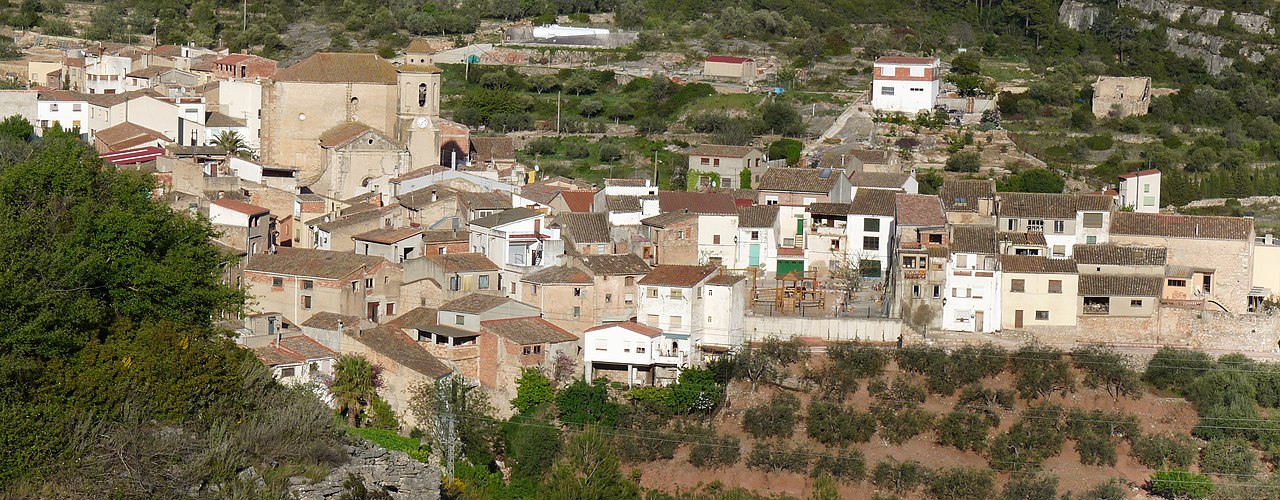
Duesaigües has around two hundred residents and sits among fields of hazelnut trees and olive groves. The landscape is typical of this part of Tarragona: terraced plots, agricultural tracks and long stretches of quiet broken only by a passing tractor or the wind moving through the pines. There is no grand arrival point or obvious viewpoint. The setting reveals itself slowly, in the layout of the fields and the low hills that frame them.
A village shaped around its church
The name Duesaigües is usually linked to the watercourses that historically ran through the area. Do not expect wide rivers. These were torrents and springs that, for centuries, determined where people could settle and cultivate the land. Water, even in small amounts, shaped the map.
The village centre is compact. Narrow streets, fairly sober stone houses and the occasional old doorway hint at a past that stretches back beyond living memory. At the heart of it all stands the church of Santa María. Modest in size yet prominent in the square, it acts as a reference point. Several of the main streets branch out from here, making it almost impossible to get lost.
The entire village can be covered in ten or fifteen minutes on foot. That is part of the point. Interest here lies in the overall atmosphere rather than in a single must-see monument. It is about the proportions of the streets, the feel of the stone underfoot and the way daily life continues without spectacle.
Fields, masías and unhurried paths
Step beyond the compact centre and scattered masías come into view. These traditional rural houses are typical of Catalonia. Some have been restored and are lived in. Others remain closely tied to agricultural work. In this area, hazelnut cultivation has long been important, and the landscape still reflects that history.
Tracks linking fields and terraces are easy to follow on foot. These are not demanding mountain routes. They are gentle walks between crops, edged with Mediterranean scrub. If the aim is to stroll without constantly checking the time or worrying about gradients, this is the right setting.
At certain times of year, people are out working in the fields. It is part of everyday life in the Baix Camp, not something arranged for visitors. The rhythm of agricultural tasks continues regardless of who passes along the track.
Local flavours of the comarca
With such a small population, the food offering within Duesaigües itself is limited. That is hardly surprising. What does come up in conversation about the area are the products of the wider comarca.
Olive oil, hazelnuts and wines from the province of Tarragona form part of the local gastronomic landscape. Harvests are discussed in much the same way as the weather, woven into daily chat. These products are not presented as delicacies for display. They are staples, tied to the land surrounding the village.
In autumn, talk often turns to mushrooms. Some locals head into the nearby hills when the season arrives. Anyone thinking of doing the same should be clear about where they are walking and what they are picking. As in many rural parts of Spain, mushroom foraging is a familiar seasonal activity, but it depends on knowledge of the terrain and species.
Within reach: Reus and Poblet
One advantage of stopping in Duesaigües is its position within the Baix Camp. By car, Reus can be reached relatively quickly. Reus is a city with far more movement and a noticeable Modernist presence in some of its streets. The contrast with Duesaigües is clear: from narrow village lanes to urban façades shaped by early twentieth-century design.
For something more overtly historical, inland lies the monastery of Poblet. This large monastic complex is well known within Catalan heritage. Its scale and recognition set it apart from the quiet anonymity of Duesaigües.
Many people combine these elements. A period of calm in a very small village, followed by a visit to somewhere busier or more monumental. The shift in pace is part of the appeal.
When the village fills up
During the summer, Duesaigües usually celebrates its Fiesta Mayor. The dates vary from year to year, but the pattern is familiar. Neighbours return for a few days, long meals stretch into the afternoon and there is often a verbena, an open-air evening dance, in the square.
These festivities feel local in character. They are not designed to draw crowds from afar, but to bring together those with ties to the village. For a brief period, the population swells and the square around Santa María becomes the focus of activity.
Outside those days, life returns to its normal scale. The quiet that defines the village for much of the year settles back in.
Arriving and knowing what to expect
Duesaigües lies inland in the Baix Camp, roughly 25 kilometres from Tarragona depending on the route taken. The approach is via secondary roads that cut through fields and low mountain ranges. The journey itself signals a shift away from the coast and towards a more rural interior.
It helps to arrive with the right expectations. This is not a place packed with attractions or a schedule of activities. It suits those who want to pause, walk a little and observe how a very small village in this part of Catalonia functions.
Sometimes tourism in Duesaigües amounts to exactly that. Park the car, wander through the streets around Santa María, follow a track between hazelnut trees and olive groves, then continue on your way. For many, that brief stop is enough.