Full Article
about Montbrió del Camp
Thermal town with a pleasant historic center, known for its moscatel.
Ocultar artículo Leer artículo completo
The first thing that strikes visitors to Montbrió del Camp is the silence. Not the oppressive kind, but the gentle absence of coastal racket—no foam-party flyers, no karaoke bars, just the hum of a tractor disappearing between almond groves and the occasional clink of coffee cups from Bar Central on Plaça de l'Església. At 132 metres above sea level, this small Baix Camp municipality keeps the Mediterranean close enough to taste the salt on afternoon breezes, yet far enough inland that British tourists are still a novelty rather than the norm.
Fields before fish
The landscape here dictates the rhythm. Vines trained on low wires stitch across the plain; olive trees older than the A-roads twist skywards; almond blossom turns whole terraces white every February. It is agricultural theatre on a human scale—small plots, stone shelters, the occasional hunter's hide. The GR-92 long-distance footpath skirts the village boundary, but most walkers simply follow the farm tracks that radiate outwards like bicycle spokes. Signposting is intermittent: a hand-painted "Cambrils 6 km" on a electricity pole, a yellow dash on a gatepost. Getting briefly lost is part of the deal; mobile signal drops behind every second hedge.
Cyclists appreciate the same grid of quiet lanes. Mornings bring pelotons of Germans and, increasingly, Brits on organised cycling holidays who base themselves at the four-star Hotel Termes. The terrain is forgiving—rolling rather than Alpine—though summer sun arrives hard and early. By eleven the tarmac shimmers; by three only the foolhardy remain in the saddle. Shade is currency here: stop under the plane trees outside Els Tres Pins bar and the proprietor will bring out an aluminium bowl of olives without being asked.
A parish church and two square metres of thermal water
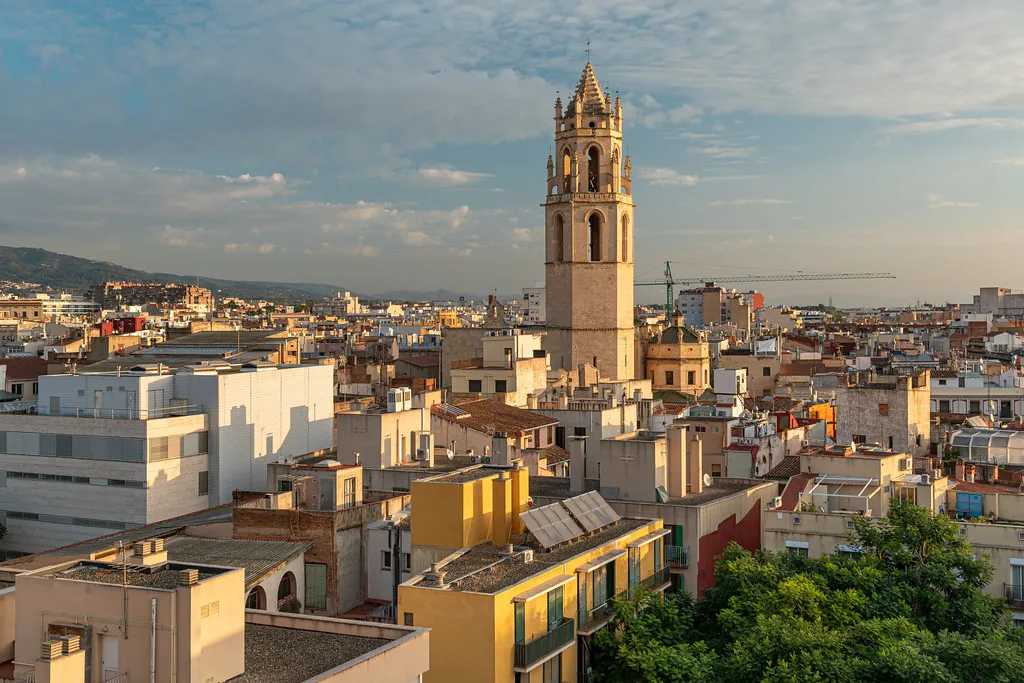
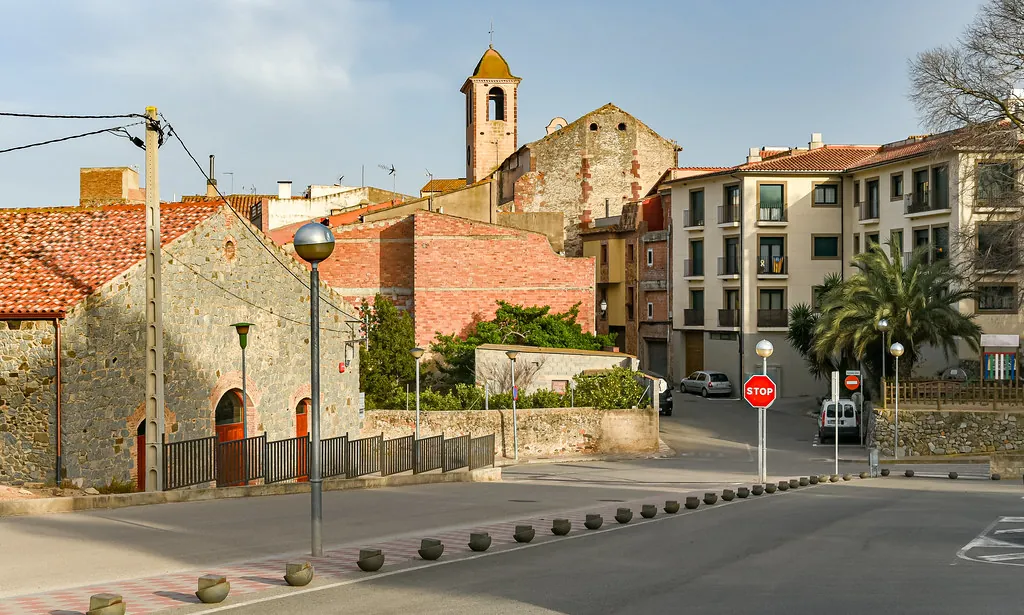
Architectural grandeur is thin on the ground, and locals like it that way. The parish church of Sant Pere squats at the highest point of the old centre, a patchwork of Romanesque stone, Gothic arches and a Baroque bell-tower added after a lightning strike in 1784. Inside, the air smells of candle wax and damp hymn books; the priest still announces Sunday mass in Catalan first, Spanish second. There are no audio guides, no gift shop, simply a wooden box for coins and a printed notice asking visitors not to photograph during services.
What brings many foreigners is underneath, in a manner of speaking. A 40-degree thermal spring bubbles up beside the dry riverbed, feeding the Hotel Termes-Montbrió spa complex. Day passes cost €28 and include access to two outdoor pools, saunas scented with local rosemary, and a series of thermal showers that pummel shoulders like over-enthusiastic physios. Coach parties from Tarragona arrive around one; book the 09:00 slot and you will share the water only with retired farmers comparing knee replacements. The water is rich in sodium bicarbonate—good for joints, less good for electronic key cards, which have a habit of demagnetising in your pocket.
When lunch dictates the clock
Spanish villages revolve around food, and Montbrió is no exception. The baker opens at seven, sells out of cocas (Catalan flatbreads topped with escalivada) by nine. By ten the bars are already setting tables for the midday rush: white cloths, bull-nosed glasses, bottles of house red kept in the fridge ("muy fresquito," the owner will insist, scandalised at British cellar temperature). Menu del día runs €14–€16 for three courses, bread and a drink; expect chickpeas with botifarra sausage followed by grilled hake or, in season, partridge stew thick enough to stand a spoon in.
Evenings are quieter. Kitchens close around 22:00; the last customers shuffle out before the national anthem appears on television. Visitors self-catering should note that the small Eroski supermarket shuts at 20:30 sharp and is shuttered all day Sunday. Plan accordingly or you will be foraging for supper in the Chinese bazar next door, whose tins of mussels in escabeche have sat there since 2017.
Fiestas, fireworks and the Monday-morning exodus
Festivity calendar is short, intense and not for the jet-lagged. The Fiesta Mayor, mid-August, begins with a predawn rocket that sends sleeping dogs into orbit. Brass bands parade through alleys barely three metres wide; neighbours compete to erect the highest stack of human towers in the plaça; wine flows from polyethylene bags poked with cocktail sticks. For four nights the village trebles in population. By Thursday the parish priest looks glassy-eyed and even the Guardia Civil smile. By the following Tuesday silence descends again; takeaway pizza boxes are the only evidence anything happened.
Winter visitors prefer Sant Antoni in January: bonfires, a barbecue of xoriço sausage and, crucially, no fireworks. It is the locals' favourite, partly because hotels drop their rates and the thermal pools steam dramatically in cold air.
Getting here, getting out
Reus airport, served by Ryanair from London Stansted and Manchester, lies 20 minutes away along the C-14. Car hire is essential: taxis charge €35 each way and buses are non-existent. From Barcelona El Prat allow 75 minutes via the AP-7 toll road (€8.45 in peak season). Trains run hourly to nearby Mont-roig del Camp, but the connecting bus to Montbrió was axed in 2022—blame rural economics and a shortage of drivers.
Six kilometres of vineyards separate the village from the sea. Cambrils resort, with its Michelin-starred seafood restaurants and Sunday craft market, tempts when the inland heat climbs past 35 °C. Yet many guests never make it that far. They float in 40-degree water while almond blossom drifts onto the surface like confetti, realise the coast can wait, and rebook the same week for next year before their towels are dry.