Full Article
about Pratdip
Legendary village with vampire dogs (Dips) and a castle with panoramic views
Hide article Read full article
At eight in the morning, the smell of fresh bread and damp earth drifts along the narrow street that climbs towards the square. A dog sleeps in the sun by the doorway of a stone house and the echo of a metal shutter closing bounces between the façades. Pratdip, in the comarca of Baix Camp, wakes slowly: a van heading down towards the main road, a blind rolling up, the dry scrape of a broom on stone.
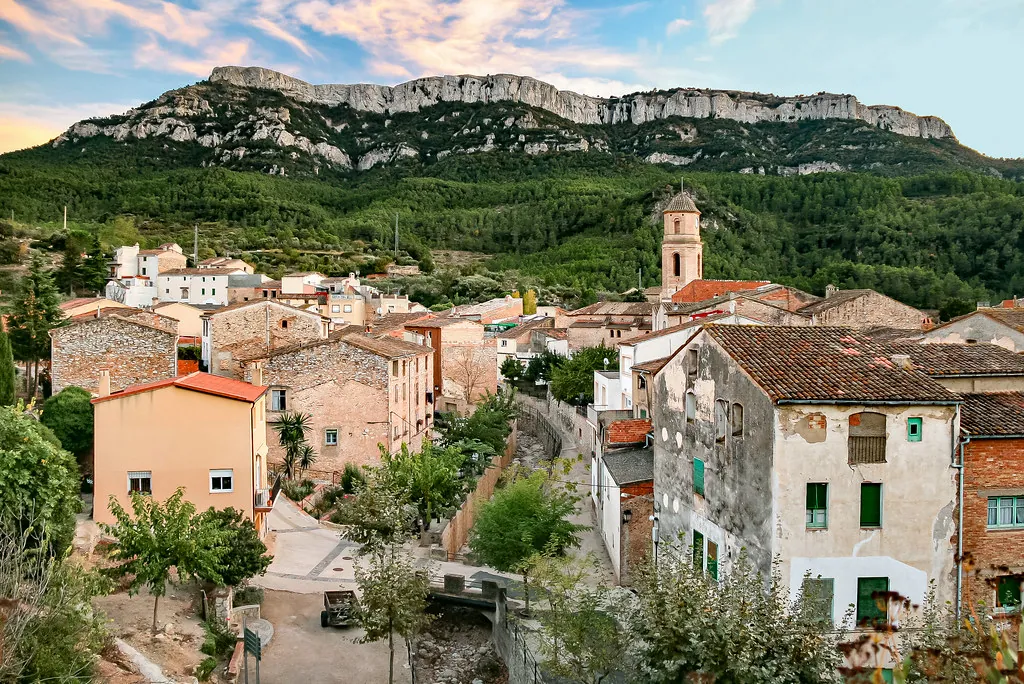
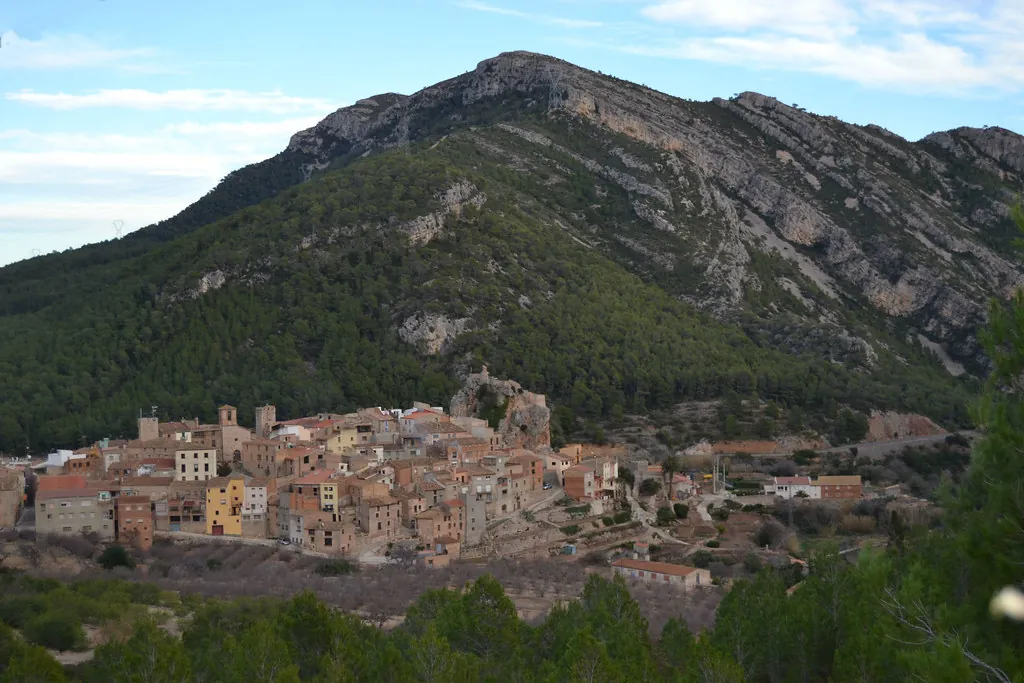
The village sits among pine and holm oak woods, in a landscape of low hills and ravines that marks the transition between the coast and the inland mountains. The sea is relatively close, though it cannot be seen from here, and the climate gives it away: mild winters, hot summers that feel slightly more bearable than along the immediate shoreline.
A compact old quarter in rough stone
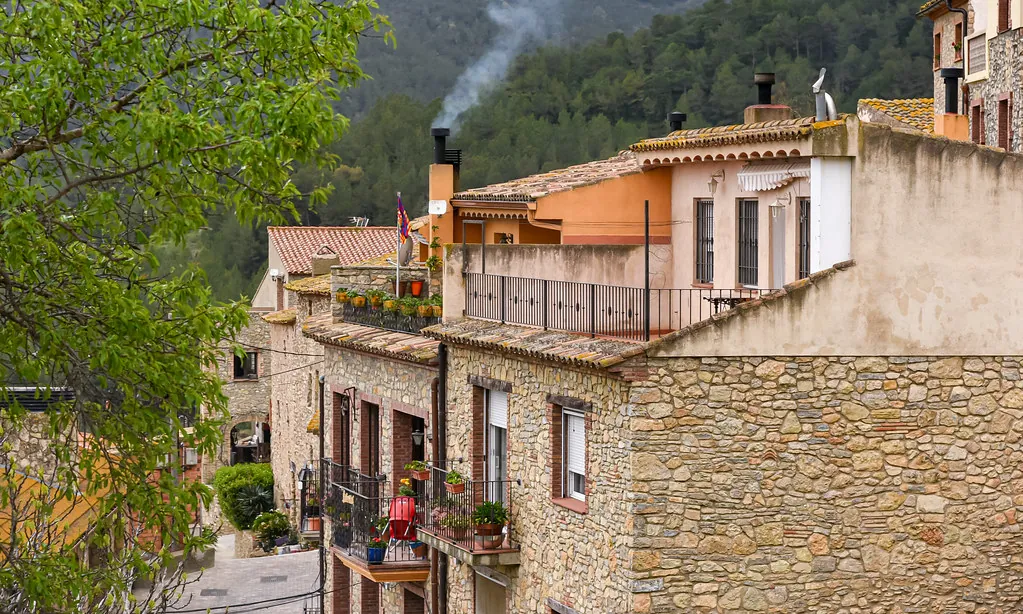
The historic centre is small and easy to cover on foot. Cobbled streets rise and fall without much apparent order, lined with stone houses whose façades are textured and uneven. Windows are small, doorways often arched, and some wooden doors still carry the marks of time.
Carved coats of arms appear on certain façades, along with dark iron balconies. Other houses conceal small inner gardens barely visible from the street. There are parked cars and signs of recent renovations, yet the overall feel remains that of an agricultural village that never expanded very far.
The parish church of Sant Salvador stands above the rest of the rooftops. Its bell tower can be seen from almost anywhere in the village and becomes a useful reference point when the narrowest streets twist unexpectedly.
Walking without a fixed plan, which is easy to do here, reveals details that never make it onto a map: an old washhouse, a fountain with stone worn smooth by years of use, courtyards where tools and mismatched plant pots are stacked in quiet disorder.
In the footsteps of the dips
Pratdip carries an unusual thread in its history linked to the so‑called dips, mythological creatures that appear in local legends dating back centuries. They were described as black dogs associated with the night and with the surrounding paths.
That tradition remains visible in the village today. Silhouettes of the animal appear in certain corners, and the story still forms part of local identity. When Pratdip’s past comes up in conversation, the dips are rarely far behind.
For visitors unfamiliar with the reference, these creatures belong to a long-standing strand of Catalan folklore. In Pratdip, the legend is not confined to books or archives but woven into the way the village presents itself.
Rural tracks to hermitages and masías
Several rural paths leave the centre and lead towards hermitages and old masías, the traditional Catalan farmhouses scattered across the municipality. Many follow a similar pattern: thick walls, heavy doors and enclosed courtyards with stone benches.
Some are still inhabited or have been restored. Others sit half abandoned among olive trees and pines. There are no explanatory panels detailing each building, so walking here has a sense of quiet exploration. Attention shifts to small details, a roof tile of a different colour, fragments of ceramic embedded in a wall, a well almost hidden by grass.
Anyone heading out beyond the village should carry water and wear comfortable footwear. In summer, the sun can be intense along the more open tracks.
Trails through pines, ravines and almond fields
The surrounding landscape is one of the main reasons to make the journey to Pratdip. The municipality stretches towards the first rises that connect with the Montañas de Prades and the inland ranges of the Camp de Tarragona.
Waymarked routes cross olive groves and almond orchards, while narrower footpaths slip into ravines thick with Mediterranean vegetation. Some sections involve serious gradients, particularly for those tackling them by mountain bike.
The long-distance footpath GR‑7 runs relatively close by, making it possible to link longer walks towards other villages in the area such as Tivissa or La Figuera.
Setting out early, before the heat tightens its grip, increases the chances of spotting birdlife circling above the slopes. Vultures and smaller birds of prey glide on the thermals, and there is constant movement among the pines. Wild boar leave clear traces in the dirt tracks, though catching sight of one is less common.
Almond blossom, olive oil and rural rhythms
Fields of olive trees, almond trees and small vegetable plots are still worked around the village. The local economy has traditionally revolved around these crops, alongside small-scale production of olive oil and honey.
In spring, when the almond trees are in bloom, the hillsides are dotted with white and pale pink against the dark green of the pines. It is a calm season for walking along the agricultural paths, before the harsher light of summer flattens the colours.
The landscape reflects a working countryside rather than a staged rural scene. Tractors pass along the tracks, tools are stacked in open sheds, and the rhythm of life follows the demands of the fields.
When to visit and what to expect
During summer, Pratdip sees more activity, particularly in August for the festa major dedicated to Sant Salvador. A festa major is the main annual festival in many Catalan towns and villages, and here it brings traditional dances, organised activities and gatherings that noticeably change the usual quiet atmosphere.
Those who prefer a slower visit often find spring and autumn more comfortable for walking in the surrounding countryside. In high summer, starting early is advisable. By mid-afternoon, the heat can feel heavy, especially on trails without shade.
Pratdip does not overwhelm with major monuments or long lists of attractions. Its appeal lies in the combination of stone streets, agricultural surroundings and a thread of folklore that continues to shape its character. Between the church tower of Sant Salvador, the shadow of the dips and the paths that lead out towards hermitages and masías, the village offers a compact but layered glimpse of inland Baix Camp, close to the coast yet firmly rooted in its own terrain.