Full Article
about Riudecanyes
Town known for its reservoir and as the gateway to Escornalbou castle
Hide article Read full article
A quiet start in Baix Camp
By mid-morning, when the sun begins to press but the streets are still half empty, Riudecanyes makes most sense at a slow walking pace. Scents drift in from the surrounding fields, a mix of damp soil, recently turned grass and, in season, green hazelnuts. They slip between the houses of the old centre. Some shutters remain closed. A door opens, a car passes at low speed, and little else interrupts the calm.
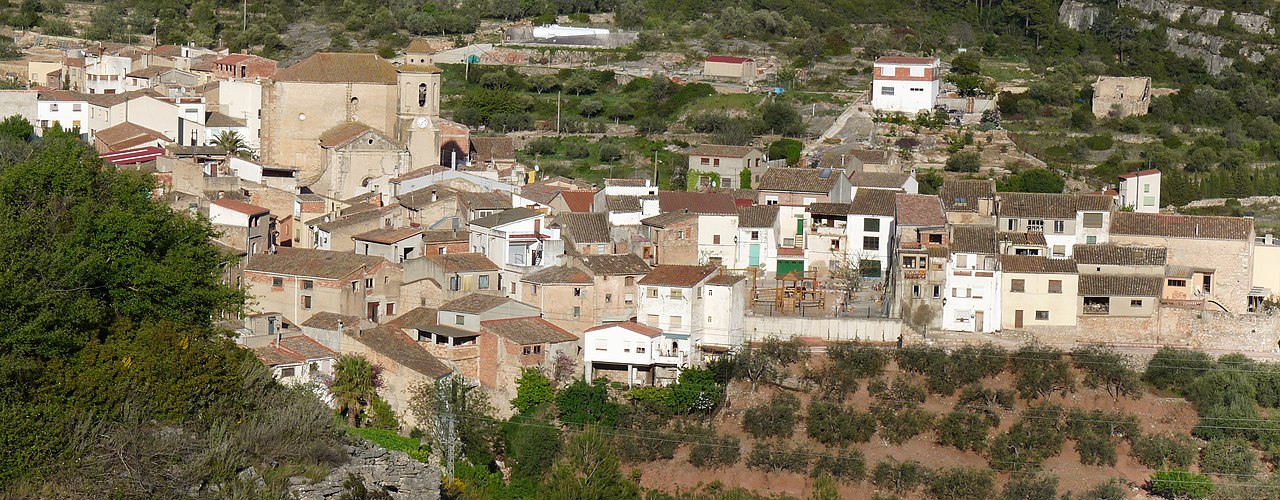
Riudecanyes has just over 1,300 residents and sits inland in the Baix Camp region. The coast is not far away, yet the atmosphere here is quite different from the seaside towns. The landscape is defined by agriculture, especially hazelnut groves that form an uneven patchwork around the built-up area. The elevation is moderate and the terrain rises and falls gently towards the inland hills.
The name of the municipality is linked to the water that has historically crossed this area. Today, the watercourse that runs near the village often carries little flow for much of the year, which is common for many rieras in the Camp de Tarragona. Even so, the strip of denser vegetation along its banks helps explain why settlement took hold here.
The old centre is small. It can be covered in under an hour without rushing, with time to pause over details: an iron grille on a doorway, rows of plant pots on a balcony, stone walls showing layers of old limewash. There are no grand monuments or dramatic streets. Interest lies in the continuity of everyday life.
Traces of history in the streets
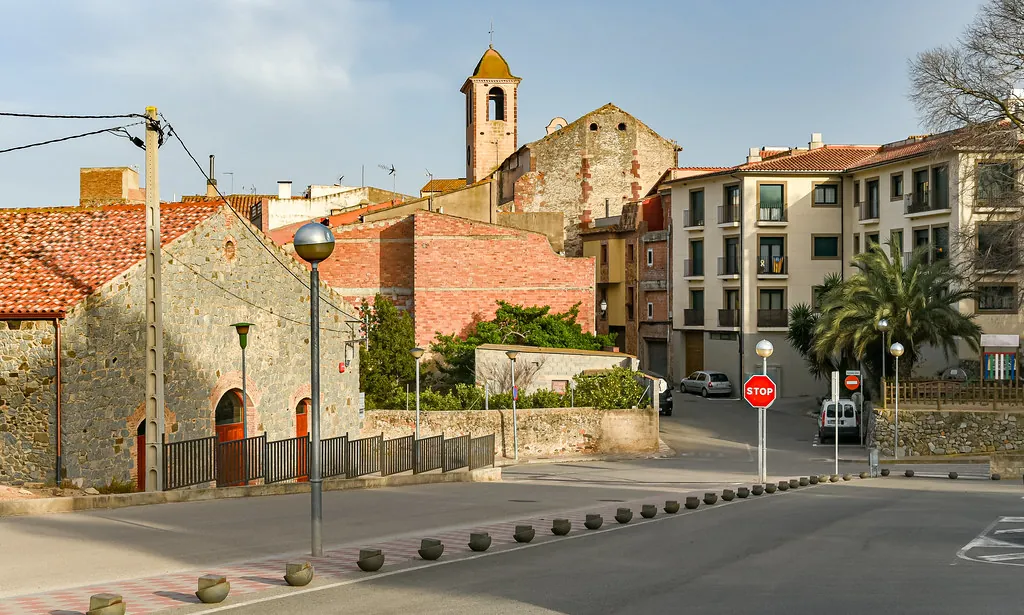
The parish church of Sant Jaume rises above the rooftops and acts as a reference point when moving through the village. The building has changed over time, visible in its mix of materials and proportions. The bell tower can be seen from several points in the centre and, depending on the hour, its shadow reaches across the nearby square.
The streets follow an irregular pattern typical of agricultural settlements that grew without strict planning. Some lead into small squares where stone benches remain and trees provide shade in summer. In the late afternoon, when the heat eases, neighbours often gather there to talk.
Beyond the houses, the agricultural landscape remains very present. Hazelnut trees dominate many plots, arranged in low rows that leave the hills visible in the distance. In spring the green is intense. By the end of summer, leaves shift towards drier tones and the ground fills with shells. Many of these fields are still active within the Denominación de Origen Avellana de Reus, a protected designation linked to local hazelnut production.
Many of the tracks crossing these fields run alongside private property. Some are marked with restricted access, so it is worth paying attention to signs and sticking to the clearer agricultural routes.
Paths and the reservoir
Several rural paths leave Riudecanyes and connect with scattered masías and nearby villages in Baix Camp. They are straightforward routes for walking or cycling, without major changes in elevation, although some stretches offer little shade. In high summer the sun falls directly on the open fields, so setting out early tends to be the better choice.
On the outskirts lies the Riudecanyes reservoir, closely tied to the area’s historic irrigation system. Paths run along its edges and are used by locals for walking or cycling. Early in the morning, the water is often completely still, reflecting the slopes that surround it.
Local cooking keeps a direct link with what is grown nearby. Hazelnuts appear in traditional desserts and also in certain sauces or picadas, a typical Catalan mixture used to enrich dishes. Olive oil and wines from the province accompany simple plates based on vegetables, escalivada or slow-cooked stews prepared without fuss.
If staying in the village, it is sensible to check opening times before heading out for lunch or dinner, especially on weekdays or outside the peak season. In small inland municipalities it is common for some places to open only on certain days.
Traditions that continue
The main festival dedicated to Sant Jaume usually takes place at the end of July. During those days the atmosphere shifts: stages appear in the squares, there is music at night and activities that bring together a large part of the community.
Outside those dates, life in Riudecanyes follows a steady rhythm. Traditions linked to the agricultural calendar, the hazelnut harvest, pruning work and regional fairs continue to shape the year. They are not presented as a spectacle but as part of daily routine. That sense becomes clear quite quickly during a stay here.