Full Article
about Vinyols i els Arcs
Agricultural town near the coast with a Baroque church and historic town hall.
Ocultar artículo Leer artículo completo
The church bell strikes seven and the tractors start. Not for the sake of tourism brochures, but because the almond orchard needs spraying and the grapes won't pick themselves. Vinyols i els Arcs, 95 m above the Mediterranean and fifteen minutes' drive from the Costa Daurada, is that rare corner of coastal Catalonia that still answers to the farming calendar rather than the tour-operator's one.
A Village That Never Bothered With a Postcard
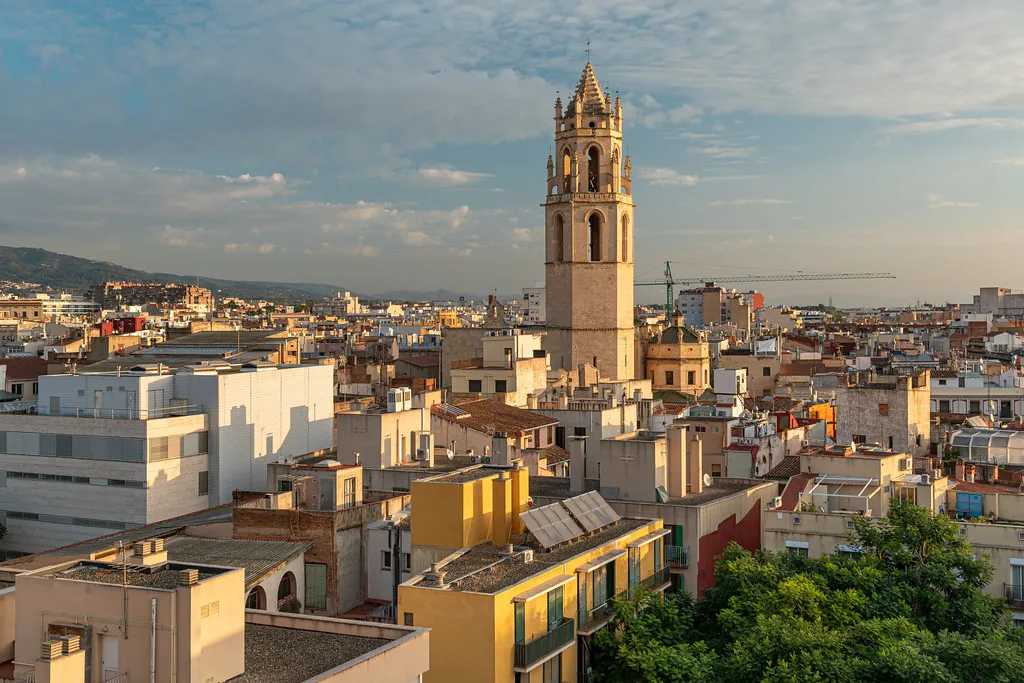
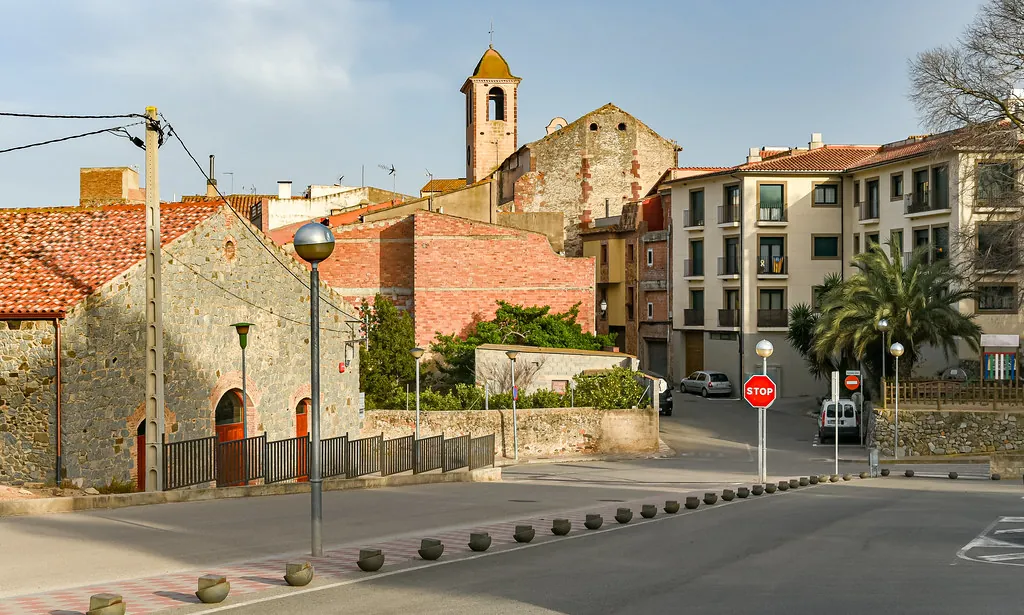
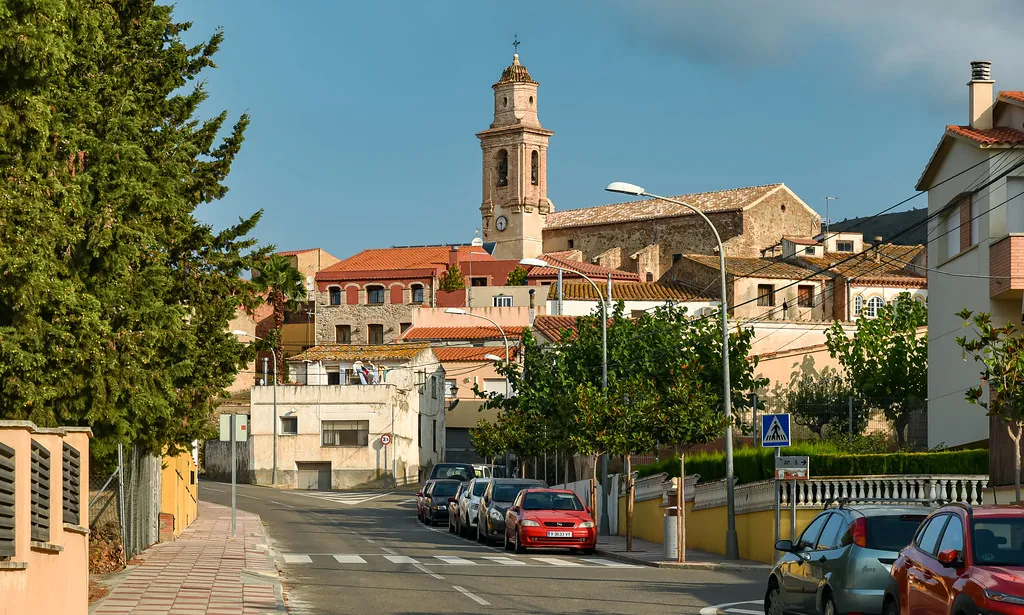
Two hamlets—Vinyols and Els Arcs—were stitched together by administrative fiat in the 1950s, and the join is still visible. Stone houses cluster around the Romanesque tower of Sant Pere in Vinyols; a kilometre away, Santa Maria dels Arcs stands guard over narrower lanes and older wine cellars. Between them spreads a patchwork of vineyards, almond groves and the odd olive terrace that keeps 2,323 people in weekday employment and weekend wine.
Visitors looking for cobbled plazas hung with bougainvillea will leave disappointed. The streets are wide enough for a combine harvester to turn, and the brightest colour is the municipal green of the recycling bins. Yet the place works: the bakery opens at six, the butcher knows how you like your botifarra sliced, and the bar still charges €1.20 for a cortado.
English voices appear mostly in spring and autumn, towing camper-vans down the T-314 after discovering that Salou's campsites want forty euros a night plus a surcharge for breathing. The informal motorhome area—signed only with a hand-painted "KM-1" on a stone track—sits at the edge of the cereal fields. Water, electricity and a cold shower cost €15, cash only, and if you ask the night before Yolanda will drop a still-warm baguette at your door before the tractors start up again.
Between the Sea and the Siurana
Distance matters here in kilometres, not hashtags. Five kilometres south the land drops away and the sea appears, flat and silver, with Cambrils' fishing boats ticking on the horizon. The beach is broad, clean and mercifully free of the inflatable-banana industry that blights Salou. Cyclists can reach it on a farm track; the gradient is negligible but the surface is stony, so leave the carbon racer at home and borrow the campsite's clattering hybrid instead.
Inland, the landscape wrinkles into the foothills of the Prades mountains. Country lanes—paved but pitted—roll past fortified farmhouses whose square towers once gave shelter from bandits and, later, civil-war militias. Most are private now; their stone patched with breeze-block and corrugated iron. You can look, but don't expect gift shops. The best views come from the ridge above the Siurana river, where a twenty-minute climb (on foot or by bike) delivers a sweep of coast from Cape Salou to the Ebro delta, layered with almond blossom in February and scorched blond by July.
Summer itself is a trade-off. Daytime temperatures sit in the low thirties, the vines are tied and the village slows to a shuffle. Shade is scarce on the lanes; plan walks for dawn or dusk and carry more water than you think reasonable. August brings the Festa Major: three evenings of sardanes, a correfoc that showers sparks across the main road, and a mobile disco that shuts down politely at 01:00 because the farmer next door needs to milk. If crowds larger than a school assembly make you twitchy, stay away that weekend.
Food Without the Fanfare
Eating is refreshingly straightforward. The village has two bars, one bakery, a modest Mercadona and no tasting menus. Breakfast at Masia Castellví—toast rubbed with tomato, local olive oil and a proper cup of coffee—costs €4 and comes with views of the vines that produced yesterday's vintage. Locals lunch on calçots in season, grilled over vine cuttings and dipped in romesco sharp enough to make your eyes water. Evening meals happen at home; the bars close their kitchens at nine unless you phone ahead, in which case Conchi will defrost some home-made croquetas and open another bottle of white from the cooperative in neighbouring Mont-roig.
Cambrils, ten minutes away, supplies the serious restaurants. El Pescador serves grilled dorada with chips that would pass muster in any British seaside caff, while the market stalls sell prawns still jumping in their boxes. Buy a kilo, drive back, fire up the camper-van hob and eat them before the sun drops behind the almond trees.
How to Do Nothing, Productively
The real attraction is the absence of one. There is no ticket office, no audio guide, no coach park. Instead you get a network of farm tracks that invite aimless pedalling, the smell of wet earth after the sprinklers switch off, and a night sky dark enough to remind you what the Milky Way actually looks like. Bring a pair of decent shoes, a paperback for the afternoon heat, and enough Spanish to say "buenos días" to the neighbour who offers you a handful of fresh peas.
Winter is quiet, sometimes too quiet. Bars reduce their hours, the campsite closes from November to March, and January's sea mist can sit on the fields for days. Yet January also brings Sant Antoni, with bonfires in the street and a priest who blesses dogs, horses and the occasional pet rabbit. Spring follows fast: first the almond blossom, then the carob trees throw their shadows across the roads, and by April the cycle starts again—tractors at seven, bread at eight, beach at ten.
Come with a car; buses exist but they favour schoolchildren over suitcases. Reus airport is twenty-five minutes away on empty back roads; Barcelona is an hour up the AP-7 if the toll booths are behaving. Book nothing except the first night's parking; after that, let the farming day set the rhythm. You won't tick off world heritage sites, but you will remember how Europe lived before the holiday industry moved in.