Full Article
about Alfara de Carles
Mountain village in the heart of Els Ports Natural Park, perfect for nature lovers.
Hide article Read full article
First Impressions in the Baix Ebre
Some villages make sense straight away. Others take a little longer. Alfara de Carles belongs firmly in the second group.
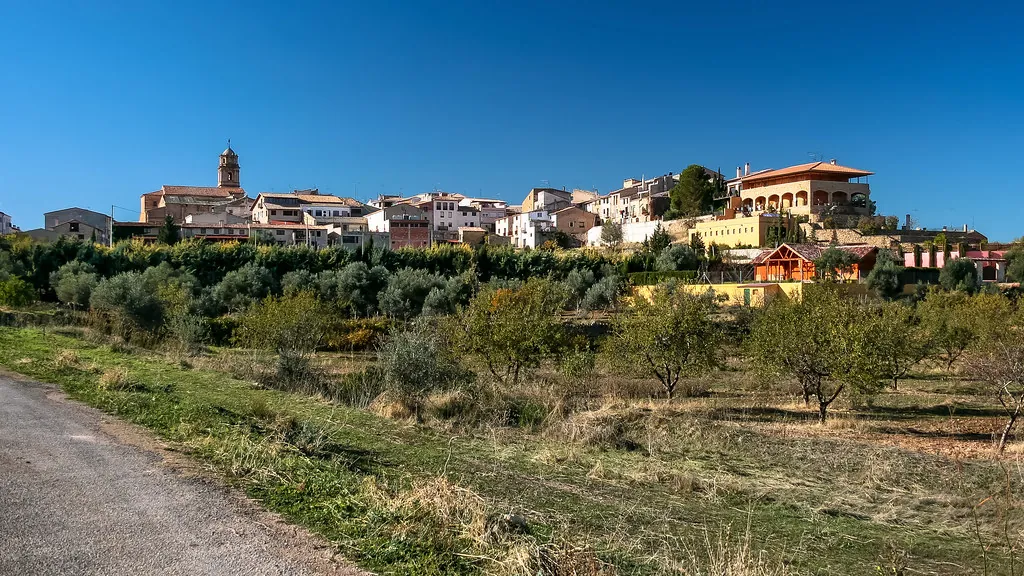
At first glance, it can seem like just another small settlement on the road towards Els Ports, in the comarca of Baix Ebre in southern Catalonia. With just over 350 inhabitants, it is modest in size and appearance. Yet a short walk through its streets quickly changes that first impression.
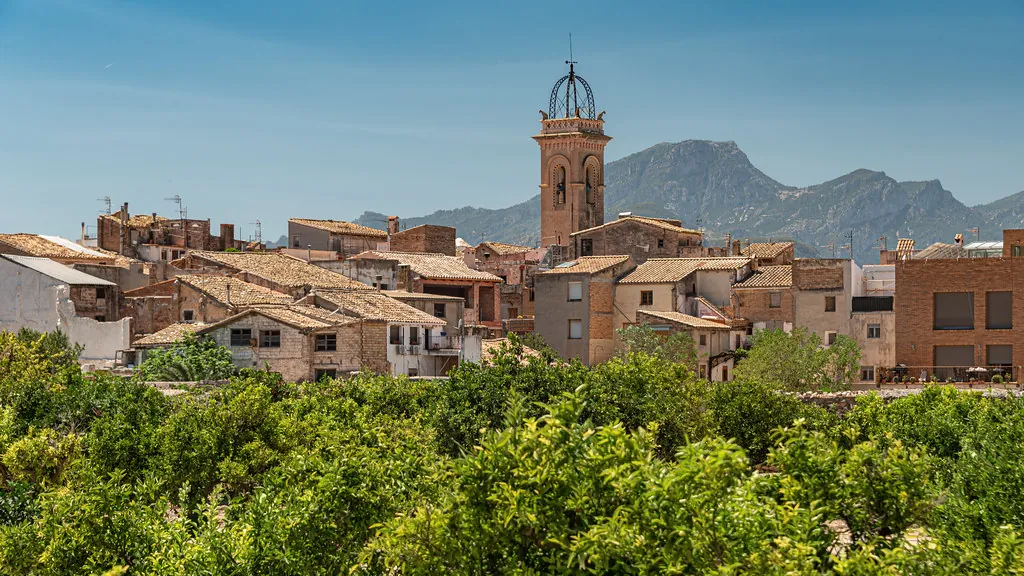
The village lives closely tied to the mountains. Olive terraces climb the slopes, ravines cut through the landscape, and paths head upwards towards the massif of Els Ports. There is no grand urban plan or monumental skyline. Instead, there are stone houses, some carefully restored, others still showing the wear of time.
In the centre, the streets twist around each other in the way that often happens in places shaped more by terrain than by drawings on paper. An old corral appears between homes. A large carriage doorway breaks up a façade. A small vegetable plot sits directly beside a house. It feels practical rather than decorative, built for daily life.
A Village Without a Backdrop
Alfara de Carles has not tried to turn its historic centre into a stage set. That is obvious as soon as you spend time here.
In summer, it is common to see neighbours sitting outside in the evening cool or chatting in the street as the day winds down. The atmosphere is calm and unhurried. Things move slowly, and that pace defines the experience of the village as much as any building.
At the heart of the settlement stands the parish church dedicated to Sant Jaume. Like many churches in small Catalan villages, it has undergone various alterations over the years. Parts of the structure reveal more recent interventions. It is not a monument that would justify a journey on its own, but it is woven into everyday life and forms part of the village landscape.
Alfara de Carles does not rely on landmarks to make its case. Its appeal lies more in how it functions as a lived-in place, still connected to its surroundings.
Close to the Massif of Els Ports
Tourism in Alfara de Carles revolves around one essential fact: its direct relationship with the massif of Els Ports. The village sits right at the edge of these mountains, and that changes everything.
Step beyond the last houses and pine forests begin almost immediately. Ravines open up between slopes. Forest tracks branch off in different directions. Some paths gain height quickly, so it makes sense to arrive prepared for walks or bike rides that include noticeable climbs.
Traditional trails link Alfara de Carles with different areas of the massif. Not all of them are perfectly signposted, so it is worth checking routes in advance or asking locally before setting off. Mountain biking is also an option, with plenty of terrain available, although uneven surfaces and steep gradients mean it is better approached at a steady pace.
On clear days, higher viewpoints look out towards the Ebro valley. When the air is especially clean, some people say the Mediterranean can be glimpsed in the distance. It does not happen every day. When it does, it tends to stop walkers in their tracks.
The mountains define the rhythm of the village. They shape its economy, its routes and much of the reason visitors come at all.
Fields, Olive Oil and Straightforward Cooking
Agriculture remains present around Alfara de Carles. Olive trees occupy many of the terraces that step down the hillsides, and local olive oil is part of daily meals. Small family vegetable gardens are still worked in and around the village.
The local cooking follows that same practical line. Expect substantial dishes prepared in a pot or oven, designed for people who have spent the morning in the fields or up in the mountains. Nothing elaborate. Good bread, quality olive oil and stews that satisfy.
This is food tied to work and landscape rather than presentation. It reflects the agricultural setting without turning it into a performance for visitors.
Birds Overhead and Space to Pause
The surroundings also attract those who carry binoculars. The massif of Els Ports is home to birds of prey and other mountain species, and from certain paths they can be seen circling above the slopes.
There are no dedicated interpretation centres or specific infrastructure for birdwatching. The experience is simpler than that. Walk, stop, look up and wait.
Part of the appeal lies in the absence of crowds and signposts telling you what to do next. The environment encourages observation rather than instruction. Silence plays a role too, especially outside the busiest weeks of the year.
When the Pace Changes
August brings a different atmosphere. People with family ties to the village return, and local festivities take place with popular events and music in the streets. Those days are livelier than usual, with more movement and more noise.
Outside that period, Alfara de Carles returns to its usual slow tempo. For travellers in search of quiet, another time of year may suit better. For those curious about local celebrations and a busier social scene, August offers a contrasting view of the same place.
A Place to Pause
Alfara de Carles is not somewhere to arrive expecting a checklist of major monuments or a long catalogue of attractions. It works better as a place to stop for a few hours, walk its streets, look towards the mountains that surround it and get a feel for how life unfolds in this part of the Baix Ebre.
It can serve as a base for exploring Els Ports, or as a calm stop on a wider route through the comarca. A stroll through the village, time spent on the surrounding slopes and a meal rooted in local produce may be enough.
Sometimes that is all that is required.