Full Article
about Benifallet
Riverside village known for its spectacular natural caves and its traditional ferry crossing over the Ebro.
Ocultar artículo Leer artículo completo
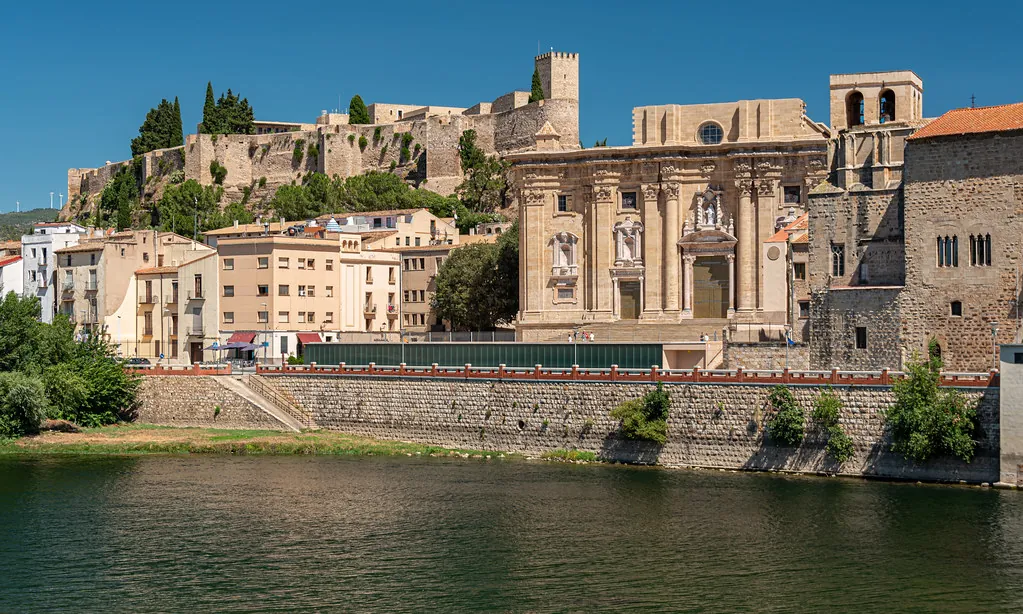
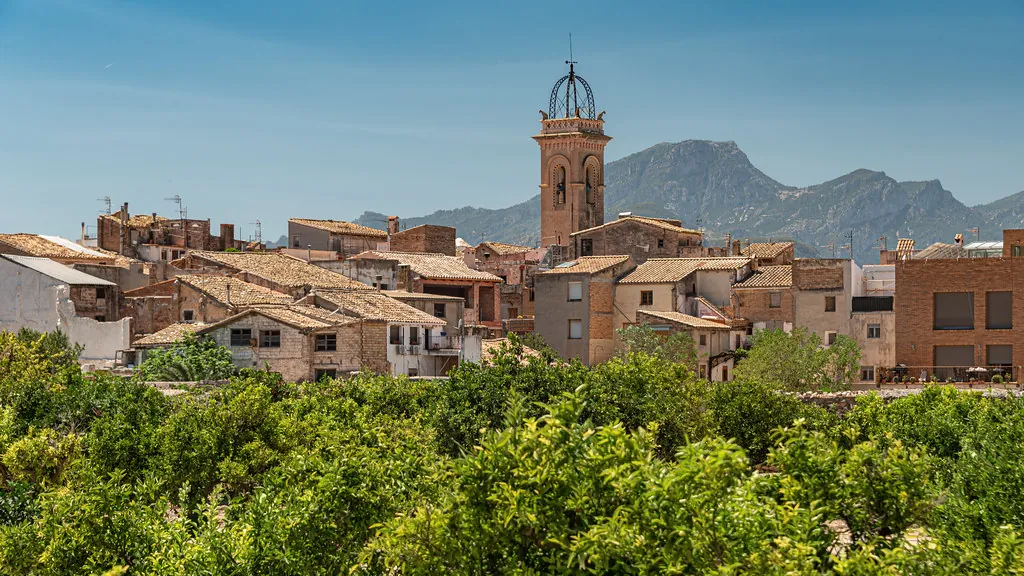
The morning train from Barcelona reaches Tortosa at 10:47, and from there it's 22 kilometres of empty road to Benifallet. No buses appear. No taxis wait. The station café owner shrugs—"pueblo pequeño, qué le vamos a hacer"—and points to a pre-booked taxi number taped above the coffee machine. Twenty minutes later the road drops towards the Ebro, and suddenly the village appears: white houses scattered across a bend in the river, mountains of Els Ports pressing in from behind, and not a souvenir shop in sight.
Benifallet sits exactly where the Ebro stops pretending to be a torrent and becomes the slow, broad waterway that irrigates half of Catalonia. The river is everything here: source of vegetables, employer of boatmen, provider of the flat GR-99 path that lures cyclists and walkers alike. Stand on the old iron bridge at dusk and you'll see herons working the eddies while fishermen in small aluminium boats haul up nets of angulas—tiny glass eels worth their weight in silver each winter.
Underground Cathedrals and Moorish Walls
Beneath the vegetable plots lies the real attraction. The Coves Meravelles aren't Spain's largest caves, but they might be its most intimate. Tours leave on the quarter past the hour, maximum fifteen people, and the guide switches to clipped English if she spots British walking boots. Inside, the temperature holds at a steady 19 °C whatever the weather topside. Stalactites drip like candle wax; one formation, the "Organ", rings like a bell when tapped. The whole visit lasts 45 minutes—short enough to keep children engaged, long enough to forget the world above. Email ahead ([email protected]) if you need an English slot; otherwise you'll follow the Spanish tour and piece together the geology from the hand gestures.
Back in daylight, the village layout still follows the Arab blueprint. Narrow lanes twist uphill from the river, just wide enough for a donkey and now barely adequate for a Fiat Panda. The eleventh-century name—Beni Fallat, sons of Fallat—survives in street signs and in the stone portals of houses rebuilt after the Carlist Wars. There's no castle, no grand plaza, just the sandstone church of Sant Jaume watching over 733 residents and a handful of foreigners who arrived twenty years ago looking for somewhere the 21st century hadn't quite finished installing.
River Time versus British Schedules
Life here runs on river time. Shops open at nine, shut at one, and reopen when they reopen—usually four, occasionally five. If you need picnic supplies for tomorrow's walk, buy the baguette before 11:00 or you'll be chewing yesterday's loaf. Evening meals start at eight; turn up at seven and the cook is still at home watching the news. The single village store stocks UHT milk, tinned tuna and surprisingly good local olive oil, but don't expect oat milk or kale. For that you'll drive 25 minutes to Tortosa's Eroski, remembering to fill the tank first—Benifallet's solitary pump closes at lunchtime and isn't open Sundays.
The GR-99 long-distance path cuts straight through the lower street, kilometre-marker 104 painted on a lamppost. Head upstream and the trail hugs the bank beneath reed beds alive with nightingales in April. Downstream it crosses the railway and climbs briefly into limestone country, giving views back towards the delta and the distant shimmer of the sea. Either direction is flat, way-marked and mercifully shade-dappled—rare in southern Catalonia. Allow two hours to the next village, Xerta, where the station has a ticket machine that actually works and a bar serving ice-cold Estrella at two euros twenty.
Kayaks, Thermal Springs and the Wrong Kind of Water
For a different perspective, rent a kayak at the riverside hut opposite the campsite. The Ebro here is wide and slow, more lake than river, but it's still a 930-kilometre waterway that can empty the Pyrenees in a spring storm. The outfitter issues life-jackets, dry bags and a laminated map showing where mobile signal dies—handy if you need to reassure anxious relatives back in Sheffield. A half-day paddle downstream to the abandoned rice mill and back costs €25 including collection; add €5 for a picnic of tortilla wrapped in foil and a can of lemon Kas.
Land-based heat relief lies three kilometres south at La Fontcalda. The thermal springs bubble out of the gorge at a dependable 28 °C, channelled into a stone pool built by monks in 1615. The road ends at a barrier; from there it's a 25-minute walk along a stony track that drops 150 metres—remember you'll be climbing back after your soak. British visitors arrive expecting a spa and find instead a natural pool with river stones for seats and dragonflies for company. Bring water shoes; the bottom is slippery with algae and there are no lifeguards, no café, no changing rooms—just a stone wall to balance on while you wrangle damp swimwear.
When to Come, When to Stay Away
Spring brings poppies to the riverbanks and temperatures perfect for walking—18 °C at midday, cool enough at dawn for a fleece. Wild asparagus appears in the markets, and restaurants serve calçots (giant spring onions) blackened over vine shoots, their ashes wiped away with newspaper. Autumn is equally kind, the light softer, the river still warm from summer. August, by contrast, is fierce: 35 °C by eleven, siesta extended until six, even the swallows panting on the telephone wires. Accommodation is limited—two small hotels, a handful of apartments—and August books solid with returning emigrants from Barcelona. Winter empties the village, daylight shrinks to six hours and the mountains block the low sun by four. Come then only if you crave solitude and don't mind restaurants that open just weekends.
Leaving the Valley
The taxi back to Tortosa has to be ordered the night before; otherwise you'll wait on the bridge hoping someone's driving to town for bread. Stand here long enough and you'll notice the river has no smell of the sea despite being only thirty kilometres from the delta. It moves slower than the Thames through Oxford, carrying silt that will become rice fields and apples the size of cricket balls. Benifallet offers no postcard moments, no Instagram peaks—just the quiet realisation that somewhere between the caves and the current you've slipped into a rhythm that feels older than cheap flights and out-of-date guidebooks. The train north leaves Tortosa at 17:27. Miss it and tomorrow's service is the same time, same platform, same indifferent punctuality. The valley won't hurry for you, and by the time the taxi tops the last ridge you already know that's exactly why you came.