Full Article
about Paüls
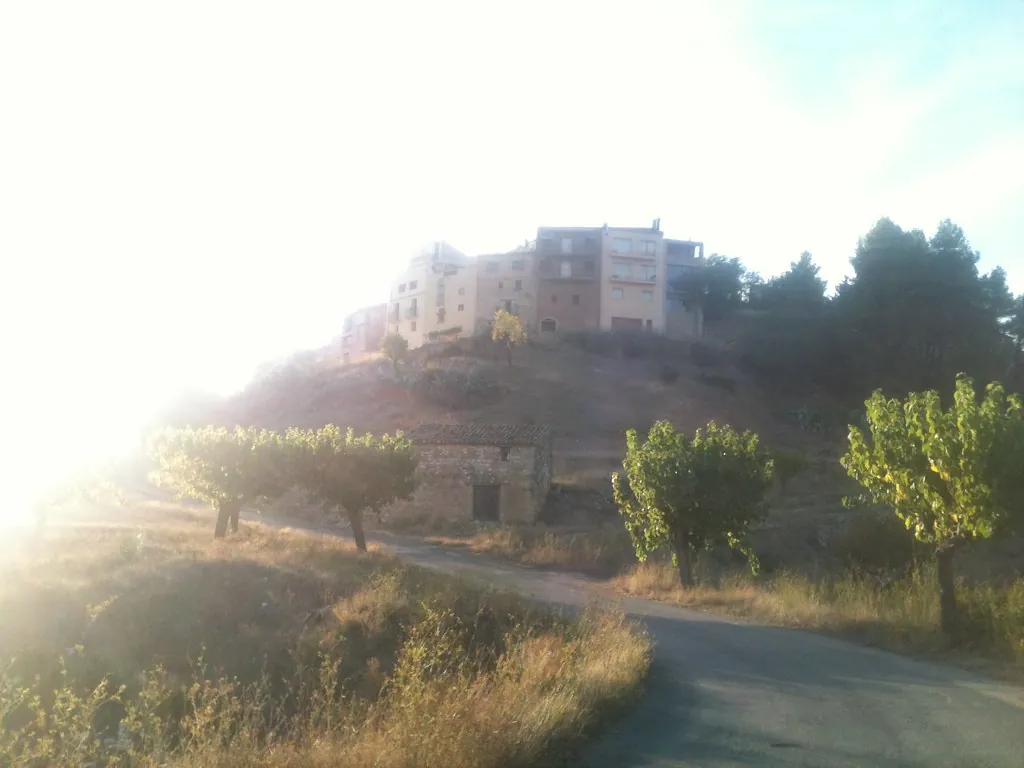
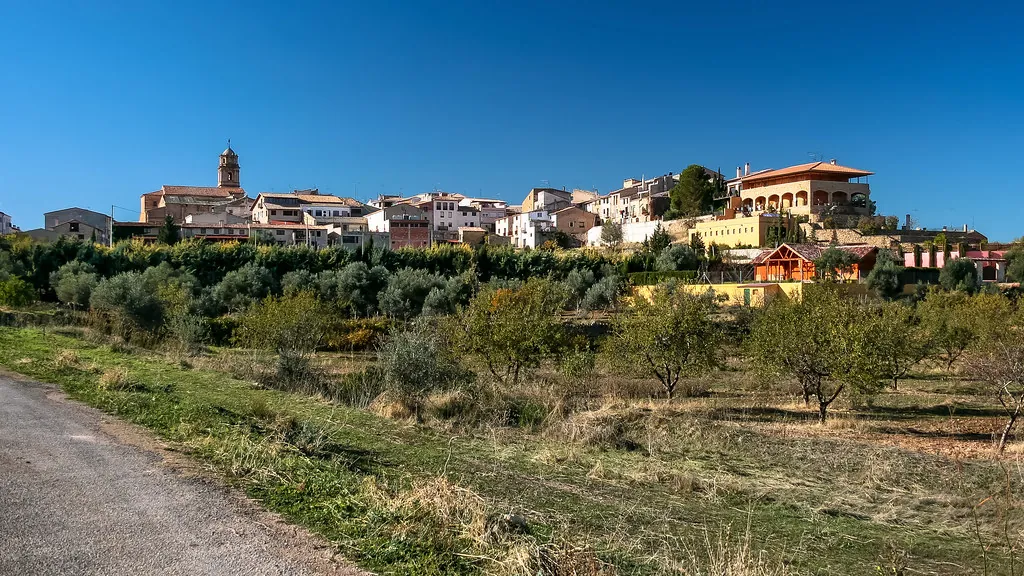
Amphitheater village at the entrance to the Els Ports Natural Park, ringed by forests and springs.
Hide article Read full article
A village shaped by its setting
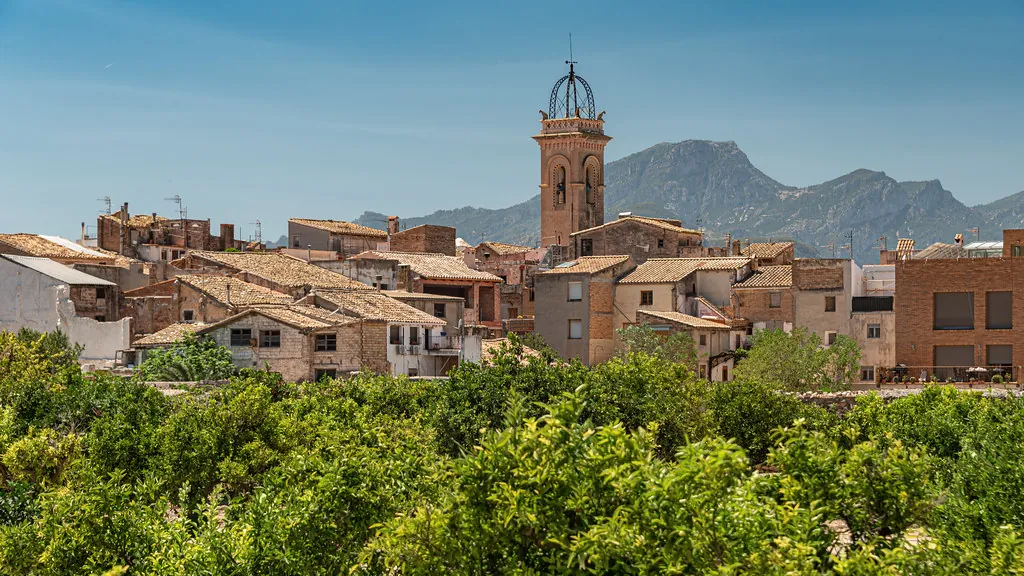
Tourism in Paüls begins with its location. The village stands on the eastern slope of the massif known as els Ports, inland in the Baix Ebre comarca, at around 380 metres above sea level. From this point, the landscape shifts quickly. To the east, the land drops towards the Ebro valley and the coastal plain. To the west, the terrain rises into the rugged mountains of the natural park.
That position has long defined daily life here. Paüls historically combined dry farming with the use of forest resources, making the most of both cultivated terraces and wooded hillsides. Today, just over five hundred people live in the municipality. The settlement remains compact, with narrow streets and short, sloping lanes. Houses built from local stone cluster closely together.
This is not a monumental old quarter filled with grand buildings. It reflects the practical logic of mountain villages where space is limited and every metre matters. Around the edge of the village, terraces planted with olive trees and almond trees still mark the landscape. For centuries, these crops sustained the local economy and continue to shape the view.
Rural architecture and everyday heritage
The parish church of Sant Jaume occupies one of the central points of Paüls. The present building is the result of several construction phases. Its origins are traditionally placed in the medieval period, although later alterations have significantly changed its appearance. The bell tower remains a visual reference within the village. From different streets, it appears between rooftops and along rising lanes, a constant point of orientation.
A walk through Paüls reveals how an inland agricultural community was organised. Houses gather around small squares and streets that follow the natural contours of the hillside. Many retain stone doorways and practical architectural elements rather than decorative flourishes. Public fountains also appear in the urban fabric. For a long time, these were essential water sources for residents.
On the surrounding slopes, the terraces supported by dry stone walls are still clearly visible. This system made cultivation possible on steep gradients and helped prevent soil from being washed away by rain. Small agricultural structures scattered among the fields follow the same principle. They are simple shelters, directly linked to work on the land rather than to display.
A landscape of terraces and forest
The immediate surroundings of Paüls combine traditional farming with Mediterranean woodland. Olive groves occupy many of the more accessible terraces, while higher areas are dominated by pine trees and holm oaks. Seasonal changes are noticeable. In winter, the tones become more austere and subdued. Towards the end of winter, when the almond trees blossom, the contrast with the stone terraces and the darker mountain backdrop becomes more pronounced.
Moving closer to the first foothills of els Ports, the terrain grows increasingly abrupt. Ravines cut into the slopes, wooded hillsides rise sharply, and limestone ridges signal the proximity of the natural park. Els Ports is one of the largest mountain areas in the south of Catalonia, and that sense of scale is felt very near the village itself.
The transition from cultivated land to mountain is immediate. A short distance from the last houses, olive terraces give way to scrub and forest. The shift in vegetation and relief helps explain how closely Paüls has always been tied to both agriculture and the surrounding hills.
Traditional routes into els Ports
Several traditional paths leave from Paüls, linking the village with masías, cultivated areas and forest zones. Masías are isolated rural farmhouses typical of this part of Catalonia. Some of these routes gradually enter the els Ports massif, where the terrain becomes more demanding.
Closer to the village, the paths usually run between olive trees, pines and Mediterranean scrub. As height is gained, wide views open over the Baix Ebre and the nearby ranges. For generations, these routes served practical purposes. They connected fields, neighbouring villages and grazing areas, forming part of everyday movement across the landscape.
Today, forest tracks are also used for mountain biking. Gradients can be considerable on certain stretches, reflecting the uneven nature of the terrain. Even without going far, it is easy to sense how the village sits at the threshold between cultivated land and high ground.
Festive traditions and the rural calendar
The festive calendar in Paüls remains closely tied to rural traditions. The main festival, or festa major, is held in honour of Sant Jaume, the patron saint of the municipality. Religious events are combined with popular activities that fill the village squares and streets, reinforcing community ties.
In winter, the bonfires of Sant Antoni are lit. This is a custom widely observed in this part of Catalonia. Fire stands at the centre of the celebration and is often accompanied by shared meals and gatherings around the embers. The atmosphere is communal, rooted in seasonal rhythms and long-standing practice.
Beyond specific festivities, the year continues to be marked by agricultural tasks. Pruning, the olive harvest and caring for the almond trees remain part of the annual cycle. Although the population and ways of life have changed over time, the direct relationship with the land still forms part of the human landscape of Paüls.
Getting your bearings
Paüls can be explored easily on foot, though some streets are sloped. It is advisable to leave the car in the access areas at the edge of the village and continue walking through the centre.
To better understand the landscape, it is worth stepping beyond the built-up area and following the paths that skirt the olive terraces. From there, the connection between village and mountain becomes clearer. The compact stone houses, the dry stone walls and the rising slopes of els Ports together explain how Paüls has grown in close contact with its surroundings.