Full Article
about Roquetes
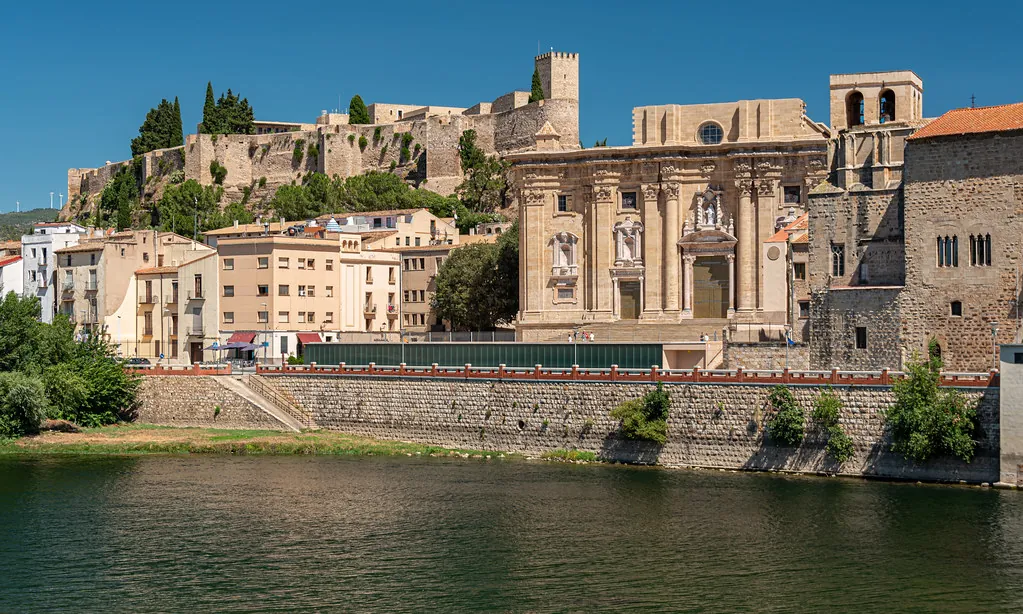
Neighboring town to Tortosa, home to the Observatorio del Ebro and gateway to Montcaro.
Hide article Read full article
First contact: streets that don’t make it easy
Anyone setting out to explore Roquetes quickly runs into something practical: parking. In the centre, it is limited. Streets are narrow and many climb more than expected. If a space does not appear straight away, it makes more sense to leave the car in the more open areas at the edge of the town and continue on foot. By mid-morning there is already a steady flow of people.
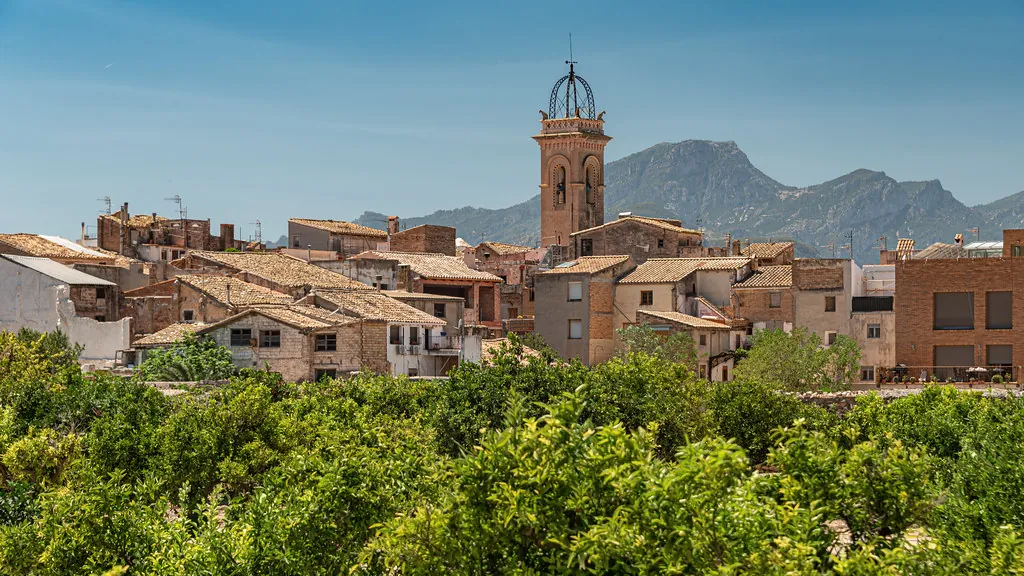
Roquetes sits pressed against the mountain. Behind it stretches the flat land of the Ebro, one of Spain’s major rivers and a defining feature of the region. In front rise the Ports, a rugged natural area. That contrast shapes the place from the outset, between cultivated plain and steep terrain.
The Ports, beyond the obvious
Roquetes works as a gateway to the Els Ports Natural Park. From within the town itself there are no major viewpoints. For wider views, it is necessary to go uphill.
The long-distance GR‑92 trail passes through here, so it is common to come across walkers carrying large backpacks. Many are either heading into or returning from the Ports, using Roquetes as a practical stopping point rather than a final destination.
One of the better-known routes leads to the Pico de los Ángeles. It is around eight kilometres in total. The distance may not sound demanding, but the sun can be intense when temperatures rise. Carrying water is essential.
Closer to the centre lies the Roca Foradada, about a thirty-minute walk away. It is exactly what the name suggests: a rock with a hole through it. Even so, the walk itself holds interest. The path climbs gradually through olive groves, agricultural terraces and the occasional isolated house. It offers a clear sense of how the surrounding land is used and shaped, without needing to go far from the town.
A town that doesn’t try to impress
The centre of Roquetes is small and easy to cover on foot. Twenty minutes is enough to walk through it at a relaxed pace.
The main square has trees and benches and serves its purpose without trying to stand out. The former town hall now functions as a health centre. The building is plain, with little in the way of decoration or show.
The Casa de Sant Josep has been repurposed as a library. It was once a Jesuit residence, and its older structure is still recognisable despite the change in use.
The town is built on a slope. Many streets turn into steps or short ramps, so walking often means looking uphill. Along the way, larger houses appear among more modest ones. These were once second homes for families from nearby Tortosa. Today they are ordinary residences, with ageing shutters, potted plants and the occasional cat asleep on a windowsill. The atmosphere feels lived-in rather than curated.
The observatory that stays in the background
On the outskirts of Roquetes stands the Observatori de l’Ebre. It has been in operation since the early twentieth century and holds scientific records that go back a long way.
Visits are possible, though usually by prior arrangement. It is not set up as a typical tourist attraction. Inside are scientific instruments, archives and laboratories. There is a strong presence of mechanical equipment and extensive documentation. For those interested in the history of science, it can be worth the effort. For others, it may feel too specialised and slow-paced.
Local traditions and everyday food
Towards the end of August, Roquetes usually hosts the Jota Cantada. Groups known as rondallas perform the same melody with different lyrics. A jury evaluates the performances and awards prizes. The mood leans more towards competition than spectacle, with the focus on interpretation rather than show.
In January, Sant Antoni brings a different kind of activity. Animals are led through the streets to be blessed. Horses are a constant presence, and sometimes dogs or other domestic animals appear as well. There is fire, torches and the distinct smell of burning wood, creating a setting tied to older customs.
Food in Roquetes stays close to local traditions. Simple preparations are still common. The coca de recapte can be found in some bakeries, particularly during festive periods. It is a flatbread topped with roasted vegetables and little else. Another version is the coca de ceba, made with slow-cooked onion that sits somewhere between sweet and savoury.
The olla del Baix Ebre is a more substantial dish, a stew combining meat and pulses. It suits colder months, when heavier food feels appropriate. In the heat of August, it can seem excessive.
Coming and going
Roquetes tends to work better as a base than as a standalone destination. Tortosa lies very close, and the Ports begin almost immediately behind the town.
The urban area can be seen in a calm morning. After that, moving around becomes necessary. A car is, in most cases, the practical option.
In summer, starting early helps with both parking and walking. After midday, the heat takes over, and the slopes of the town make themselves felt more sharply.