

Full Article
about Xerta
Town known for its striking weir on the Ebro and its stately homes
Ocultar artículo Leer artículo completo
The 11 a.m. Regional-Express from Barcelona is still three kilometres away when the smell of orange blossom drifts through the carriage windows. Passengers glance up from phones; the train has slipped unnoticed into the lower Ebro valley, and Xerta’s orchards now press against both sides of the track. By the time the wheels squeal into the single-platform halt, the scent is almost overpowering. Step off and you’ll notice something else: the silence that follows the train out of the station is complete, broken only by a blackbird and the slow creak of a cyclist crossing the level crossing.
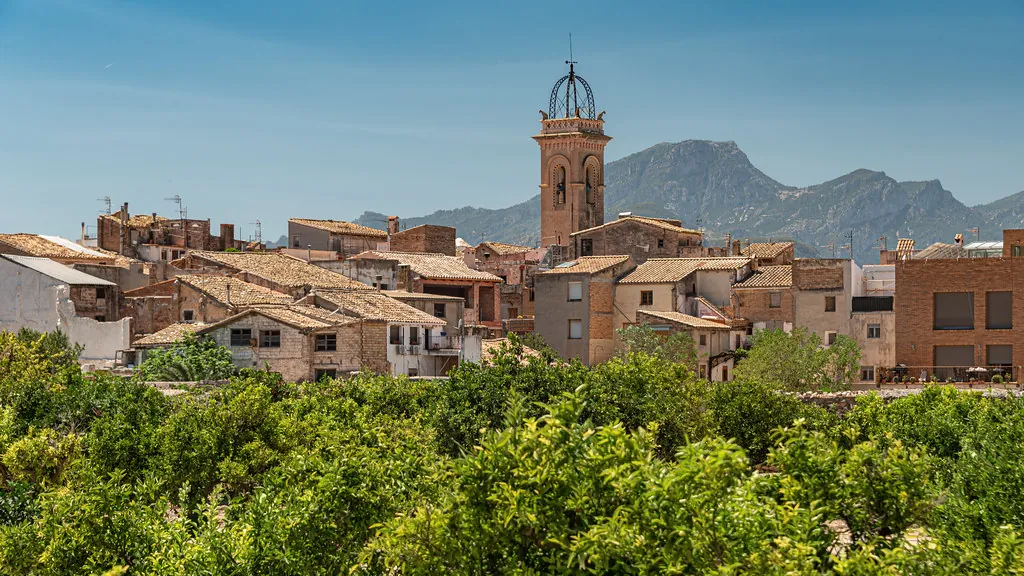
Xerta sits twelve metres above sea-level but feels lower. The river is everywhere – in the irrigation channels that slice through the citrus plots, in the humidity that softens old stone walls, in the local accent that stretches vowels like slow water. Five thousand people live here, yet on a weekday afternoon the village square holds just four elderly men, one tortoiseshell cat and a waiter who will not rush the coffee, whatever the British preference for speed.
River Time, Garden Time
The Arabs called this stretch of valley la huerta – the garden – and the name still fits. Walk south along Carrer de la Riba and the streets shrink to lanes, then to packed-earth paths between irrigation ditches. On one side, orange trees stand in perfect rows; on the other, peach orchards are netted against birds. The system is medieval: water is released from the Ebro on a rota, each farmer knows his twenty-minute slot, and gates are opened with the same iron keys that fitted locks two centuries ago. You can taste the result in the juice served at Bar El Travesser where a 250 ml glass costs €1.80 and arrives with the pulp still spinning.
The river itself is reached by a five-minute stroll across the main road. A service road for acequias becomes a footpath that meanders between reeds and white poplars. Herons stalk the shallows; a grey wagtail teeters on a moored fishing skiff. This is not a dramatic gorge or a whitewater stretch – the Ebro is already languid, fattened by Pyrenean snowmelt and thinking about the delta forty kilometres downstream. Kayaks can be rented in neighbouring Tortosa, but most Xerta folk simply sit on the bank at dusk, phones left at home, watching the water turn the colour of burnt sugar.
Stone and Brick, Civil War Scars
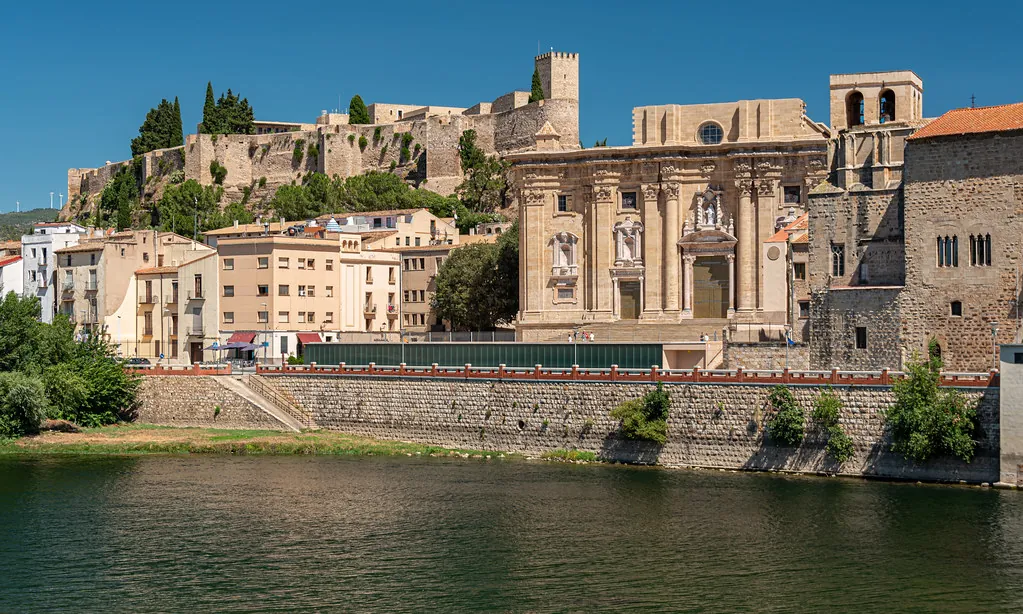
Turn back into the village and the streets narrow further. Houses are built from chunks of local limestone mortared with river sand; balconies are just wide enough for a geranium pot and a couple of drying T-shirts. The parish church of Sant Bartomeu was rebuilt after 1938 – the front is neo-Romanesque, the side walls still pock-marked by shell fragments that nobody has bothered to smooth over. Inside, the cool smells of wax and damp stone offer instant relief from the July heat that can top 38 °C. Mass is at 11 o’clock Sunday, but the doors stay open all day; visitors are expected to switch off headlights and common sense in equal measure.
There is no interpretative centre, no audio guide, no gift shop. Instead, information arrives in other ways. A laminated A4 sheet taped to the presbytery noticeboard lists the village dead from both sides of the Civil War – names only, no commentary. At the bakery on Carrer Major, the owner will point out the house where Republican officers set up a field hospital, but only if you buy a loaf first. The loaf, crusty and flecked with toasted sesame, costs €2.40 and keeps for four days if you can resist it that long.
Eating Between Orchards
Midday hunger sends most visitors to the single restaurant that opens every day (closed Monday, naturally). The menu del día is €14 and changes with whatever the cooperative truck unloads: perhaps fideuà of river carp and tomato, or a bowl of escudella broth thick with chickpea and morcilla. Pudding is almost always crema catalana, its sugar crust cracked tableside with the back of a spoon. Vegetarians are accommodated, but you need to ask in advance; phone ahead and Mercedes will put aside artichokes from her cousin’s plot.
Self-caterers do better. The Spar on Plaça de l’Església stocks local olive oil labelled simply Cooperativa de Xerta – mild, almost buttery, ideal for breakfast tomatoes. In March the same shop sells net-bags of just-picked oranges for €2 a kilo; by July the fruit is finished and peaches take over. British visitors note the absence of a cash machine; stock up in Tortosa before arrival or expect a 20-minute drive back to the nearest hole-in-the-wall.
Two Wheels, One Gear
Xerta sits on the Via Verde, the old railway line converted to a cycle path that runs 170 km from Aragon to the sea. Hire bikes are available at the station apron: €15 a day for a hybrid, €25 for an e-bike, helmets included. The surface is smooth crushed limestone, gradients negligible, and the first seven kilometres north to Benifallet follow the river so closely you can watch terrapins slide off logs into the current. Serious cyclists continue to the delta, but a lazier option is to pedal twenty minutes to the ruined Moorish watchtower at La Punta de l’Àguila, eat sandwiches in the shade, and freewheel back before the afternoon heat builds.
Walking options exist, though way-marking is Catalan-only. A 4 km loop called Ruta de les Azagadores threads through irrigation lanes to a small chapel on a bluff; go at dawn and you’ll share the path only with sprinkler arcs and the occasional tractor driver raising a hand in wordless greeting. Sturdy shoes are advisable after rain – the clay sticks to soles like wet biscuit.
When the Valley Parties
The village’s main fiesta honours Sant Bartomeu around 24 August. What that means in practice is portable discos in the square, paellas for 200 cooked in pans the size of satellite dishes, and a greased-pole contest over the river that ends with teenagers dropping fully clothed into the Ebro. Visitors are welcome but accommodation is snapped up months ahead; if you hate fireworks, avoid the place entirely for three nights. A quieter option is the spring aplec at the riverside chapel: locals walk out at dawn, musicians play flutes and small drums, and someone hands out sweet moscatel wine in plastic cups. No programme is published; ask at the bakery the week before.
Getting There, Getting Out
Reus is the nearest airport, an hour and fifteen minutes by car on the C-12. The road is fast until the final five kilometres, where olive trucks rattle through unlit bends; arrive after midnight and you’ll understand why hire companies push the extra insurance. Four trains a day link Xerta with Barcelona Sants (2 h 15 min, €12.85 each way), but the last southbound service departs at 19:15. Miss it and a taxi from Tortosa costs around €30. Buses exist but are timed for schoolchildren, not tourists; check Hife.es and abandon hope if you need Sunday travel.
Summer brings humidity that can feel heavier than coastal resorts; spring and late September offer mid-twenties sunshine without the wall of moisture. Winter is mild – 12 °C at midday – and almond blossom appears in January, but several rental cottages shut tight between November and March.
The Bottom Line
Xerta will not change your life. There are no headline sights, no boutique hotels, no sunset viewpoint thronging with influencers. What you get instead is a working valley village that happens to smell of oranges, a river that obligingly reflects every shade of evening sky, and a pace that forces even the most restless British visitor to slow down. Bring cash, a phrasebook and an appetite for whatever is ripe. Leave the car unlocked, the phone on airplane mode, and allow at least one afternoon to disappear entirely.