Full Article
about Albons
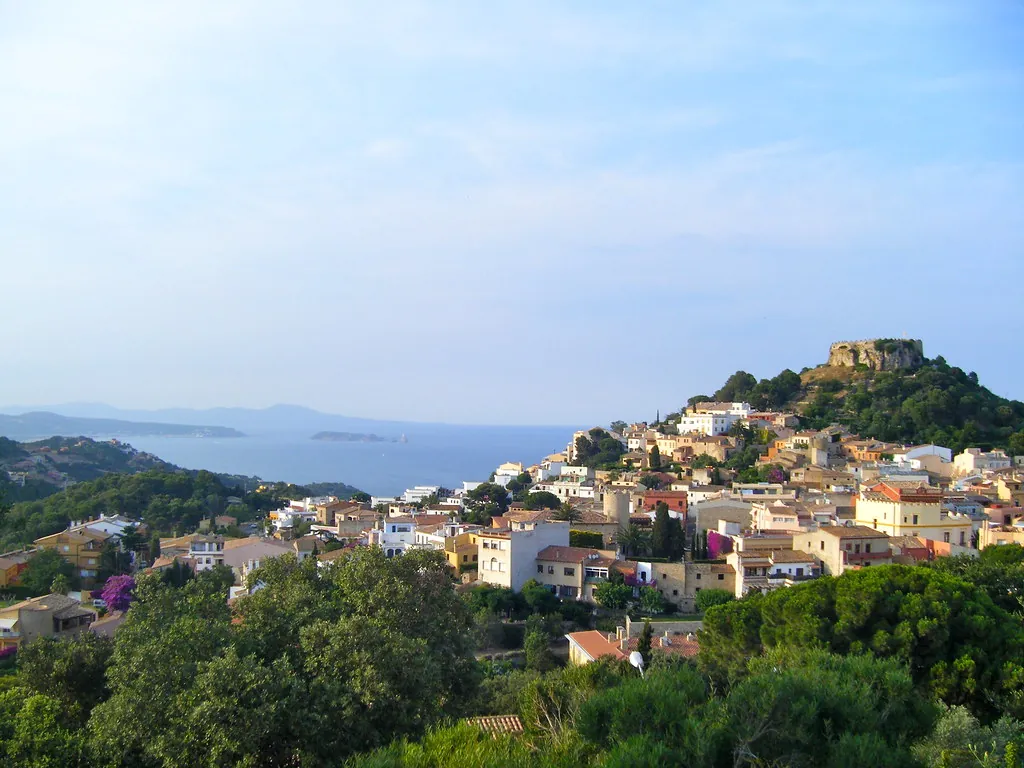
A hilltop village overlooking the plain; its compact, authentic medieval core survives.
Ocultar artículo Leer artículo completo
Twenty-five metres above holiday brochures
The church clock in Albons strikes the half-hour and nobody looks up. That’s the first thing you notice: time is still allowed to pass without becoming a photograph. At barely 25 m above sea level, the village sits low enough to catch sea-wind on stormy days, yet far enough inland to avoid the Costa Brava’s summer soundtrack of foam parties and karaoke. The result is a working Baix Empordà community of 800 souls where tractors have right of way and the bakery sells out by ten.
A single road threads through Albons. One end points to the rice fields outside Ullà, the other to the pine-topped ridge of Montgrí. Stone houses lean inwards, shading pavements wide enough for two abreast but not for a supermarket trolley. Park on the periphery or you’ll block someone’s grandmother.
Stone, bread and conversation
The parish church of Sant Martí is impossible to miss because every lane tilts towards it. Medieval in parts, rebuilt after the 1427 earthquake, it looks more like a fortified granary than a cathedral. Locals treat the square out front as their sitting room: plastic chairs appear after Mass, dominoes clack, and the village nurse parks her scooter beside the fountain without turning a head.
Walk five minutes in any direction and the houses shrink into barns, the barns into fields. Albons is ring-fenced by small vegetable plots and orchards whose owners still label rows in Catalan. Dawn light flattens across the plain, turning irrigation channels silver; at dusk the same fields glow like burnished copper. Photographers do turn up, but they tend to be Catalan weekenders rather than coach tours, so tripods don’t outnumber tomatoes.
Flat roads, slow bikes
The terrain is ideal for anyone who likes cycling without Lycra. Puff gently west and you reach the medieval grid of Bellcaire d’Empordà (4 km). Spin east and the tarmac dissolves into farm tracks scented by fennel and sheep. Signposting is sporadic—download the free Empordà route map or follow the wind and hope. Bike hire is easiest in Torroella de Montgrí, eight kilometres away; several villas in Albons include a pair of bone-shakers in the price.
Serious walkers may find the landscape too gentle to feel heroic. Treat it instead as an open-air museum of Mediterranean farming: carob, olive, artichoke, apple, in rotation since the Arabs planted the first irrigation ditches. In May the air smells of apple blossom; in October it’s wood smoke and new wine.
Rice, fish and whatever the sea sent that morning
There are two restaurant-bars inside the village perimeter. Both close on random Tuesdays, so ring ahead. Expect short menus written on a blackboard: rice with local mushrooms, pork cheek slow-cooked in Empordà wine, and a fish dish that depends on what L’Estartit boats landed at dawn. Vegetarians survive on omelette and roasted peppers; vegans negotiate.
For choice, drive ten minutes to the coast. Platja de Pals has a long sandy shelf safe for body-boarding children; L’Estartit adds dive centres that run hour-long trips around the protected Medes Islands. Back on land, Can Gel in neighbouring Pals will serve half-portions of rice so youngsters can taste seafood without wasting a kilo of prawns.
Empordà wines rarely top 13% alcohol—closer to a light Burgundy than to the punchy Priorat reds further south. Cellar doors are modest: knock at Mas Oller in nearby Torrent and someone’s aunt appears with a tasting tray and a dog that wants crisps.
When the village remembers it has visitors
Albons’ own fiesta mayor lands during the last weekend of July. A fairground ride occupies the football pitch, the bakery doubles its staff, and you’ll share the square with second cousins from Barcelona arguing over the playlist. Accommodation within the village is limited to four self-catering houses; book early or sleep in Torroella and accept a taxi home after midnight.
The only other date that disturbs the calm is 13 October, when a steady stream of walkers heads to the Sant Grau chapel for a memorial mass. If absolute silence is your holy grail, avoid that week. Otherwise October is glorious: 22 °C afternoons, vines turning red, hotel prices down 40% on August.
Getting here, getting out
Girona-Costa Brava airport is 50 km, mostly on the AP-7 toll road (€7.45 each way). Ryanair flies from Stansted, Manchester and Bristol between April and October; winter visitors route via Barcelona. Hire cars live in the terminal; without one you’ll be marooned, because Albons lost its railway in 1956 and the weekday bus reaches Torroella only twice daily—none on Sunday.
Rain falls heaviest in April and October; bring a light jacket. Summer tops 32 °C but the plain’s evening breeze cools things faster than the coast, so dine outside without sweating into your paella.
The bottom line
Albons will never tick the “must-see” box because its whole point is refusing to perform. Come if you like cycling past wheat that whispers, buying tomatoes still warm from the field, and falling asleep to the sound of someone practising the accordion two streets away. Leave if you need nightclubs, souvenir magnets, or a beach within walking distance. The village won’t mind either way; it has tractors to service and apples to pick.