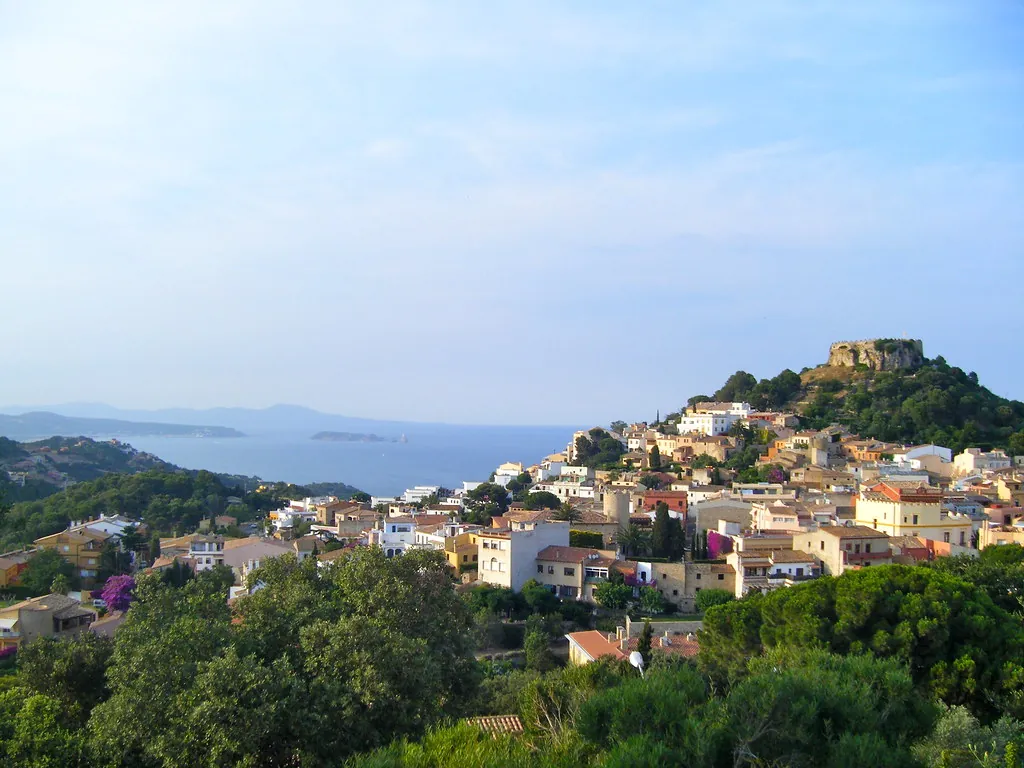
Begur - Plaça de la Vila - Catalunya.jpg
Cataluña · Sea, Mountains & Culture

Begur

The bakery queue spills onto Carrer de la Llibertat at eight sharp. By half past, the village women have swapped yesterday's gossip, the baker has ...

4,291 inhabitants · INE 2025
200m Altitude
Coast Mediterráneo

Why Visit

Coast & beaches Begur Castle Ronda Paths Route

Best Time to Visit

summer

Fira d'Indians (September) septiembre

Things to See & Do
in Begur

Heritage

  • Begur Castle
  • defense towers
  • colonial-style houses

Activities

  • Ronda Paths Route
  • Snorkeling at Aiguablava

Festivals
& & Traditions

Fecha septiembre

Fira d'Indians (septiembre), Fiesta de Sant Pere (junio)

Las fiestas locales son el momento perfecto para vivir la autenticidad de Begur.

Full Article
about Begur

Jewel of the Costa Brava with crystal-clear coves; noted for its defense towers and colonial-era mansions

Ocultar artículo Leer artículo completo

The bakery queue spills onto Carrer de la Llibertat at eight sharp. By half past, the village women have swapped yesterday's gossip, the baker has run out of coques (Catalan flatbread flecked with sugar and almonds), and the first British-reg car is still circling for a space. Begur doesn't do early starts for tourists—it's too busy being itself.

From any approach, the town appears to have been poured over a 200-metre granite hill and left to set. The castle keep—what's left of it—sticks up like a broken tooth, visible for miles. Climb the last fifty metres of cobble and you'll understand why pirates kept getting thumped here: the 360-degree view takes in eight separate coves, a lattice of stone terraces and, on clear days, the Pyrenees scraping the horizon. The ruins themselves are little more than waist-high walls and a Catalan flag whipping in the wind, but the platform makes a natural grandstand for sunset, when the stone houses below glow peach and terracotta.

Those houses are the first clue that Begur's story detours through the Caribbean. In the late 1800s a third of the male population bolted for Cuba, returning a decade or two later with enough pesos to build turreted mansions in flamingo pink, pistachio and canary yellow. Walk the Ruta d'Indians (a free map from the tourist office, if you can catch it open) and you'll spot the tell-tale details: wrought-iron balconies wide enough for a rocking chair, palm trunks thicker than any Scots pine, and ceramic tiles shouting Cuba in looping script. Casa Bonaventura Caner, halfway down Carrer del Càrcer, still has its original 1895 elevator—an open cage of brass and mahogany that would look more at home in old Havana than provincial Catalonia.

Between Two Blues

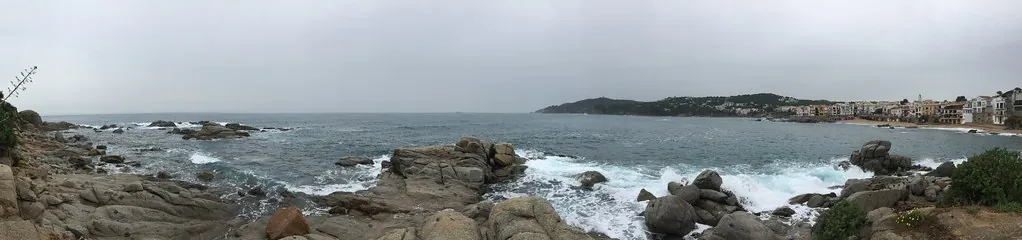
Drop any of the lanes heading east and within five minutes the air tastes of salt. Begur's coastline is a shattered mosaic of coves, each angled differently to the Mediterranean. Sa Riera, the easiest to reach, gives you 400 metres of actual sand—enough to lay out a towel without touching your neighbour's Factor 30. The others are smaller, rockier, and demand either a stiff walk or nerves of steel on the access road. Sa Tuna squeezes a dozen fisherman's huts, one restaurant terrace and a pebble beach into a cleft so narrow that car doors almost scrape the rock. Aiguablava, poster-child of the Costa Brava, is heart-stoppingly turquoise at 9 a.m. and resembles a sardine tin by 1 p.m. when the coach tours arrive. The trick is to treat the beaches like tide times: arrive early, leave early, or be prepared to park a kilometre back and hike in trainers, not flip-flops.

The old coastal path, Camí de Ronda, stitches the coves together. A thirty-minute stretch from Aiguablava to Fornells gives you pine shade, limestone sculpted into natural diving boards, and the chance to peer into weekend villas whose infinity pools seem to pour straight into the sea. Signposting is sporadic—look for red-and-white flashes painted on rocks—and the route occasionally scrambles uphill just when you thought you'd finished climbing. Proper footwear saves ankles; a litre of water saves tempers.

What to Do When You're Not Climbing or Swimming

Begur's weekly market is Friday, not Saturday as in most of the UK, and occupies the upper half of Plaça de la Vila. Stallholders sell formatge de cabra still tacky with ash, and knobbly tomatoes that actually taste of summer. Arrive after eleven and you'll queue behind Barcelona weekenders buying entire legs of jamón; arrive before ten and you can eavesdrop on farmers arguing over whose chickpeas are softer.

If the hilltop wind is whipping up a tramuntana (the local north wind that drives people slightly mad), head indoors to the tiny Museu de Begur tucked inside the old school. One room traces the Cuban exodus with sepia photos and a 1905 peseta note signed by the mayor; another displays coral-handled pistols that the town's merchant sailors once traded in Algiers. Entry is free, donation box guarded by a one-eyed cat who expects to be stroked first.

Rainy-day families sometimes drive the fifteen minutes to Pals, a medieval inland sister that looks like a film set but knows it. Begur's charm is that it hasn't realised anyone is looking.

Eating Without the Sea View Surcharge

Lunch on the seafront is pricey and, once the sunbathers pack in, oddly frantic. Better to retreat uphill for dinner when the day-trippers have fled. Can Torrades occupies a former Indiano mansion whose ground-floor patio is shaded by a 120-year-old mango tree. The menu majors in suquet de peix, a gentle Catalan fish stew that won't frighten palates used to Devon chowder. A bowl for two costs €26 and arrives with a side of allioli thick enough to stand a spoon in. Locals order the three-course menú del dia (€16 weekdays, €19 weekends) even when the restaurant is rammed—follow their lead and you'll dodge the markup on à-la-carte prawns.

Vegetarians usually get directed to Merci, a bijou spot opposite the church that does Asian-inspired tapas: think yakitori aubergine and padron peppers dusted with miso. British teenagers have been known to eat there without complaining, possibly because the soundtrack is 90s Britpop rather than flamenco.

If you must eat on the sand, Sa Tuna's chiringuito will grill sardines while you wait, five euros for six fish, lemon wedge compulsory. They stop taking orders when the coals die, normally around 5 p.m.—no arguing, no exceptions.

Getting Stuck, or Not

Begur is 45 minutes from Girona airport, an hour and a half from Barcelona if the AP-7 behaves. Car hire unlocks the coves before breakfast; without it, rely on the summer-only Bus Platges that shuttles every thirty minutes from the top of the hill to four beaches. Download the Begur al dia app before you leave Wi-Fi—bus times update in real time and the beach-crowding traffic light is depressingly accurate. Parking at Aiguablava fills by ten; after that, the police wave you towards a park-and-ride field in Palafrugell and a twenty-minute walk downhill. Bring coins for the attendant—card machines are still considered witchcraft.

Autumn brings grape-harvest weekends and hotel rates that drop faster than the temperature. Winter is quiet, occasionally stormy, and the best season for having the castle view to yourself. Only the Hotel Aigua Blava stays open year-round; the rest shutter in October, reopen for Easter. If you fancy the famous Fira d'Indians (Cuban-themed street party with rum cocktails and salsa bands), book early for the first weekend in September—rooms triple in price and the bakery queue now stretches round the corner by seven.

Worth the Hassle?

Begur demands a bit of legwork: hills, hikes, hunt-the-parking-space. What it gives back is the rare sense of a place that figured out how to live with visitors rather than for them. The bakery still runs out of bread because locals eat it, not because TripAdvisor told you to queue. The Cuban mansions remain family homes, their paint peeling exactly where it would if nobody had ever Instagrammed them. And when the castle lights switch off at eleven, the only sound is the tramuntana rattling the palms—a reminder that some hills still remember who they were before the rest of us arrived.

Key Facts

Region
Cataluña
District
Baix Empordà
Coast
Yes
Mountain
No
Season
summer

Planning Your Visit?

Discover more villages in the Baix Empordà.

View full region →

More villages in Baix Empordà

Traveler Reviews