Full Article
about Bellcaire d'Empordà
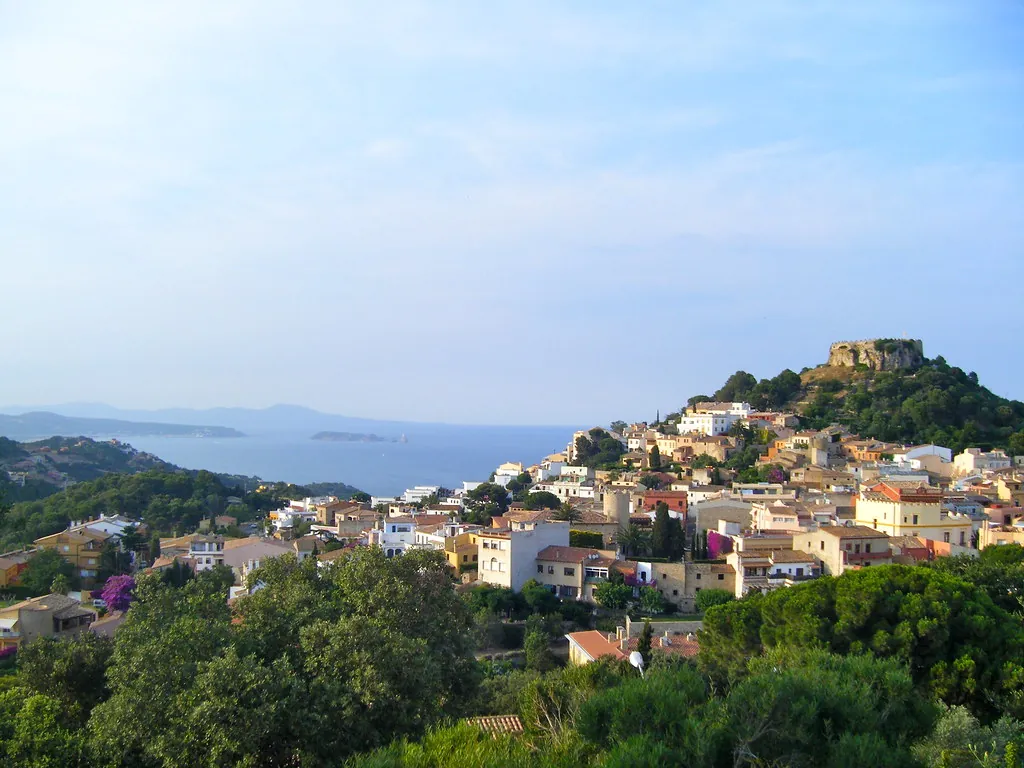
Village dominated by the castle of the Counts of Empúries, surrounded by farmland.
Hide article Read full article
At sunset, when the cereal fields begin to turn golden and the air finally cools a little, the quiet in Bellcaire d'Empordà becomes unmistakable. At that hour, the soft scrape of wind through the reeds along the field edges carries across the landscape, along with the occasional car moving slowly along a local road. This village sits at around 35 metres above sea level, on the inland plain of the Baix Empordà, set back from the busier coastal areas. Life here still follows an agricultural rhythm: tractors coming and going, farm buildings in use, and the steady pace of a small place where most things happen on foot.
The centre of the village is organised around the church of Sant Feliu, a building constructed and altered over several centuries. From the outside it looks restrained, built in pale stone, but inside the different phases of its history become visible in the arches and interior details. Around it, short streets cluster together, lined with houses that have thick walls and small windows, designed to keep out the summer heat and the tramuntana wind in winter. Walking out towards the edges of the village, masías, traditional rural farmhouses, begin to appear among open fields. Some have been restored, while others retain a more rugged, weathered look typical of the Empordà countryside.
Across the flatlands of the Baix Empordà
The landscape around Bellcaire d'Empordà is broad and horizontal. Agricultural tracks lead out of the village in several directions, threading through plots of cereal, sunflowers or forage crops depending on the time of year. These routes are straightforward for walking or cycling because there is barely any change in elevation. On days when the tramuntana blows, however, the experience shifts. This strong northern wind is a defining feature of the region, and cycling into it can quickly become demanding.
Light plays a big role in how the landscape feels. Early in the morning, the fields are often covered in moisture, and the air carries the smell of fresh earth. By midday, everything becomes drier and paler under the sun. As evening approaches, a warm golden tone settles over the stubble left after harvest, changing the character of the fields once again.
Routes linking neighbouring villages
From Bellcaire, it is easy to follow paths that connect with other villages across the Empordà plain. These are quiet routes, running alongside irrigation channels, low stone boundaries and open farmland. In spring, the green of the fields becomes especially intense, and poppies appear along the edges of the tracks. By late summer, the landscape shifts completely: ochre tones dominate, fine dust settles on the paths, and the distant sound of harvesting machines becomes part of the background.
Anyone heading out on foot or by bike between villages should carry water, as there are long stretches without shade.
Close to the sea and the Montgrí
Although Bellcaire lies inland, the coast is not far away. In under half an hour by car, several points along the Costa Brava can be reached, offering a clear contrast to the inland plain. In the other direction, the Montgrí massif rises from the flat terrain, breaking the horizontal line of the landscape with ridges of pale rock. From some of the surrounding roads, on clear days, the silhouette of the castle at the top can be seen standing out against the sky.
Girona is also within reasonable reach for a short trip. Outside the peak season, moving around its centre tends to be calmer, making it a manageable addition to time spent in the area.
When to come to Bellcaire d'Empordà
Summer brings more activity to the village, particularly during the festa major, the annual local festival. At that time, the central streets fill with residents and people who return to the village for the occasion. Concerts, communal meals and simple events take place in the square, giving the village a different rhythm for a few days.
For those interested in the changing agricultural landscape, spring and early autumn tend to be the most rewarding periods. In August, the heat becomes intense, and by midday the streets are almost empty. Shutters are closed, and the constant hum of cicadas fills the trees. Daily life shifts towards the cooler parts of the day, early morning and late evening, when movement returns to the streets and the surrounding fields.