Full Article
about Castell-Platja d'Aro
Top-tier tourist destination; combines luxury shopping
Hide article Read full article
Castell-Platja d'Aro: The Costa Brava's Split Personality
After 25 years here, I’ve seen the Costa Brava get polished up for the world. But Castell-Platja d'Aro is that friend who can’t decide if they want a quiet hike or a big night out—and somehow manages both. It’s less about having your cake and eating it, and more about finding the slice that suits you before the crowds eat it all.
I came here years ago braced for concrete. What I found was a clifftop path in the morning and bass from a beach club by night. That split is still the deal, but now you need to pick your moment.
The Three Faces of One Town
The name is a clue: this isn't one place, it's three stapled together. You’ve got Platja d'Aro, the two-kilometre beach strip where the party lives. Then there's S'Agaró, just south, which feels like someone dropped a fancy garden city onto the cliffs for people with nicer cars. A few kilometres inland, Castell d'Aro is the old village that started it all, where life still moves at market-day pace.
That medieval core isn't just for photos. People live here. You'll see them hauling groceries up stone staircases that haven't changed much. It’s a ten-minute drive from the seafront neon, but it feels like a different century.
Skip the Strip, Find the Path
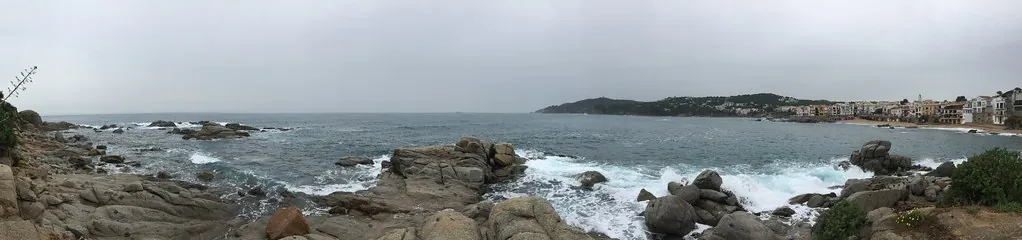
If you do one thing, make it the Camí de Ronda coastal walk from S'Agaró. This is the real Costa Brava—the "wild coast" bit they put on postcards. It’s an old fisherman's and smuggler's trail cut into the cliffside. You'll round a bend and find a cala (cove) with just three people in it, even in July if you go early. Wear proper shoes; this isn't a sandal-friendly promenade.
The famous rock arch, Cavall Bernat, is on this path. Yes, everyone takes a picture, but they do it because it’s actually worth it, especially as the sun drops behind it.
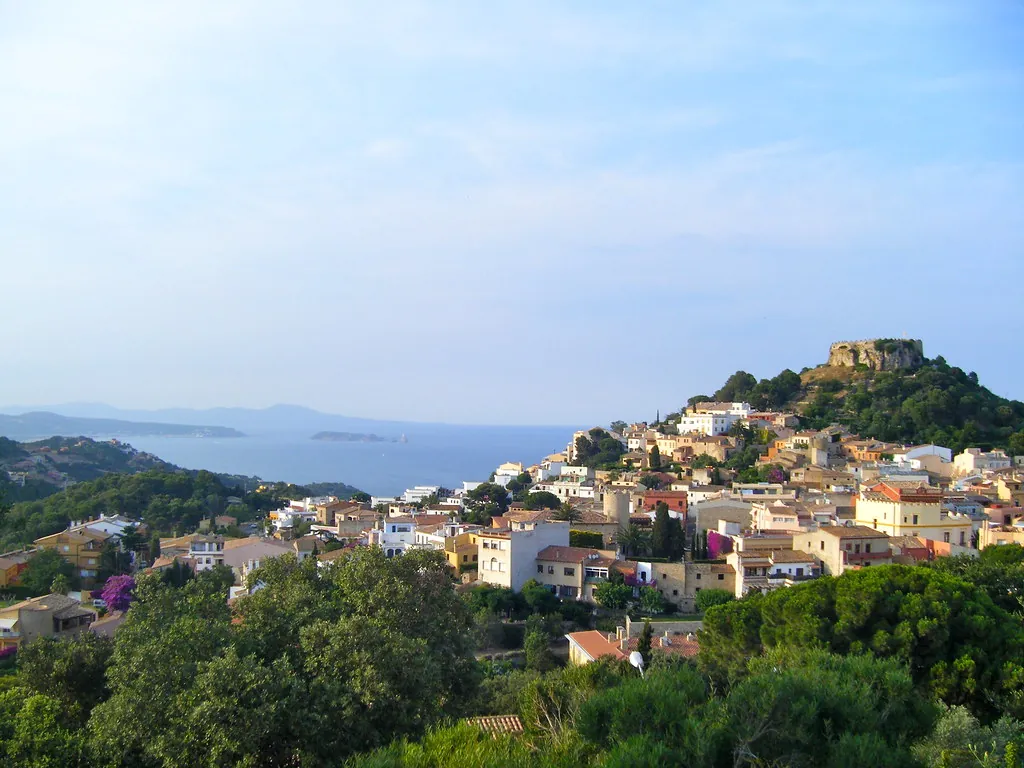
For a quieter afternoon, head inland to Castell d'Aro village. Walk up past the church for a view back over the whole messy, beautiful sprawl towards the sea. There’s usually a breeze up there, which you'll appreciate after the beachfront humidity.
Eating Late, Staying Later
Food here follows two rules: seafood and Spanish time. The local specialty is suquet de peix, a garlicky fish and potato stew. The best versions aren't in fancy seafront restaurants; look for the simpler xiringuitos (beach bars) on the sand or back towards the working part of the port.
A tip: if you see a place full of Catalan families around 9pm, that’s your spot. They’re not there for the decor.
As for nightlife, Platja d'Aro has a reputation for a reason. The main drag really gets going after midnight and keeps going. If your idea of hell is thumping Euro-pop until 4am, book somewhere to stay in S'Agaró or inland near Castell d'Aro village. You'll sleep better.
Getting Around & When to Come
You'll want a car. The bus from Girona or Barcelona gets you to the centre, but good luck reaching those hidden coves or hilltop villages without one. Parking in August is its own special sport—competitive and expensive. The big municipal lots charge holiday prices. Locals often park in S'Agaró's residential streets and walk down.
Come in June or September. The weather's still good, the water's warm, and you can actually move. July is full but workable. August? Only if you enjoy queues, paying top euro for everything, and sharing every square metre of sand.
Skip generic seafront hotels. Look for an apartment rental inland or in S'Agaró. You get more space, a kitchen to make lunch, and crucially, distance from the noise when you want to call it a night.
Is it for everyone? No. It's unapologetically brash in season. But if you use Castell d'Aro village as your quiet base, explore the coves by morning, and dip into the chaos on your own terms, you see why people keep coming back. Just remember: dinner at 10, bars at 1. Pace yourself