Full Article
about Colomers
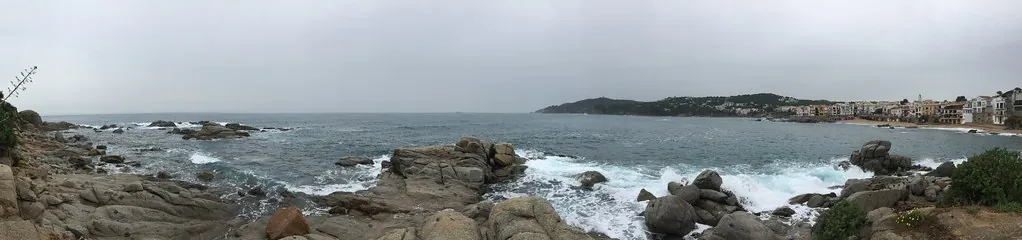
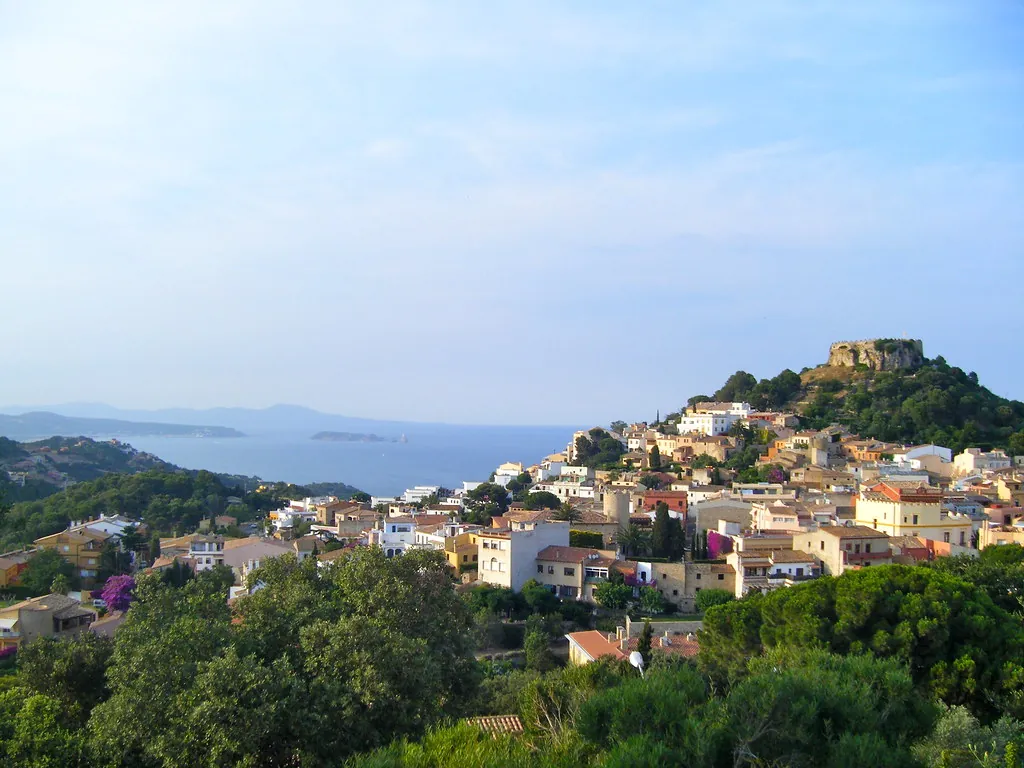
Quiet village on the Ter River; known for its dam and natural setting for kayaking.
Ocultar artículo Leer artículo completo
The morning chorus in Colomers begins with a tractor. Not the romantic putter of a vintage model, but the proper diesel growl of a modern Massey Ferguson heading out to the fields before the sun clears the pine-topped ridge. By 7:30 a.m. the engine note has faded down a track between wheat stubble and olive groves, leaving space for sparrows, distant voices at the bar, and the soft click of a village door unlatched for the milk delivery. At 41 m above sea level, this is the Empordà minus the sea breeze, the selfie sticks, and the 12-euro gin-and-tonics that dominate the coast twenty minutes away.
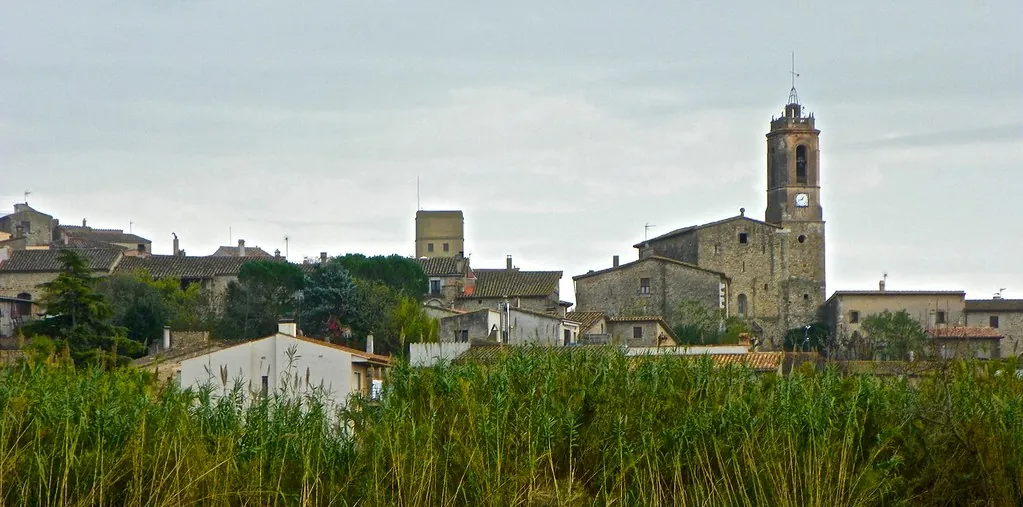
Colomers does not announce itself. There is no medieval gateway, no castle keep to climb, no gift shop selling fridge magnets shaped like dolphins. The single road in passes a cement works, a row of 1970s semi-detached houses painted the colour of paella rice, and a sign warning drivers that children play here. Then the tarmac narrows, the speed limit drops to 20 km/h, and visitors realise they have arrived—unless they blink and roll straight through to neighbouring Sant Jordi Desvalls.
The Arithmetic of Small-Scale Living
Roughly 200 residents share 6.8 km² of arable land, two bakeries (one inside the village, one mobile van that toots its horn on Tuesdays), and a bar that doubles as the post office, lottery counter, and gossip exchange. The ratio of tractors to permanent inhabitants stands at about 1:5, a statistic the local council prints on the back of its festival programme because, frankly, there is not much else to brag about architecturally. The parish church of Sant Feliu fits its congregation comfortably on a single nave the length of a London bus. The bell rings the hour, then again seven minutes later if the sacristan forgets to pull the rope in time—an endearing irregularity that no one seems inclined to fix.
What the village lacks in monuments it returns in decibels of silence. Stand on the plaça at midday in late September and you can hear a walnut drop from the tree beside the war memorial. The stillness is not the curated quiet of a heritage site, but the natural pause between meal-times when even the dogs know not to bark. British visitors raised on the piped music of National Trust cafés often find the hush unsettling for the first hour, then addictive for the rest of the stay.
Walking Without Wallet-Strain
Colomers sits on a slab of flat clay that once formed the bed of an ancient lagoon. The terrain is forgiving for anyone whose usual hike involves a Sunday circuit of Hampstead Heath. A four-kilometre loop heads south along the green lane to the ruins of a Roman bridge, turns west through carob orchards, and drifts back past allotments where grandfathers grow lettuce the size of side plates. The path is signposted in Catalan, but way-marking is tastefully discreet; getting slightly lost is part of the deal, though the skyline of the Gavarres hills always provides a bearing.
Those who prefer pedals to boots can borrow a bicycle from Can Massanet, the village B&B, for €12 a day. The same flat tracks that favour walkers also suit cyclists who do not fancy emulating the thigh-sculpting gradients of the Tour de France. A gentle fifteen-minute spin north reaches La Pera, whose 16th-century stone cross is worth exactly the time it takes to drink a cortado in the bar opposite—about twelve minutes if the espresso machine is already hot.
Eating, or Not
There is no restaurant in Colomers. Locals regard this as a point of honour rather than omission. Lunch options therefore revolve around what you bring, what your host cooks, or a five-minute drive to nearby Sant Jordi where Can Xic serves three-course menús del día for €14, water and wine included. The house speciality is cargols a la llauna—snails roasted with garlic and rock salt—whose flavour lies somewhere between mushrooms and mildly irony chicken. Vegetarians usually opt for the escalivada, a smoky tangle of aubergine and red pepper that tastes of wood-fired Sundays.
Shopping for self-catering is similarly limited. The village mini-market opens 9 a.m.–1 p.m., stocks tinned tuna, UHT milk, and surprisingly good local olives, then closes with the certainty of a pub that has never heard of all-day opening. Thursday sees a travelling fish van park beside the playground: hake from Palamós, sardines still silver, and gambas that cost €8 a kilo less than on the coast because no one has added the word “artisanal” to the sign. Bring cash; the vendor’s card reader succumbs to rural Wi-Fi about once a month.
When Silence Gets Seasonal
Spring brings storks. A pair nests on the school roof, clacking their beaks like castanets during lessons on fractions. Almond blossom powders the fields white, then disappears in a weekend of tramontana wind that rattles every shutter in harmony. Summer turns the place into a slow-motion barbeque: locals work dawn fields, sleep through the 3 p.m. furnace, and re-emerge at nine for cards on the plaça. British families often arrive expecting fiestas every night; instead they find one proper party, the Festa Major around 15 August, featuring a foam cannon, a mobile disco playing 1990s Eurodance, and enough Estrella to make the teenagers think dancing on tables is culturally appropriate. It lasts four hours, finishes at 1 a.m. sharp—village by-law—and the square is swept clean before the baker lights his oven.
Autumn smells of figs split open on hot stone and the first wood-smoke from chimneys. This is the sweetest window: mornings warm enough for coffee outside, evenings cool enough to justify a jumper. Winter, by contrast, is honest to the point of bluntness. The tramontana returns, sometimes clocking 100 km/h and stealing roof tiles like a bored magician. Clouds skid across low sky, and the population drops closer to 150 as second-home owners scuttle back to Barcelona. Roads stay open—gritting happens promptly because the mayor’s cousin runs the only plough—but countryside strolls require a windproof more substantial than a Barbour bought in Kingston.
Getting Here, Getting Away
Girona Airport, served by Ryanair from Stansted, Luton, and Manchester, lies 40 minutes east on the C-66. Car hire is almost compulsory; buses run to Flaçà, seven kilometres distant, roughly twice a day when the driver feels like it. Taxis from Flaçà station cost €20 if you ring the one licensed firm; €35 after 10 p.m. when the night tariff kicks in with the certainty of continental logic. Sat-nav sometimes directs motorists down a farm track masquerading as a road; trust the tarmac more than Google.
Accommodation inside the village amounts to three options: the aforementioned Can Massanet with four rooms and a pool that measures exactly four by eight metres; a pair of tourist apartments carved out of the old olive press; and a cottage rented by the week that sleeps six and has a fig tree dropping fruit onto the terrace whether you want it or not. Prices hover around €90 a night for two, breakfast included where applicable—roughly half the rate of coastal chic, with the added bonus that the only traffic noise is the baker’s Berlingo at dawn.
The Measure of It
Colomers will not change your life. You will leave without having ticked a UNESCO site, uploaded an influencer-worthy sunset, or bought a souvenir more glamorous than a jar of honey labelled in Comic Sans. What you might take home instead is a memory of how Europe sounded before cheap flights and Spotify: a tractor at dawn, bells from a nave the size of a tennis court, and the crack of a walnutshell echoing off stone walls under a sky big enough to make you count your breath.