Full Article
about Jafre
Quiet hilltop village near the Ter; known for its "miraculous" spring.
Ocultar artículo Leer artículo completo
The church bell strikes noon and nothing happens. No tour buses lurch into the stone archway, no souvenir shutters roll up, no restaurant terraces spill onto the single lane that threads through Jafre. At 44 m above sea-level, the Baix Empordà village simply lets the Mediterranean light settle on its terracotta roofs while a tractor grumbles somewhere beyond the last house. For visitors who have spent the morning jostling for towel space on L’Estartit’s beach, 17 km away, the silence feels almost theatrical.
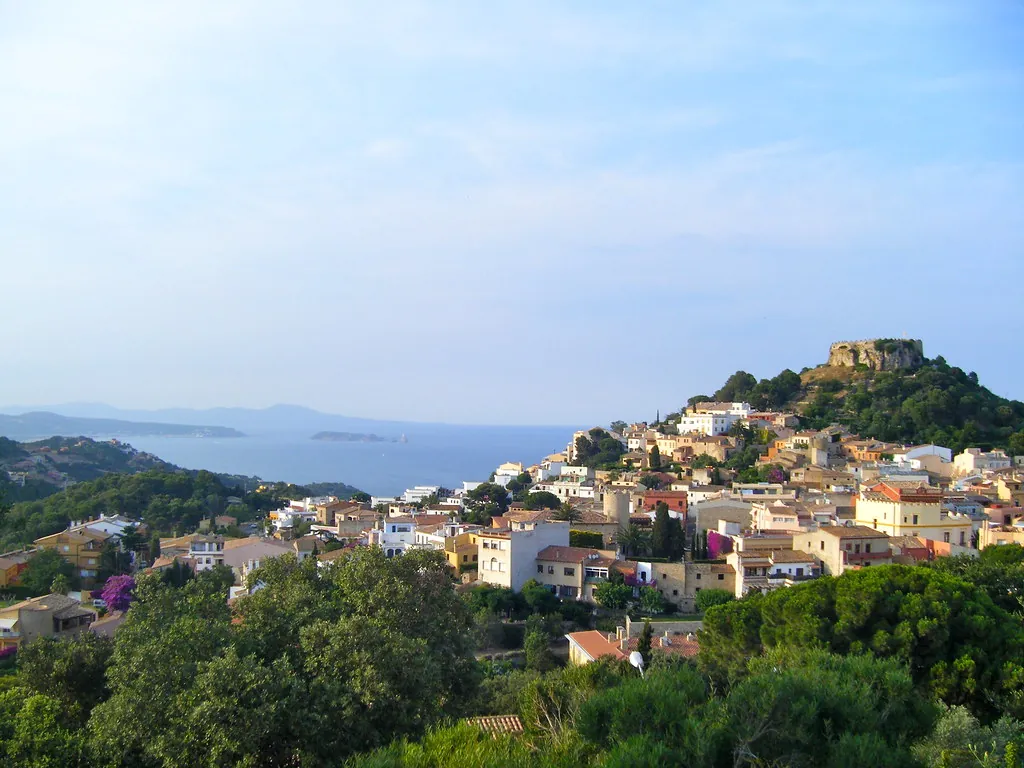
Jafre’s population is officially 388, though you’d be hard-pressed to assemble more than a dozen locals at the same bar table. Size is misleading: the settlement occupies a low ridge between the Ter river flood-plain and the pine-clad hills that buffer the coast, so it feels larger than the numbers suggest. Walk five minutes north and maize fields fan out like a green chessboard; five minutes south and the horizon lifts to the Montgrí massif, a fortress-shaped limestone outcrop that sailors once used as a landfall beacon. That geography—coast close enough to taste the salt, interior far enough to escape the caravan convoys—explains why Jafre is increasingly used as a sleeper base rather than a day-trip checkbox.
Stone, Clay and the Smell of Wet Earth
There is no ornamental village gate, no medieval wall to photograph. Instead, the place reveals itself in increments: a stone doorway carved 1897, a wooden balcony propped on iron brackets, a recess that once held a shrine to St Isidore, patron of ploughmen. The houses are built from the same ochre sandstone that farmers pulled from neighbouring fields, so walls and earth appear to bleed into one another after rain. Look down and you’ll notice drainage channels cut straight into the bedrock—an 18th-century hack against flash floods that still works.
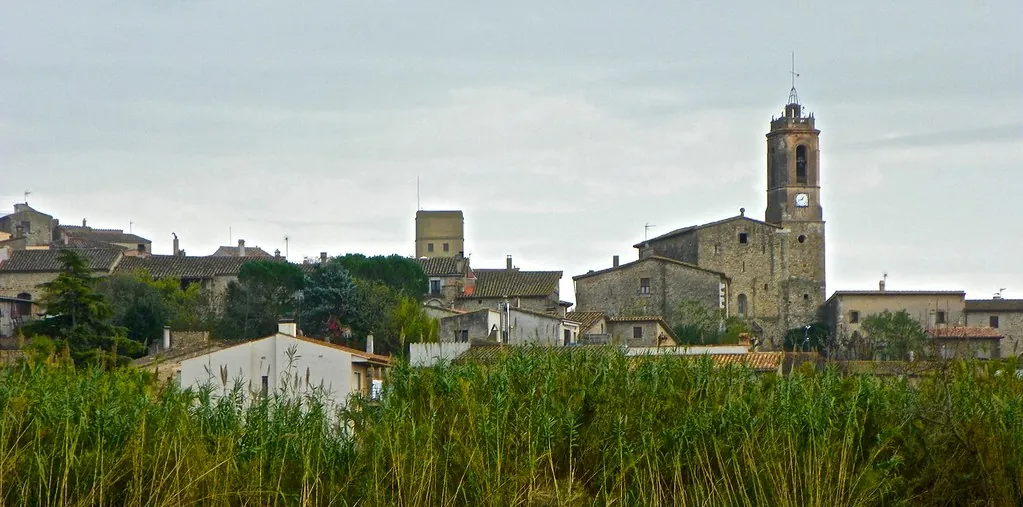
The parish church of Sant Julià squats at the top of a brief incline, its bell-tower more defensive than elegant. The door is usually unlocked; inside, the air carries a faint trace of burnt beeswax and the previous Sunday’s lilies. No baroque excess here—just a single nave, wooden pews polished by centuries of Sunday backsides, and a 16th-century polychrome altarpiece that art historians politely describe as “provincial”. Stay for ten minutes and you’ll probably witness the only other visitor: a woman in house slippers replacing wilted flowers with fresh ones from her garden.
Outside, the streets narrow to shoulder width. Residents park hatchbacks in former haylofts and grow geraniums in halved olive oil tins. Washing lines zig-zag overhead, creating shifting shadows that make even midsummer heat feel manageable. If you’re expecting curated Instagram corners, you’ll leave disappointed; if you keep your eyes open, you’ll spot hand-painted ceramic numbers that pre-date Franco’s road-naming decrees and a coal chute still blackened from the 1950s.
Flat Trails, Fat Tyres and Rice that Tastes of Smoke
Jafre’s appeal is what it hasn’t got—traffic, queues, admission fees—rather than marquee sights. The standard activity is to walk or pedal the farm tracks that stitch together an eight-kilometre loop through Ullà, Fontanilles and Gualta. The terrain is almost dead flat, so a hybrid bike suffices; hire one in Torroella de Montgrí for €18 a day and you can be circulating within 20 minutes. Olive groves give way to apple orchards, then to the rice paddies of Pals, whose watery surface reflects the sky like broken mirrors. October brings the harvest: farmers in waders burn rice stubble at dusk, and the air smells of popcorn and woodsmoke.
Hikers after something longer can follow the GR-92 footpath as it skirts the Montgrí range, dipping into holm-oak forest before descending to the beaches of L’Estartit. The round trip is 24 km; carry water because cafés thin out after Gualta. Spring migrants—bee-eaters, hoopoes, the occasional short-toed eagle—use the thermals above the ridge, so binoculars repay the extra weight.
Back in the village, gastronomy is farmhouse-simple rather than chef-driven. The lone bar, Ca l’Andreu, opens at seven for strong coffee and gossip; by one o’clock the terrace fills with men in work boots demolishing three-course menús that cost €14 and arrive on mismatched crockery. Expect grilled pork ear, white beans with botifarra sausage, and mel i mató—a fresh cheese drizzled with local honey that tastes faintly of rosemary. Wine comes in 500 ml carafes from Empordà cooperatives; the garnacha tinta is chilled just enough to cope with 30-degree heat. Arrive after 3 pm and the kitchen is closed until eight—this is not the coast where kitchens tick over for northern European stomach clocks.
Market Day Proxies and the Illusion of Seclusion
Jafre itself has no weekly market; instead, residents drive 8 km to Torroella on Monday mornings for fruit, socks and scandal. The upside is that Wednesdays and Fridays feel genuinely sleepy, whereas coastal villages merely pretend to. If you need cash, bring it with you—the village ATM spends more time out of order than in, and the nearest functioning machine is in Ullà, a 25-minute walk across a road with no pavement. Mobile coverage is patchy inside stone houses; stand in the church square, wave your phone vaguely skywards and hope for four bars.
Accommodation is limited to three rural houses (casas rurales) and a pair of Airbnb flats carved out of former barns. Prices hover around €90 per night for a two-bedroom place with roof terrace and a barbecue that the owner insists is “only for vegetables” because of fire risk. Book early for April-May and mid-September to October; summer weekends are quieter than you’d expect because domestic tourists still head straight to the sea. Winter lets drop to €55, but be aware that night-time temperatures can dip to 3 °C and most properties have single-glazing and tile floors that hoard cold like a grudge.
When the Fiesta Meets the Tractor Beam
Every late July the village stages its festa major in honour of Sant Julià. The programme is pinned to the church door and follows an unvarying formula: Saturday evening sardana dancing in the square, Sunday morning procession with a brass band that learned its repertoire during the Franco era, and Monday correfoc—devils with fireworks—performed by the same teenagers who harvest your rice in October. Visitors are welcome to join; if you’re tall and fair, expect to be dragooned into carrying one end of the saint’s platform, an honour rewarded with lukewarm cava drunk from a plastic cup. The event draws perhaps 200 outsiders, a crowd that would be pitiful on the coast but here feels almost unmanageable. Park on the approach road or risk being boxed in by a tractor.
Autumn brings the neighbouring village of Gualta’s Fira de l’Arròs, a rice fair where local chefs hand out spoonfuls of paella de verdures made with Pals grain so freshly milled it still feels warm. Entry is free if you arrive before eleven; after that the organisers request a €2 donation towards next year’s brass band. Combine it with a late-morning bike ride from Jafre and you can justify the calories before you’ve even consumed them.
Honest Exit
Staying in Jafe works only if you accept the trade-off: you swap beach bars and night markets for silence, starlight and a bar that shuts when the owner’s granddaughter arrives from school. Come seeking rustic authenticity and you’ll find it—along with Wi-Fi that falters whenever the wind shifts and a bakery that’s closed every other Tuesday. The village doesn’t try to seduce; it simply continues, 44 m above the plain, while the Mediterranean glints beyond the pines. If that sounds like enough, leave the coast at the second roundabout after Torroella, follow the rice-paddy road until the asphalt narrows, and keep driving until the bell tower appears. Park, stand still, listen. Nothing happens. That’s the point.