Full Article
about Mont-ras
Municipality between Palafrugell and Palamós; includes the coves of Crit and Font Morisca
Ocultar artículo Leer artículo completo
The bakery runs out of croissants by ten. That's the first thing visitors learn in Mont-ras, a reminder that this isn't a resort but a working village where breakfast happens early and the day's rhythm belongs to farmers, not holidaymakers. Yet within twenty minutes you can be floating in the Mediterranean. This dual personality—rural backbone, coastal convenience—explains why a growing number of British families base themselves here rather than in the prettier-known beach towns four kilometres away.
A Village that Prefers Tractors to Tourists
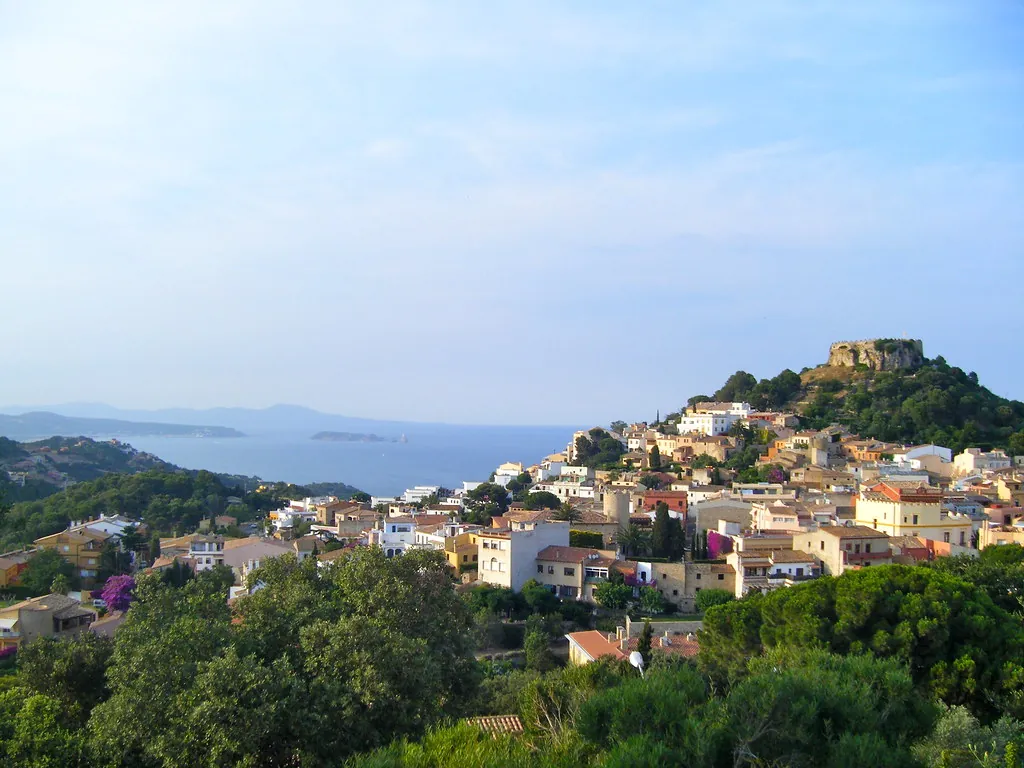
Mont-ras sits 88 metres above sea level on a low ridge between the Gavarres hills and the sea. Stone houses cluster around the parish church of Sant Pere, their walls the colour of local earth, their balconies bright with geraniums. There is no sea view; instead you look out over a patchwork of vegetable plots, almond orchards and the odd cork oak. The population hovers around 1,670, though numbers swell in August when Catalan grandparents arrive to swap city flats for village houses and teenage grandchildren take over the plaça on scooters.
The centre is small enough to cross in five minutes, yet it holds everything required for a self-catering week: an excellent bakery, a frutería that still weighs tomatoes on brass scales, a modern Spar with a surprisingly thorough wine aisle, and a fishmonger who drives over from Palamós each morning. Prices are lower than on the coast—expect to pay €2.20 for a loaf of proper crusty bread and €12 for a kilo of just-caught sardines.
Architecture is modest: no grand palaces, just solid stone farmhouses and narrow lanes built for mules, not cars. Hire cars frequently meet their first Spanish scrape here; park at the top of the village in Plaça Major and walk down. The reward is an authentic soundtrack—church bells, swifts overhead, the occasional tractor—rather than the thump of beach bars.
Forest Tracks and Coastal Coves
From the village edge a web of pistas forestales (dirt tracks) fans out into the Gavarres Natural Park. These cork-oak forests are a mountain-bike playground: routes are way-marked but not sanitised, so you’ll share the path with the odd wild boar and locals gathering mushrooms after rain. A gentle 12 km loop westwards climbs to the ruined Iberian settlement of Castell de Mont-ras (380 m) before dropping back through holm-oak shade; allow two hours at touring pace.
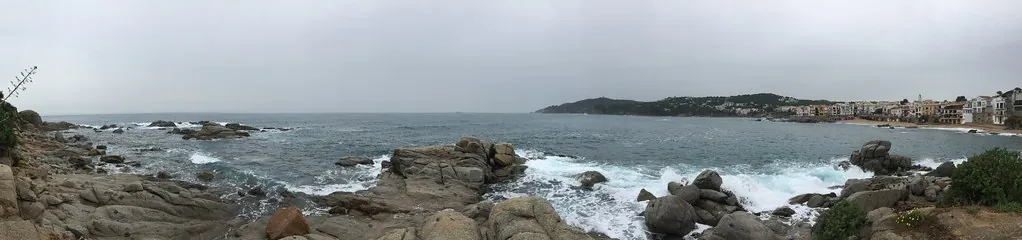
If salt water calls, head east. The nearest coves, Cala Roca Bona and Cala Margarida, lie 5½ km away and remain largely free of high-rise development because they’re ringed by protected pines. Arrive before 11 am in July and you’ll share the pebble beach with a handful of Spanish families and the odd snorkeller counting sea bream. After midday the car park fills with day-trippers from Girona; by 4 pm it’s empty again as siesta calls.
For sand rather than shingle, continue to Llafranc. Its yacht-filled horseshoe bay feels more Côte d’Azur than Costa Brava, yet the promenade retains 1950s restraint—no karaoke bars, just a row of cafés where waiters in white aprons serve gin-tonics the size of goldfish bowls. The walk from Llafranc up to the 19th-century lighthouse at Sant Sebastià (add 40 minutes each way) gives a sailor’s view of the coastline and is shaded enough for pushchairs.
Eating: From Farm to Fork without the Fanfare
Mont-ras itself offers exactly one restaurant, Can Cervera on Plaça Major. That sounds limiting until you realise the menu changes daily depending on what the chef finds in the market. Grilled calçots (fat spring onions) appear between January and March; the ritual involves wearing a bib while dipping the charred alliums into romesco sauce—messy, delicious, and worth planning a winter trip around. Outside calçot season expect rabbit stewed with prunes, or a simple plate of butifarra sausage and white beans. A three-course lunch with wine costs about €18.
When variety beckons, Palafrugell—five minutes by car—supplies everything from Michelin-listed seafood to takeaway pizza. British visitors usually make straight for the beach restaurants in nearby Calella, where fideuà (short pasta cooked like paella) delivers the flavour of the sea without the bones. Pair it with a chilled bottle of local rosat; Empordà wines are light, inexpensive and mercifully free of the oak overload that afflicts much Spanish white.
Self-caterers should time a Wednesday morning around Palafrugell’s market: rows of stalls sell just-picked peaches, jars of honey the colour of burnt caramel, and goats’ cheese wrapped in chestnut leaves. Back in Mont-ras, the bakery’s coca—flatbread topped with roast aubergine and red pepper—works as an instant picnic. Buy early; by late morning only rock-hard baguettes remain.
Festivals, Flies and Other Practicalities
Sant Pere, the village patron, is celebrated on 29 June with a communal paella cooked in a pan the size of a satellite dish and a sardana dance in the square that even the teenagers join. The bigger Festa Major lands in late August, when a travelling funfair sets up next to the football pitch and locals compete at greased-pole climbing. Visitors are welcome but there are no bilingual announcements; half the fun is working out what’s happening from context.
Mont-ras lacks the micro-climate hype of coastal brochures. Summer evenings are warm rather than sticky—temperatures drop to 19 °C after midnight—so air-conditioning is optional. Mosquitoes, however, are not. Irrigated fields surround the village; bring repellent from May to October or spend your nights executing aerial acrobatics.
Winter is quiet but not closed. January daytime highs reach 13 °C, ideal for cycling, though mountain tracks turn to mud after rain. Many restaurants shut between November and Carnival; check opening hours before you arrive and pack a sense of self-sufficiency.
Access is straightforward: Girona airport is 45 minutes by car, Barcelona 90. Trains reach Flaçà, 20 km away; buses continue to Palafrugell, but the final hop to Mont-ras requires a taxi (€12) or a pre-booked bike rental with delivery. Without wheels you’re stranded, so hire a car or bring pedals.
The Catch—and Why it Might Suit You Anyway
Mont-ras will not dazzle with postcard perfection. There is no sea view, no mediaeval castle on a crag, no boutique hotel with infinity pool. Even in high season you may find yourself the only non-Catalan in the bakery queue, which is either liberating or isolating depending on your Spanish phrasebook. Evening entertainment consists of a beer on the square and the sound of someone practising accordion two streets away.
Yet that is precisely the point. The village offers an affordable base where children can roam safely, where dinner ingredients come from the field you cycled past that morning, and where the Costa Brava’s celebrated coves are a short downhill freewheel away. You swap beachfront noise for morning birdsong, and gain an authentic slice of Catalan life that many coastal resorts lost decades ago.
Come if you want the Med without the mayhem, if you’re happy to share space with tractors, and if the idea of cycling to buy still-warm bread feels like holiday heaven rather than hardship. Pack repellent, learn how to say “bon dia”, and set your body clock to croissant o’clock. The sea will still be there when you’re ready.