Full Article
about Pals
One of the most beautiful and visited Gothic villages; also known for its rice fields.
Hide article Read full article
First impressions on a hill
Early road trips do not always go to plan. Arriving in Pals at midday can mean parking wherever there is space, often far from the centre, because the village sits tightly packed on a hill. Plans for a quick bite might fall through if the place marked on the map is closed. Heat, hunger and second thoughts about leaving Barcelona can all show up at once.
Then things settle. A simple coca de recapte, a typical Catalan flatbread topped with roasted vegetables, eaten on a small terrace overlooking the town hall square, changes the mood. Pals begins to make sense at that pace.
Climbing into the old town
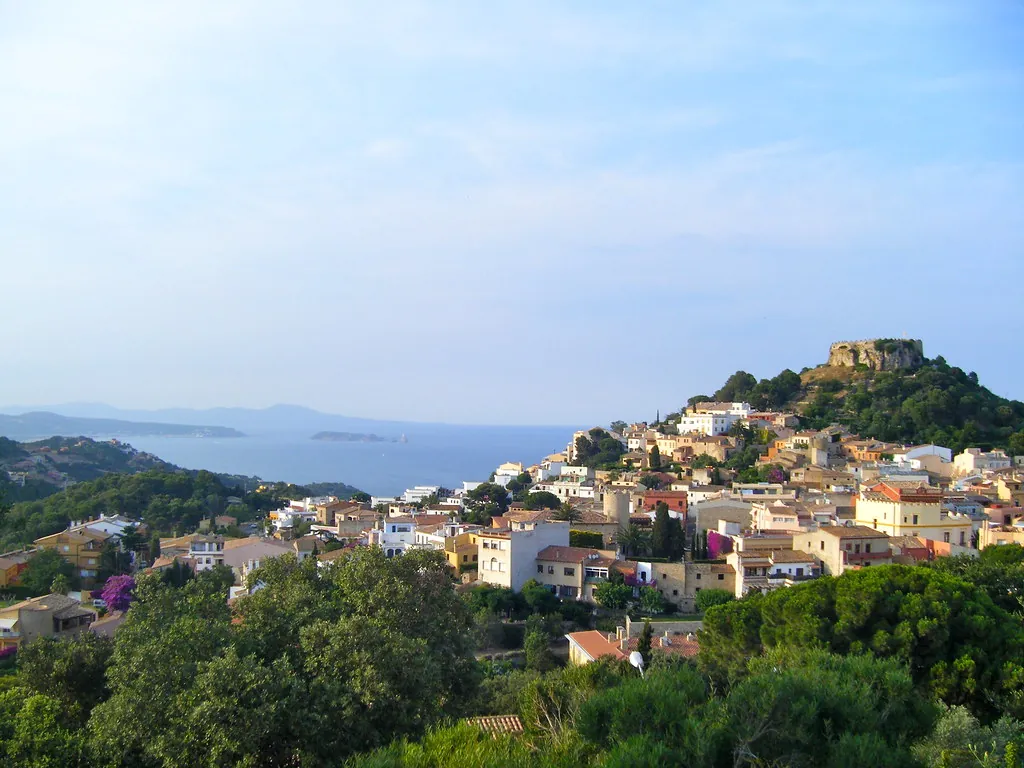
The old quarter of Pals feels like a medieval film set until it becomes clear that people actually live there. The streets climb steadily, the sort of uphill stretch that slows the pace. At the top, stone houses cluster together, older than anything that measures time in phone battery life.
Turn a corner and the Torre de les Hores appears without warning, as if placed there for a photograph. It usually gets one.
The historic centre is compact. An unhurried walk covers it in about an hour, though it rarely goes that quickly. There is always something that interrupts the route: an archway, a fragment of wall, a staircase dropping into a tiny square, a viewpoint that opens suddenly over the Empordà. On clear days the fields stretch out across the plain, with the line of the sea in the distance.
That shifting view explains a line often associated with the writer Josep Pla. Pals is not for a single visit, but for several. The reason is simple. It does not overwhelm with monuments, yet each walk reveals something that went unnoticed before.
Rice fields at the edge of the village
Rice is part of everyday conversation in Pals. This is not a souvenir idea of local food. Real rice fields surround the village.
The rice grown here is often of the bomba variety, a grain that absorbs liquid well and stays separate. Kitchens in the area prepare it in many ways: brothy, black, with seafood or with meat. The usual question at the table is not whether to order rice, but which type to choose.
Those fields sit only a few kilometres from the medieval centre, in the direction of the coast. Head down towards the plain and they appear quickly. In season, plots fill with water. Irrigation channels cut through the land, and tractors move slowly along the paths.
Easy routes cross this landscape. They are mostly flat walks, the kind that pass almost unnoticed during a conversation. They also help explain the name of the village. Many link Pals to the Latin word palus, used for marshy ground. The view across the fields makes that idea feel plausible.
When the rhythm changes
Pals is small, so any increase in visitors becomes obvious.
Spring tends to work well. The weather is mild and the busiest summer period has not yet arrived. Around that time, a fair dedicated to rice usually brings extra activity to the streets.
Summer changes the atmosphere. The old town becomes lively, and Platja de Pals, a beach a few kilometres away, draws plenty of people. The village celebrates its own festivals during these months, like many places in the Empordà. Music fills the streets, activities spread through the squares, and evenings stretch out with a noticeable social buzz.
Events appear at other points in the year too. Concerts or small cultural gatherings take place in corners of the historic centre. Sometimes the experience is as simple as sitting on a step with a drink and watching a square slowly fill up.
Winter is much quieter. Around Christmas, a living nativity scene is often organised with local residents taking part, a tradition common in this part of Catalonia.
Walking it off
After a meal centred on rice, a walk usually feels like the right next step.
The old town itself invites wandering without a fixed plan. A short route circles part of the wall and links several viewpoints over the Empordà plain. Each one frames the same landscape slightly differently.
Longer walks are easy to find nearby. Paths lead up to local massifs such as the Quermany. They are not high mountains, yet they offer enough elevation to take in the patchwork below, fields, villages and the distant sea.
The GR‑92 also passes through this area. This long-distance footpath follows much of the Mediterranean coast. Nearby stages connect Pals with neighbouring towns, mixing inland stretches with coastal sections.
A place that grows on you
Pals is not the kind of place that produces an instant, dramatic reaction on arrival.
It works more gradually. The old town is compact and easy to navigate. Views over the rice fields shift with the light. The beach sits close enough to fold into the same day. Everything feels within reach.
A simple plan fits well here. Arrive in the morning, walk through the old town at an unhurried pace, head up to the viewpoints, then make your way down towards the plain. The rest tends to fall into place.