Full Article
about Parlavà
Town on a small hill; fortified church and farmland around.
Hide article Read full article
An Evening Light Over Stone
Late in the afternoon, as the sun drops towards the fields of the Baix Empordà, the stone of the church of Sant Esteve takes on a warm, almost golden tone. At that hour, Parlavà is nearly silent. A door closes somewhere, a car moves slowly along the main street, and if the day has been damp, the smell of wet earth lingers between the houses.
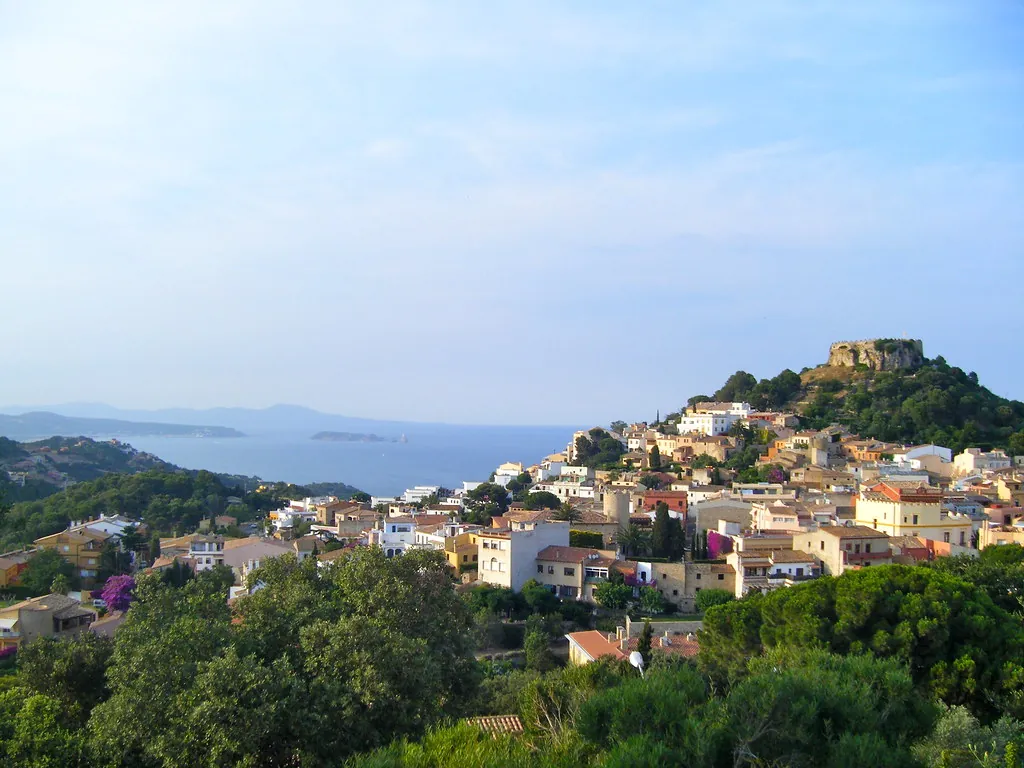
The village sits just a few kilometres from the Costa Brava, yet the atmosphere feels different. The pace here belongs to the inland landscape. Narrow streets, slightly worn stone walls, and small courtyards where plant pots, tools or bicycles still lean against the walls. It is not a place that tries to attract attention. Life continues at its own rhythm while the busier, more tourist-focused parts of the Empordà carry on a short distance away.
Stone Streets and an Agricultural Past
A walk through the old centre of Parlavà reveals small signs of its agricultural past, which remains very much present. Wooden doors studded with old nails, the occasional vegetable patch behind a low wall, and the distant sound of a tractor returning from the fields as evening approaches.
The houses largely preserve the traditional construction of the area. Stone walls, relatively small windows, and red tiled roofs define the look of the village. There are no grand squares or clearly marked routes to follow. Instead, the experience is about wandering without a fixed plan, noticing how the light shifts across the façades or watching cats stretch out on steps when the sun warms the stone.
Early morning is especially quiet. Before the day properly begins, it is often possible to hear little more than distant bells or the wind moving through the trees at the edges of the village. It is a stillness that feels part of daily life rather than something staged.
Paths Through the Baix Empordà Countryside
Around Parlavà, the landscape opens up into flat, cultivated land. Fields stretch out alongside small areas of pine woodland, connected by rural tracks that link nearby villages. Many local residents use these paths for walking or cycling, as they are generally easy to follow.
Some of these routes are still actively used for agricultural work. At certain times of year, it is common to encounter tractors or other machinery. The simplest approach is to step aside calmly and allow them to pass.
The surroundings change noticeably with the seasons. In summer, fields near the Baix Ter can appear green or even flooded due to the rice cultivation of Pals. In winter, the landscape becomes more earthy and open, with a clear light arriving from the north that gives the area a different character altogether.
Nearby Villages Worth Exploring
Parlavà is often visited alongside other small towns in the Baix Empordà, all within a short drive.
One of the most notable is Ullastret, where remains of an ancient Iberian settlement are preserved. These are considered among the most important in Catalonia. The site sits on a low hill, and from the top there are wide views across the Empordà plain.
Close by are also villages such as Pals, Peratallada and Monells, known for their stone-built medieval centres. These places tend to attract far more visitors, especially at weekends and during the summer months. Those who prefer a quieter experience often choose to go early in the day or later in the afternoon, when the pace softens slightly.
Each of these locations offers a different perspective on the region, but returning to Parlavà brings back that quieter, more residential feel.
The Sea Within Reach
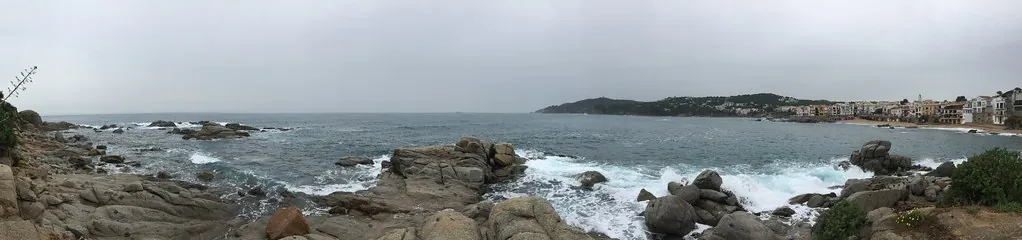
Although Parlavà lies inland, the coast is not far away. A short drive leads to the beaches of the Baix Empordà coastline, where sandy stretches alternate with more rugged, rocky coves.
During the summer, traffic can require some patience. Mid-morning and late afternoon are the busiest times, as cars move in and out of the coastal towns. To avoid the heaviest flow, it helps to head out early or wait until the last hours of the day, when the sun begins to drop and the atmosphere becomes more relaxed.
The proximity of the sea adds another dimension to a stay in Parlavà, even if the village itself remains firmly rooted in its inland character.
Local Life and Festive Moments
Throughout the year, Parlavà marks celebrations linked to the Catalan festive calendar. The festa major, the main annual festival, usually takes place in summer. During these days, the village hosts a series of popular events, including music, traditional dances and shared meals that bring together residents and families who return for the occasion.
Outside these festive periods, the atmosphere is much quieter. Parlavà functions mainly as a place to live and as a base for exploring the surrounding comarca, or region.
Arriving without hurry makes all the difference. This is a small village of stone, surrounded by fields, where the most engaging moments can be very simple. Sitting for a while in silence, watching the light shift across the rooftops as evening approaches, often says more than any itinerary.