Full Article
about Sant Feliu de Guíxols
Coastal town with a major monastery and festival; family and cultural tourism
Hide article Read full article
First Impressions by the Water
Anyone planning a visit to Sant Feliu de Guíxols should think about the car before anything else. In high season, parking near the port fills up early. Arrive later in the day and you may find yourself circling for a space. Many people end up leaving the car further out and walking down towards the seafront. In summer, that is simply how it works here.
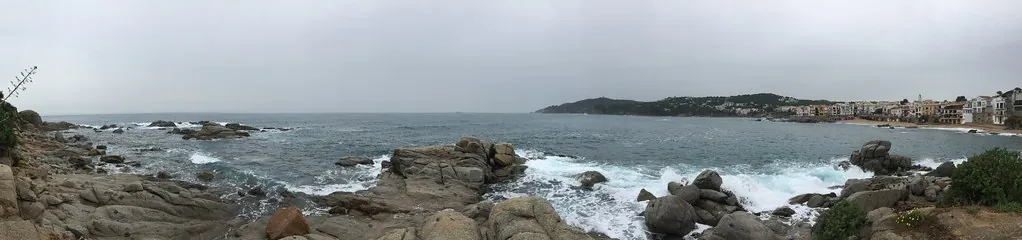
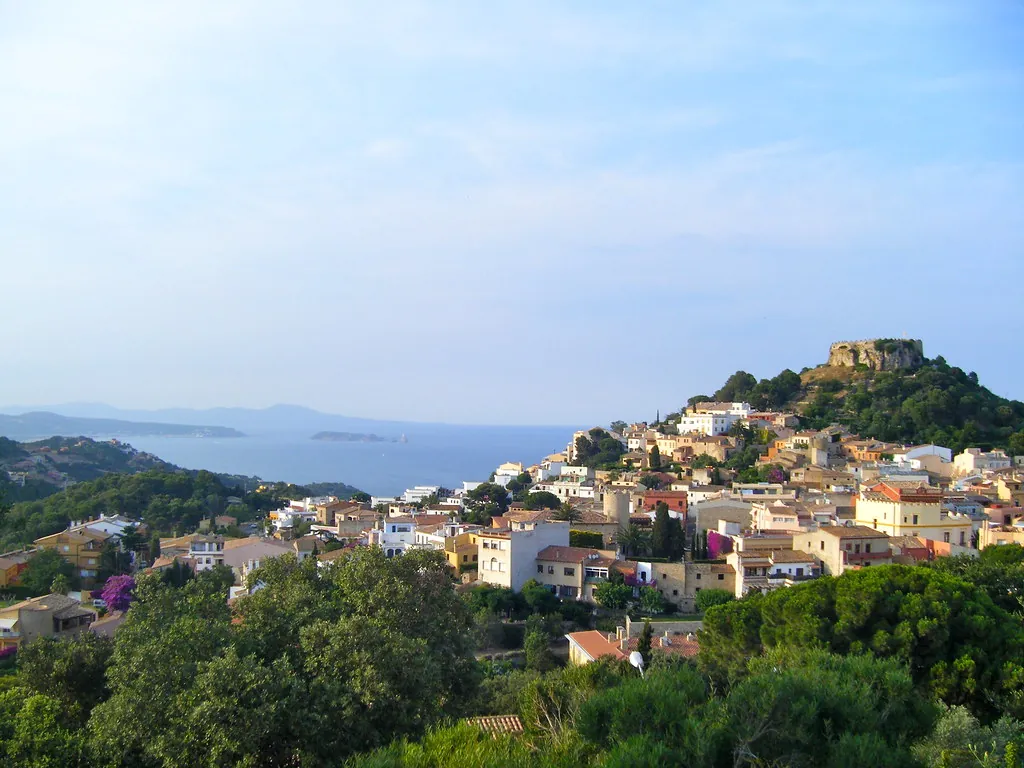
Sant Feliu sits on the Costa Brava in Catalonia and has grown from a fishing port into a town that now relies heavily on tourism. At times it runs smoothly. At others it feels stretched by the number of visitors. There is little theatrical polish. What you see is what you get: sea, apartment blocks, a working town centre, and a steady flow of people who come for the day or for the season.
Monastery Stones and Measured Expectations
The Monestir de Sant Feliu de Guíxols is the place that makes the most sense to start. Its Porta Ferrada is one of the few Romanesque elements that has survived without too much alteration. You go in, take a look, spend a short while with the stone arches and then step back out. It does not demand hours, but it does anchor the town historically.
Next door stands the modernista casino building, well preserved and easy on the eye. If you have seen similar architecture in other cities, it may not feel especially distinctive, but it adds character to the seafront area.
The Ermita de Sant Elm sits above the town. The view over the coastline is good, open and wide, yet the walk up is long and in summer the sun is strong. It is worth weighing up whether the climb suits the day’s temperature.
The Museu Thyssen occupies a modern building by the sea. For those who enjoy painting, there are interesting works inside. Expectations should be kept in check, but it can be a worthwhile stop if art is part of the plan.
Then there is La Pedralta, the much talked about balanced rock in the area. It is exactly that: a very large stone resting on another. Curious, certainly, though still just a rock. Whether it justifies the detour depends on your appetite for geological quirks.
Beach Life and the Camí de Ronda
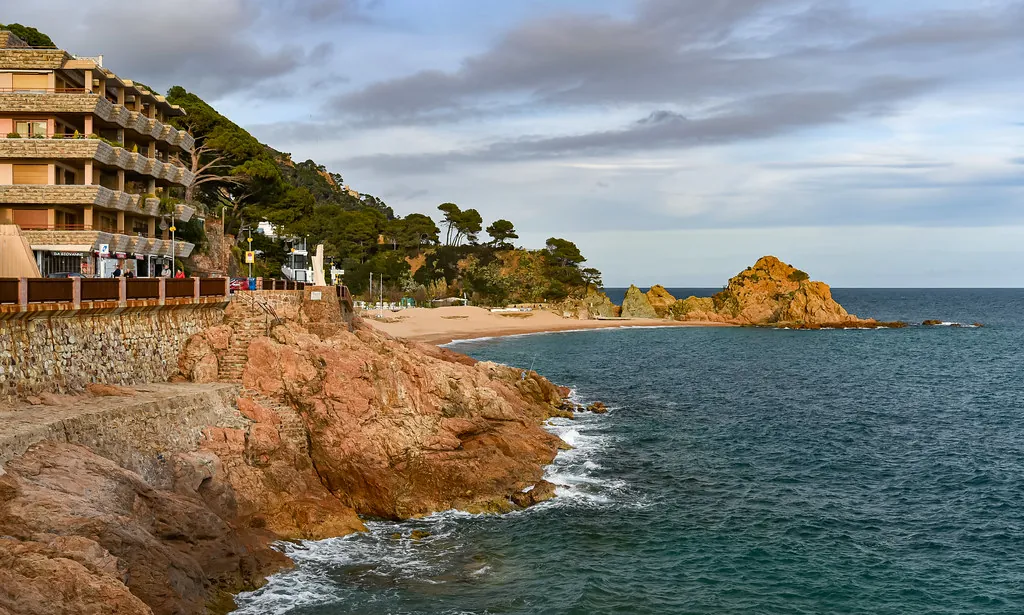
The main beach in Sant Feliu is large, with coarse sand that has a habit of working its way into flip-flops and sticking to towels. The water is usually clean. In August, the issue is not quality but quantity, as the number of people rises sharply.
For those who prefer walking to lying on the sand, the Camí de Ronda towards Sant Pol offers a more pleasant stretch. These historic coastal paths link different parts of the Costa Brava and here they trace the shoreline with open views of the sea. In a little over an hour on foot you can reach Sant Pol. The small coves along the way often feel more spacious than the central beach, particularly in the busiest weeks.
Eating by the Port, Carefully
Food in Sant Feliu revolves around what comes from the sea. Oily fish is especially common: anchovies, sardines and mackerel appear regularly on menus. Suquet de peix, a traditional Catalan fish stew, is also seen when kitchens are working with fish from the local fish market, which usually arrives in the morning.
Choosing where to eat requires a little judgement. Places with menus translated into many languages and photographs displayed outside tend to follow a familiar pattern along the Costa Brava. It is often a clear sign of a certain type of offer, and not always the most interesting one.
Practical Thoughts from Repeat Visits
June and September tend to work better than the height of summer. In July and August the town fills up and moving around the centre can be harder than it first appears. The streets near the seafront grow busier, and the rhythm changes.
When the Porta Ferrada festival takes place, there is more atmosphere in the evenings. The festival shares its name with the Romanesque structure at the monastery and brings extra activity after dark. It also means more traffic and higher accommodation prices.
Just a few minutes away lies S’Agaró. The atmosphere there shifts noticeably. Urban developments and second homes dominate the landscape. Sant Feliu feels more mixed: long-time residents, summer visitors and people who come only for the day all share the same promenade.
That mix shapes the experience. At certain hours the town feels balanced and easy. At others it tips towards overcrowded. This is direct Costa Brava, without much decorative framing. For travellers who enjoy the sea and do not expect absolute silence, Sant Feliu de Guíxols fits the bill.