Full Article
about Abrera
Industrial municipality in Bajo Llobregat with a quiet old quarter near the river.
Hide article Read full article
A Town Shaped by the Llobregat
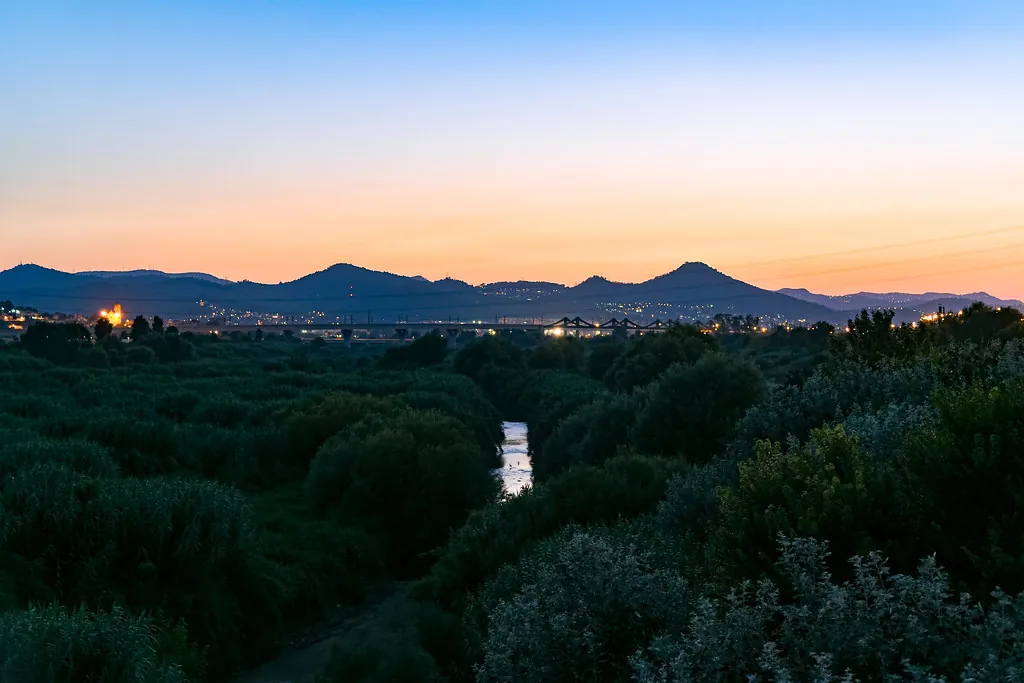
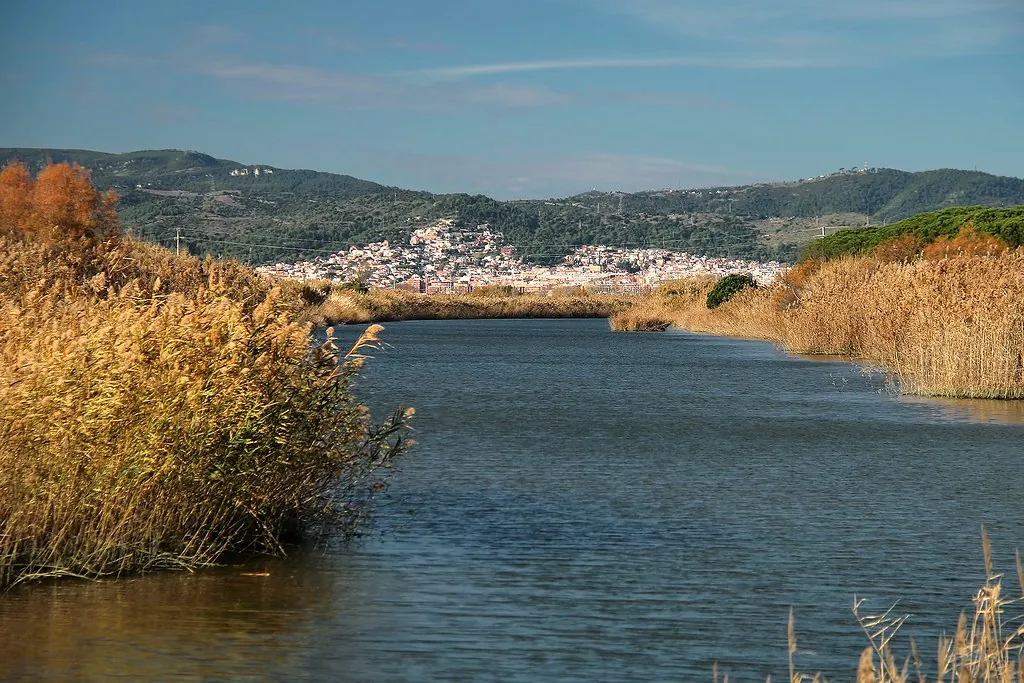
The train that runs up the Llobregat valley reveals the river just before reaching Abrera. From the window, the town appears set against the hillside, with an industrial plain on one side and the mountains on the other. The geography of the Llobregat explains much of what Abrera is today. Here the valley widens enough to allow crops, factories and major roads, yet remains close enough to the range for the old quarter to sit above it all.
Abrera has grown between these two realities. It has long been a natural passage between the Baix Llobregat and inland Catalonia, while also being a scattered agricultural territory for centuries. What now feels attached to the wider Barcelona metropolitan area began as a small settlement oriented more towards the valley than towards the city.
The Llobregat itself divides the municipality into two clearly distinct landscapes. The lower ground was once farmland and later became home to industrial spaces that arrived with 19th century mechanisation. On the slope above, the historic centre remained safer from flooding and offered a better vantage point over the valley.
In the upper part of the municipal area, remains of the Roman villa of Sant Hilari were discovered. This agricultural settlement confirms what seems obvious: these lands were already being cultivated in Roman times, thanks to the river water and the fertile plain.
The origin of the name Abrera is not entirely clear. Some studies link it to older terms connected to land or agricultural activity. There is no firm agreement, but the idea fits with what this place represented for centuries: a working landscape tied to the valley.
Medieval Watchpoints and the Old Village
Abrera appears in written records in the 10th century, in documents related to the monastery of Sant Cugat. The monastery accumulated properties across much of what is now the Baix Llobregat. At the time, Abrera was not a large settlement but rather a collection of lands and farmhouses under different jurisdictions.
Above the valley stood the castle of Voltrera, now in ruins, located in the range that separates the Baix Llobregat from the Vallès. From this position it controlled the natural passage between these counties. Although the castle today belongs to the municipality of Castellví de Rosanes, its presence helps explain the strategic importance of this entire corridor.
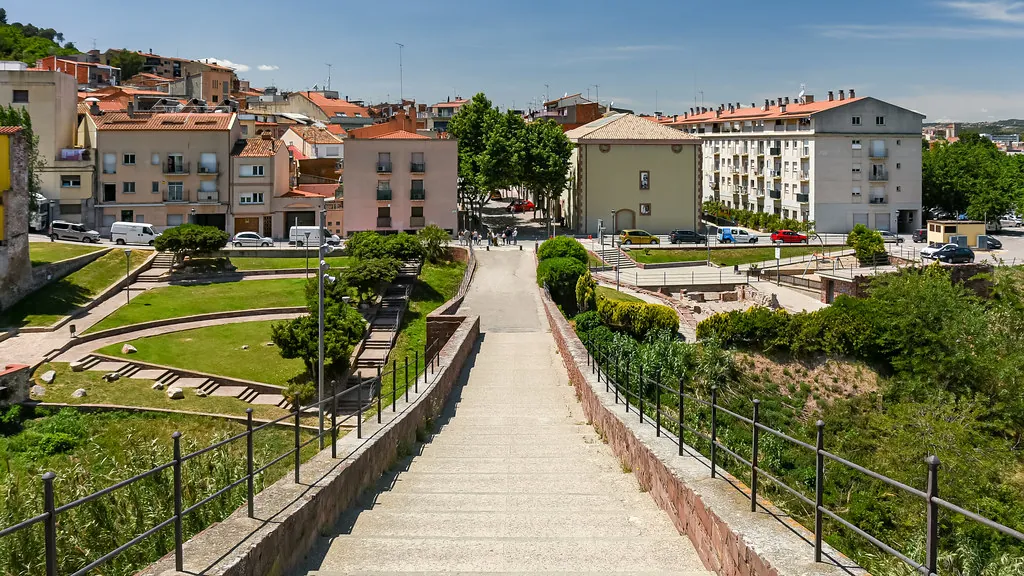
Within Abrera’s old quarter, the church of Sant Pere occupies the highest point. The current building is largely the result of 18th century renovations carried out over earlier structures. It is less its size that stands out and more the solidity of its walls and its commanding position over the valley. From the surroundings of the church, it becomes easy to understand how the old village was organised: houses grouped around the parish and fields stretching down towards the river.
The historic centre still retains a clearly village scale. Even as the municipality has expanded, this upper area preserves the sense of a small community shaped by agriculture and parish life.
From Fields to Factories
Well into the 19th century, the local economy remained agricultural. The turning point came with the industrialisation of the Llobregat valley, when factories began to take advantage of the river’s water power and the proximity to Barcelona.
These new facilities were built on the plain. With them came workers, quickly constructed housing and an urban expansion that gradually shifted the town’s centre of gravity downwards, closer to the main roads and railway lines. The lower part of Abrera became increasingly linked to the wider industrial landscape of the valley.
In the final third of the 20th century, the crisis in the textile sector forced many municipalities along the Llobregat to rethink their economic base. Abrera ultimately became integrated into the metropolitan dynamic. Many residents now live here while working in other nearby towns or in Barcelona itself.
Even so, the older nucleus has not been absorbed entirely by this growth. A short walk uphill is enough to leave behind the busier lower areas and return to narrow streets clustered around Sant Pere. The contrast between plain and hillside remains visible and continues to define the town’s character.
Everyday Cooking in the Baix Llobregat
Abrera does not have highly distinctive local dishes of its own. The food here is essentially what is prepared in many homes across the Baix Llobregat comarca, a Catalan county within the province of Barcelona.
In winter, escudella is a common sight on the table. This hearty stew, typically made with meat, vegetables and pulses, is a staple of colder months across Catalonia. When calçot season begins, usually in late winter, calçots take centre stage. These long, sweet spring onions are grilled over an open flame and eaten dipped in sauce, often at social gatherings known as calçotadas.
In Abrera, popular calçotadas are sometimes organised in municipal spaces or by local associations. They do not function as tourist attractions so much as neighbourhood gatherings. If a visit happens to coincide with one, it is generally enough to sign up or buy a ticket on site.
Alongside these seasonal traditions, everyday fare includes embutidos, cured sausages typical of Catalonia, pa amb tomàquet, bread rubbed with tomato and drizzled with olive oil, and various spoon dishes suited to family meals.
Getting There and Walking Around
Abrera is connected to Barcelona by the Llobregat‑Anoia line of Ferrocarrils de la Generalitat, the Catalan regional railway network. Trains depart from Plaça d’Espanya and run along the valley. The station in Abrera is a short distance from the centre.
By car, the municipality lies between the A‑2 and the C‑55, two of the main routes structuring the Llobregat corridor.
The essential walk around town is brief. From the station, it is possible to head uphill towards the old quarter and the church of Sant Pere, explore the streets around the square, and then make your way back down towards the more recent parts of town. In less than an hour, the overall scale of the place becomes clear.
For those inclined to walk a little further, several paths follow the streams and slopes surrounding the municipality. These are simple trails, used by local residents for a stroll or light exercise. They offer another perspective on the setting that has always defined Abrera: a town balanced between river plain and hillside, between agriculture and industry, between village and metropolitan edge.