Full Article
about Begues
Municipality set in the heart of the Garraf massif, surrounded by nature and quiet.
Hide article Read full article
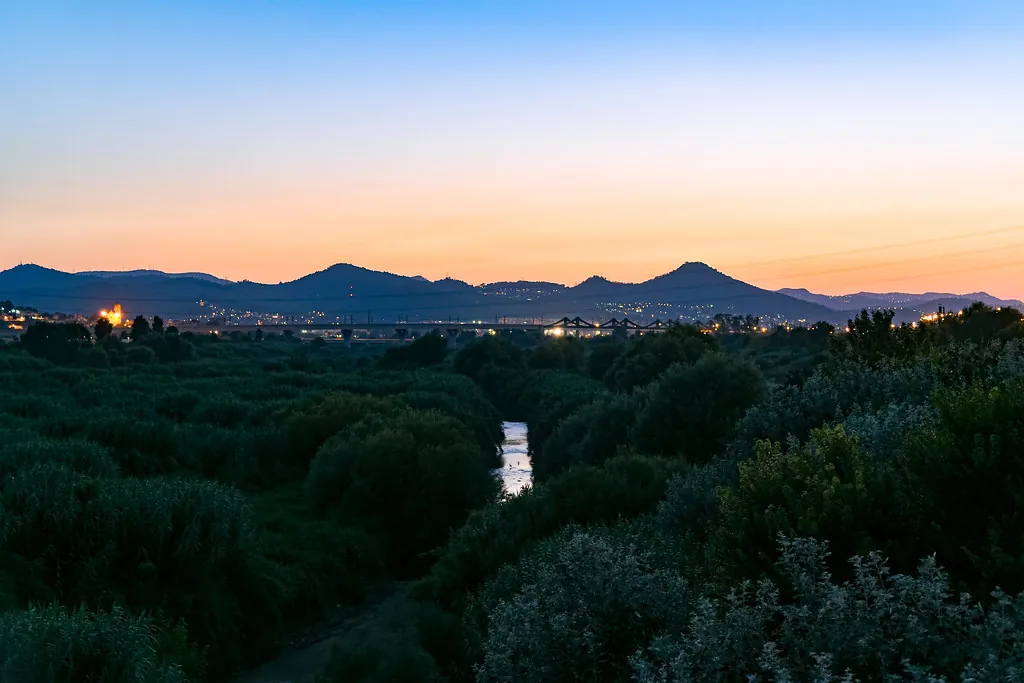
At eight in the morning, mist clings to the slopes of Montau like a damp wool blanket. From the path that climbs towards the ermita de Bruguers, the smell of grills drifts over from a nearby masía, wood smoke mixed with scorched onion, wet earth, rosemary. At moments like this, tourism in Begues feels almost unlikely. It is hard to believe that such quiet exists less than half an hour by car from Barcelona.
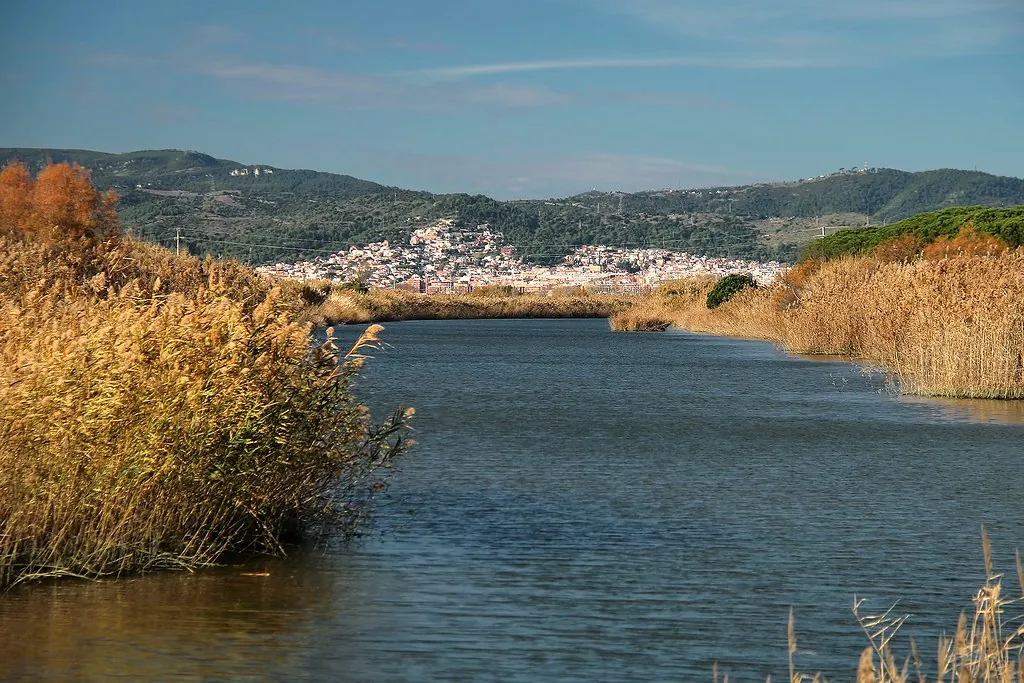
Begues is not a place to glance at and move on from. It asks to be walked, climbed, breathed in. With around fifty square kilometres, it is the largest municipality in the Baix Llobregat region, yet distance here is measured less in kilometres and more in how long the light lingers on the hillsides. The Garraf mountain range surrounds everything: pale rock, scattered pines, and tracks that sometimes narrow until they become little more than a faint line through low scrub.
A Cave and One of Europe’s Oldest Known Beers
Halfway between the village and the ruins of the castle of Eramprunyà lies the Cova de Can Sadurní. Archaeological remains found here have been linked to one of the oldest documented beers in Europe. In ceramic vessels, traces of fermented barley were discovered, thousands of years old. It is not something immediately visible on entering. The cave is, above all, damp stone and silence. Still, the story offers perspective: this landscape was inhabited long before the present-day village took shape.
The walk to the cave is short, a little over two kilometres from the area near Can Sadurní where visitors usually leave the car, though the uphill stretch makes itself felt. Look closely at the rock and marine fossils appear embedded in the limestone, sea urchins, shells, small shapes pressed into the surface. They are reminders that this entire massif lay beneath the sea millions of years ago. After rain, sturdy footwear is wise. The rock of the Garraf can become slippery.
A Year Marked in the Square
In Begues, the passing of the year is more noticeable in the square than on a calendar. In winter, the festival of the Tres Tombs is usually celebrated. Carts and horses move along the main road while the air carries the scent of firewood and embutido roasting over embers. The Tres Tombs is a traditional Catalan celebration linked to Saint Anthony Abbot, when animals are blessed and paraded through town.
Summer brings the Fiesta Mayor, the annual town festival common across Catalonia. During those days, the rhythm changes. Music fills the square, noise stretches late into the night, and groups move from one side of the centre to the other after dark. Anyone staying near the middle of the village at that time should expect the quiet to arrive late.
These events shape how Begues feels at different points in the year. Outside festival days, the atmosphere returns to its usual calm, with the mountains close on all sides.
Paths Through Rock and Fields
Towards the end of winter, almond trees begin to flower on some slopes. For a few weeks the landscape shifts tone, white and pink patches set against the darker green of the pines. As the year advances, the remaining vineyards within the municipal boundaries push out vivid green shoots, especially after rainy days.
One of the footpaths that crosses the karst terrain of the Garraf starts from the upper part of the village, near the cemetery, and quickly enters the natural park. It is roughly four kilometres there and back. The route passes through white rock formations, low scrub, wind-twisted pines and open stretches where the sun falls hard even outside summer. On clear days, from certain cols, the sea can be seen as a thin blue line between hills.
Water is essential on these walks. There are no fountains along the paths, and shade can be limited. The landscape may appear gentle from afar, but up close it is exposed and dry.
The terrain itself defines Begues. Karst formations shape the ground, creating fissures and pale outcrops that contrast with darker vegetation. The sense of height is constant. This is a village set high in the sierra, where the horizon often feels close and wide at the same time.
A High Village with Deep Roots
Medieval documents make early reference to Begues, in some cases written as “Begas”. There is also a long-circulating local story that Count Guifré el Pilós, known in English as Wilfred the Hairy, may have died in these lands at the end of the ninth century. Historians do not fully agree on this point, yet the anecdote remains part of local memory.
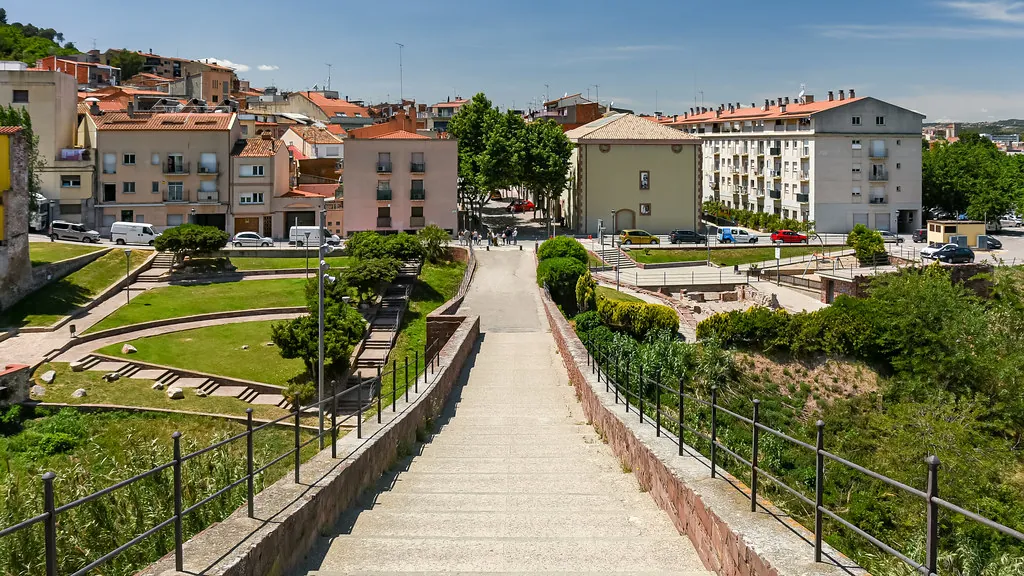
In the centre of the village stands the church of Sant Cristòfol. The current building has undergone many reforms, though it retains older stone elements. Inside, a cool dimness tends to linger even in summer. Light enters through a high window and rests briefly on the floor before fading. Outside, the bells mark the hours with a dry sound that carries well beyond the square.
Begues does not present its history in grand gestures. It appears in fragments: a name in a medieval text, a story repeated over generations, a section of old stone preserved within later renovations. The surrounding mountains hold even older traces, from marine fossils in limestone to the fermented barley once stored in cave pottery.
Practical Notes for Visiting
Spring and early autumn are generally the most pleasant times for walking in the sierra, with milder temperatures and less traffic on the paths. In high summer, weekends tend to be busier than usual in the village.
Mobile phone coverage fails on some trails. Anyone planning to walk should consider downloading their route in advance or carrying a simple map. Conditions can change quickly after rain, particularly on rocky sections.
Begues remains defined by its setting in the Garraf and by the pace imposed by light, weather, and terrain. Close to Barcelona yet shaped by rock, scrub, festival days and long stretches of silence, it offers a different scale of experience. Here, distance is felt in slopes climbed and hours of daylight, rather than in numbers on a signpost.