Full Article
about Castellví de Rosanes
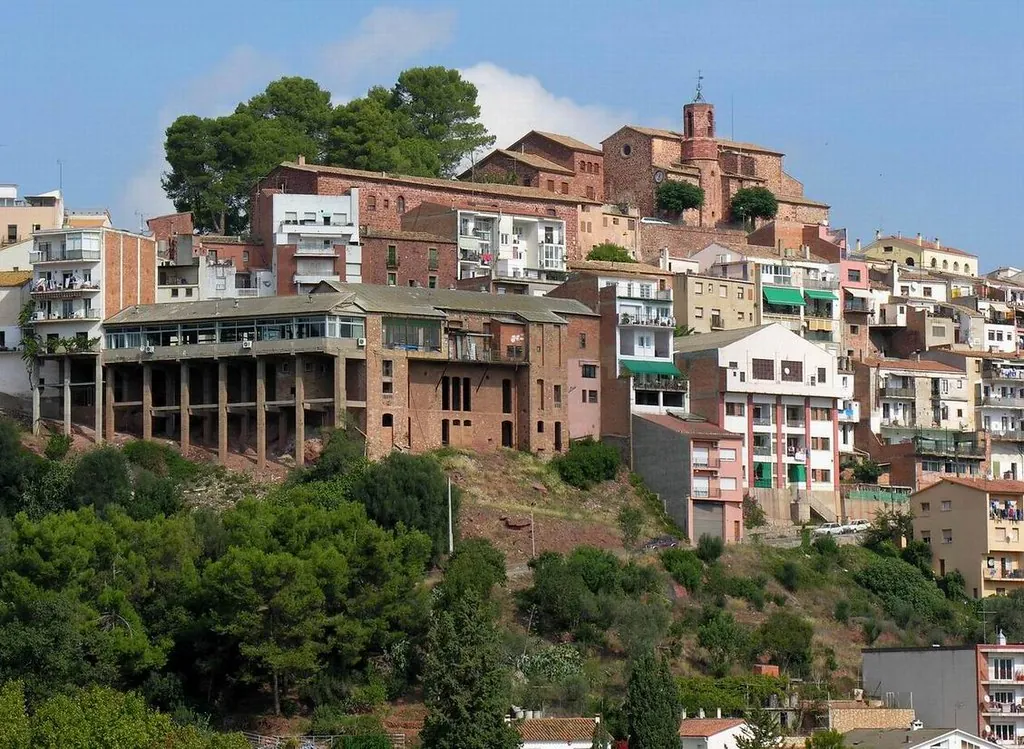
Small town known as the balcony of the Llobregat for its views
Hide article Read full article
From the road that climbs up from Martorell, even before reaching the centre of Castellví de Rosanes, Can Abat appears between the pines. A large rectangular stone building with a four-sided roof, stern, almost aloof. It is visible only for the length of a bend, yet it stays with you. The kind of place that suggests time moves at a different pace here than it does down in the valley.
The car continues upwards and the house disappears behind the trees. Even so, the image returns again and again throughout the day.
The castle that is no longer a castle
The tarmac ends where a pale dirt track begins. It is around ten on an April Tuesday morning. The ground still holds the night’s dampness and each step releases that mix of earth and rosemary typical of Mediterranean hillsides just after sunrise.
The climb to the Castell de Sant Jaume is not long. Around twenty minutes at an easy pace, a little less if you push on. Parts of the path are laid with stone, worn smooth by use. It is hard to imagine how many generations passed this way before the route became a weekend walk.
At the top there are fragments of walls and little more. Low stretches of masonry, pieces of a tower, lines of stone tracing what was once a defensive enclosure. What matters here is less what survives than what can be seen from this point.
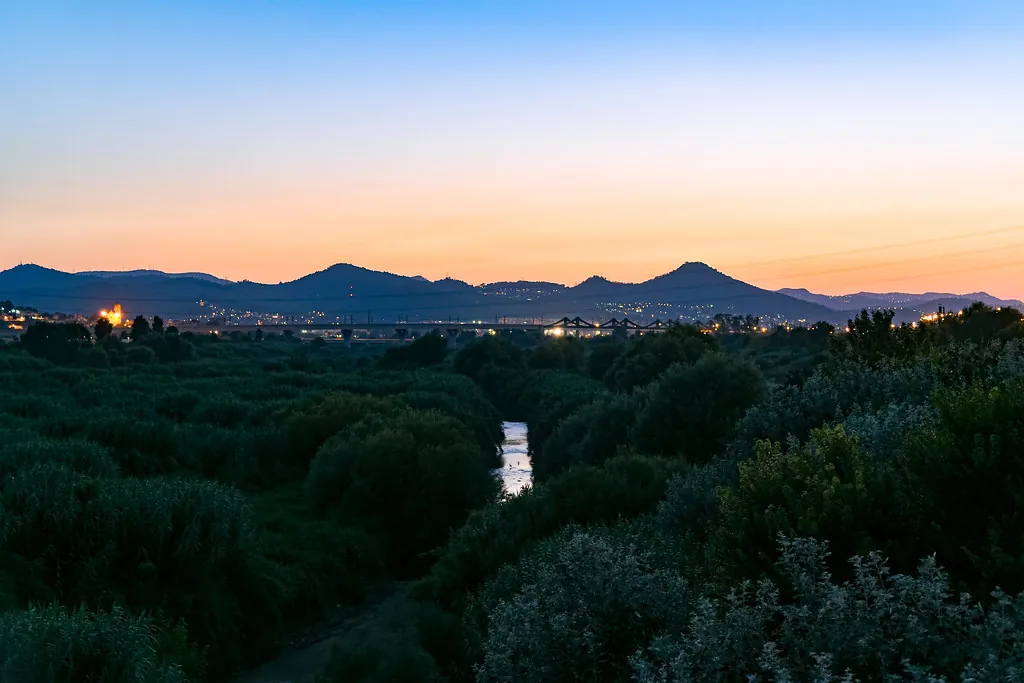
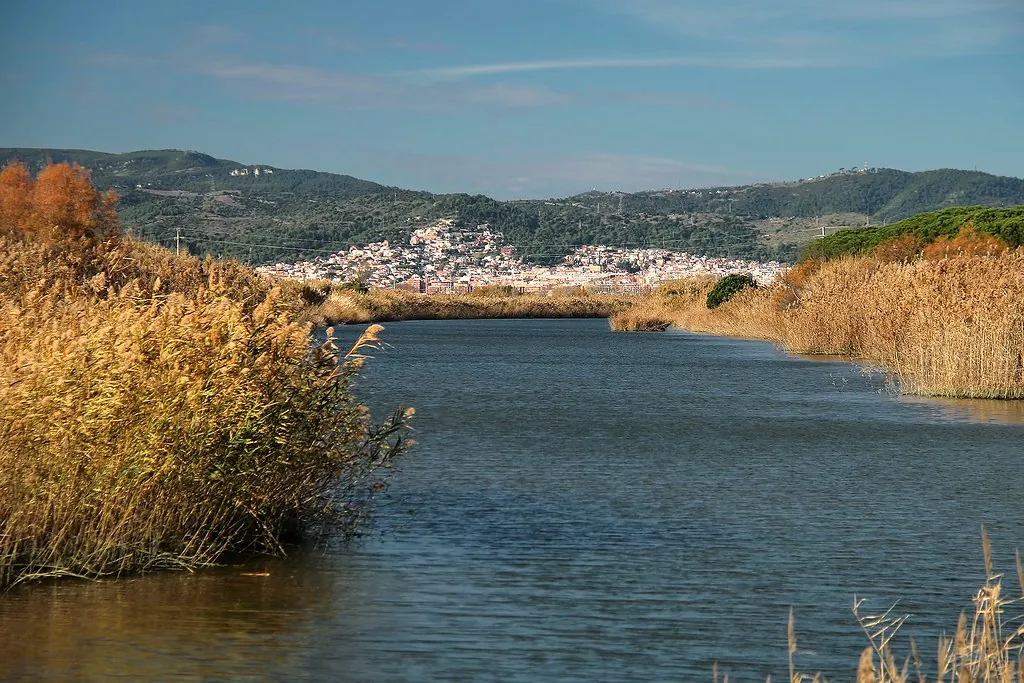
The Baix Llobregat opens out in full: geometric agricultural plots, roads reflecting the midday light and, further off, the river making its way towards the sea. When the wind picks up, scents drift up from the valley. Sometimes damp earth, sometimes something sharper that recalls wineries or freshly worked fields. It is the sort of place where people sit down for longer than they meant to.
It is worth bringing water. There are no fountains along the path and shade is scarce once the sun is high.
A cross at the edge of the path
On the way down towards the area known as the Font de Sant Jaume, the Creu de Terme comes into view. It stands by the side of the track next to an old olive tree with a twisted trunk.
These boundary crosses once marked the limits of municipalities or parishes. This one appears to have been restored at some point. In places the stone looks pale and fresh, in others darker, as if time were still settling the pieces back into place.
A farmer drives down the track in his tractor as I pass. Half joking, half serious, he remarks that the cross once had a chain. “So no one would take it away,” he says. He does not explain who might have wanted to do so, but he tells it with the matter-of-fact tone of stories that have circulated in small towns for decades.
Can Abat in the afternoon light
Later in the day, the road leads back to Can Abat. In the softer light of late afternoon, the stone takes on a golden tone that is absent at midday.
The house sits behind a dry-stone wall covered in ivy. The shutters are closed and the garden is barely visible through the trees. Some sources mention that the building played a role in episodes of the War of Independence, when this area was a compulsory passage between inland Catalonia and Barcelona. It is difficult to verify on the ground. What dominates now is silence.
There is space to sit along the edge of the wall. No one passes. A black cat crosses the path and pauses, as if weighing up whether there is any reason for someone to be there at all.
After a few seconds, the quiet returns.
A village that resists growing too much
Castellví de Rosanes has around 2,000 inhabitants according to recent figures. At certain times of day, it feels like fewer.
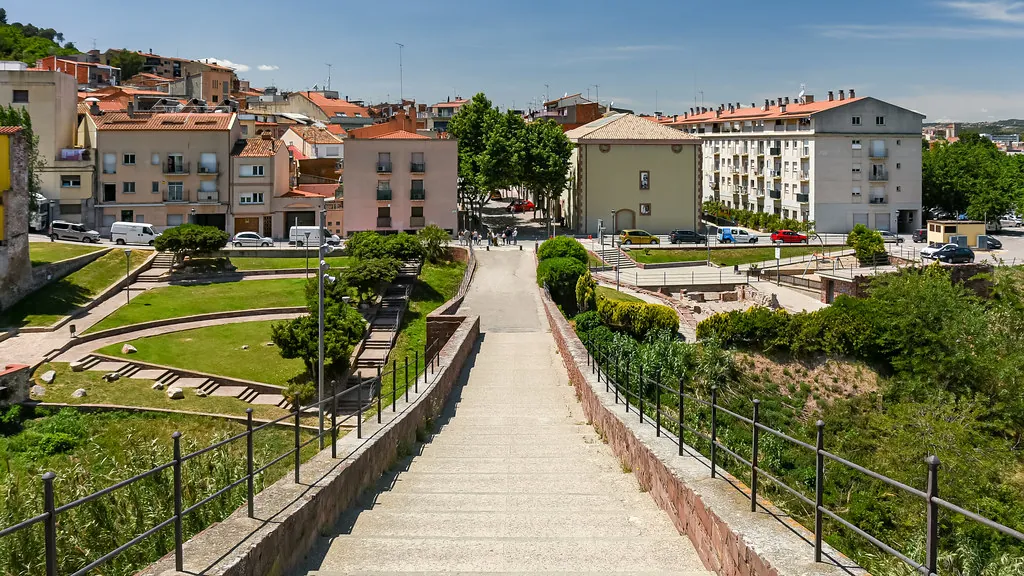
By mid-afternoon many shutters are lowered. The square in front of the church of Sant Pere lies still. The building, Romanesque in origin and heavily altered over the centuries, looks onto a couple of parked cars and a stone bench warming in the sun.
The village grocery shop remains open. Inside, the air smells of ripe fruit and detergent. The woman behind the counter seems to know everyone who walks in. With an unfamiliar face she hesitates for a moment, deciding whether this is someone passing through or not. A packet of biscuits is placed on the counter and, almost as if serving a neighbour, she adds an orange to the bag.
In places of this size, opening hours can vary significantly depending on the day. It is wise not to rely on getting much done late in the afternoon.
When to come, and why
Spring is often the most rewarding time to walk in the surroundings of Castellví de Rosanes. For a few weeks the hillsides turn green and rosemary flowers among the stones of the path.
In September, when the grape harvest begins across the comarca, the air sometimes carries the scent of must from nearby municipalities. The colours of the landscape shift and the paths crunch more sharply underfoot.
Summer can feel heavy. Heat settles in the valley and walking at midday becomes uncomfortable. If visiting at that time of year, it makes sense to set out early.
One simple detail matters in any season: good footwear. The paths are uneven in places, with loose stones and worn sections that demand attention. It is a small precaution that makes the difference between watching your steps and looking up at the valley spread out below.
Castellví de Rosanes does not present itself loudly. There are no grand monuments in perfect condition, no busy squares filled with noise. What it offers instead are fragments: a ruined castle overlooking the Baix Llobregat, a boundary cross beside an olive tree, a large stone house glimpsed between pines. Together they shape a place that seems content with its scale, where the hours stretch out quietly above the valley.