

Full Article
about Collbató
Southern gateway to Montserrat, known for its saltpeter caves
Ocultar artículo Leer artículo completo
The lambs are turning on the charcoal grill at La Vinya Nova when the funicular crowd arrives. They spill out of taxis that have raced down the Montserrat switchbacks, still clutching water bottles bought at the monastery for twice the price. Within minutes the restaurant's stone terrace is full of English, German and the occasional relieved Geordie who has discovered that the rack-railway stopped running an hour ago. This is Collbató's daily drama: functioning as the place where Montserrat comes to eat when the mountain shuts up shop.
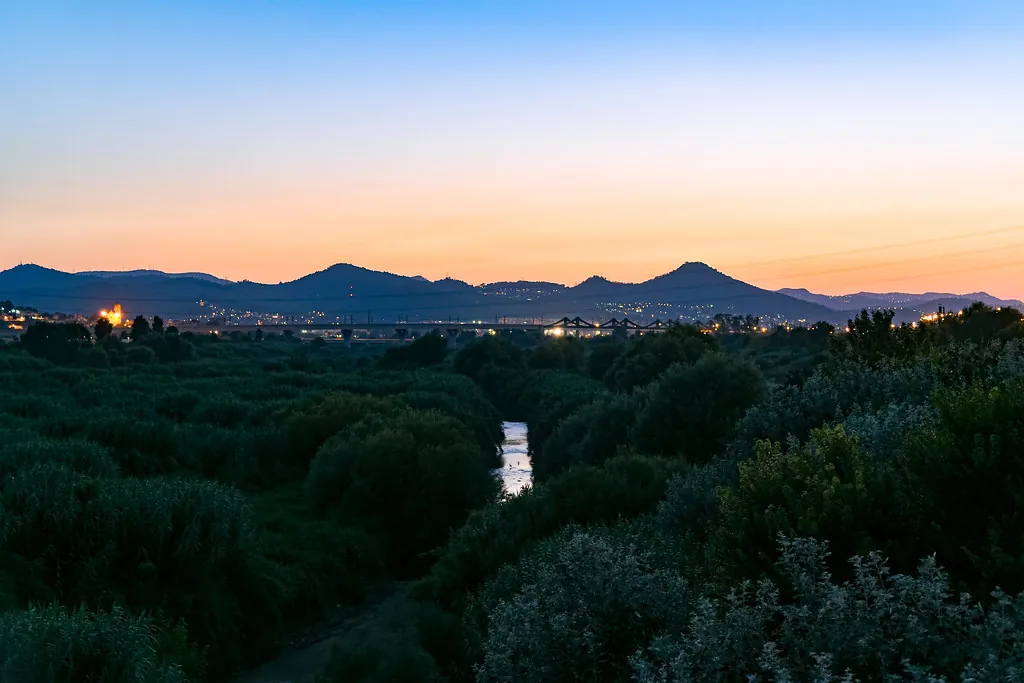
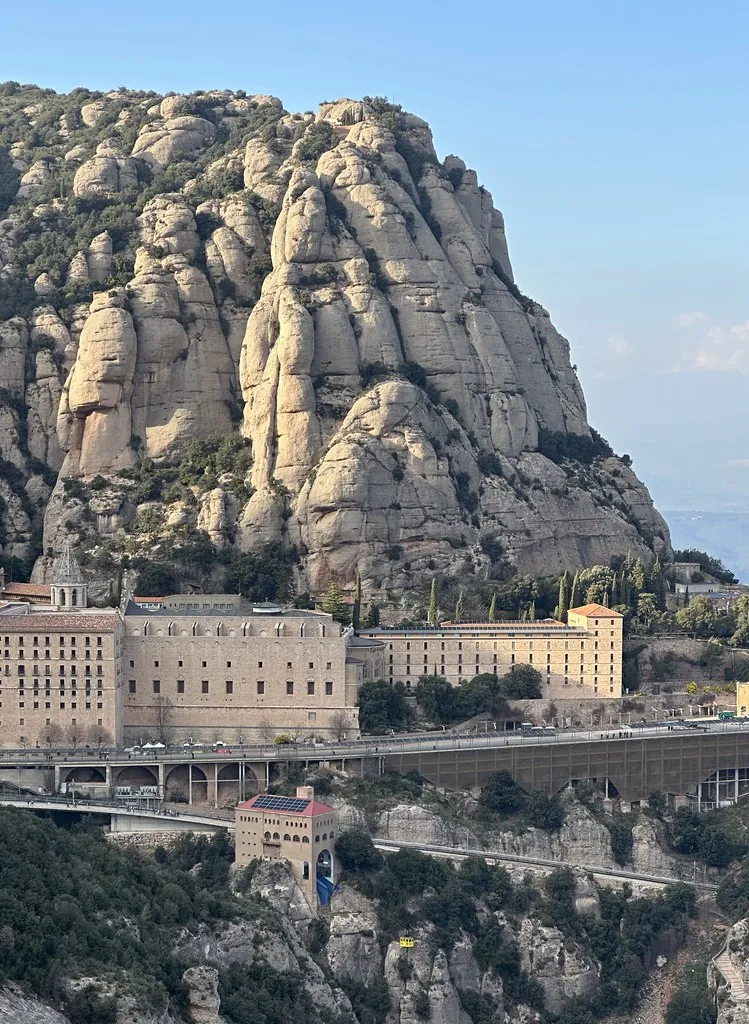
At 388 metres above sea-level, the village sits in a natural amphitheatre facing the famous serrated ridge. The rock wall dominates every street, every bar window, every childhood bedroom view. Children grow up here measuring time by the changing colour of the limestone: amber at dawn, bone-white at midday, bruised purple when the sun drops behind the Llobregat valley. It's a geography lesson you can't escape, and most locals wouldn't want to.
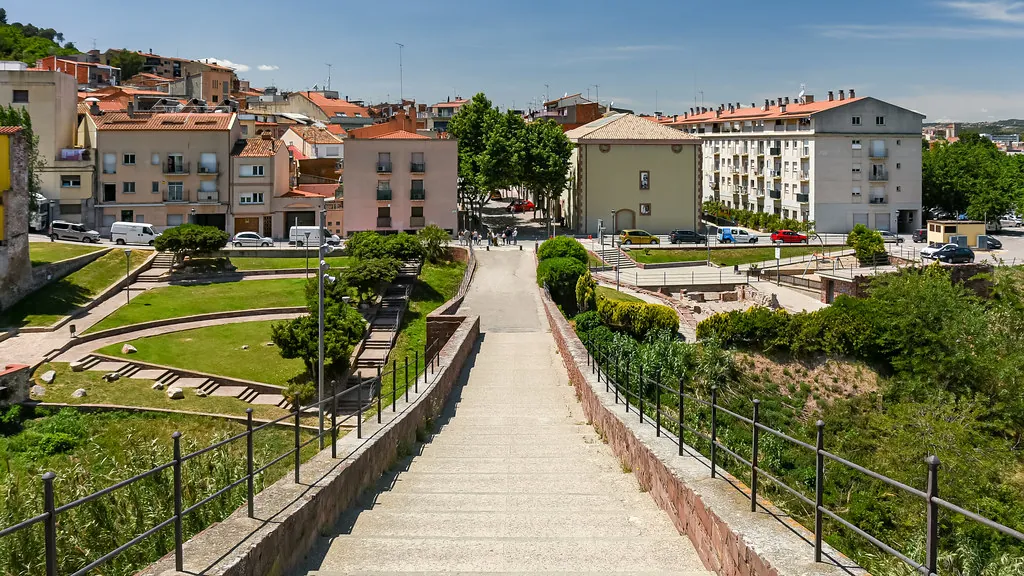
The old centre climbs away from the main road in a tangle of medieval lanes barely two metres wide. Stone houses lean together for support, their ground floors once stables, now garages or tiny shops selling bread, fishing licences, and the obligatory paners de mèc – traditional straw baskets that weekend hikers buy then forget on the train. The eleventh-century church of Sant Corneli squats at the top, its bell tower doubling as the village timepiece. When it strikes seven, the bars on Plaça de l'Església start pulling shutters. By eight-thirty the square is quiet enough to hear mountain crickets.
The Caves That Funded a Sunday Roast
Half-way up the Montserrat track, the Coves del Salnitre provide natural air-conditioning at a constant 14 °C. The guided tour lasts 45 minutes and involves 460 steps – down first, then mercilessly up. Electric lights pick out formations with names like "Roman Candle" and "Cauliflower", the sort of labels that make speleologists wince but keep children interested. The caves were once thought to harbour bandits; later they supplied bat droppings for gunpowder. Today they supply something more valuable to Collbató: a steady trickle of visitors who might otherwise stay on the coach to the monastery.
Tickets cost €13.50 and must be bought in the kiosk opposite the village pharmacy. Arrive after 11 a.m. in July and you'll be offered a slot three hours later – time enough to climb the old mule path to Montserrat and back, if you enjoy vertigo and negotiating loose shale with a hangover. Most people sensibly choose the bar opposite the cave entrance, order a cafè amb llet, and watch rock climbers inch up the cliff face like determined beetles.
A Menu That Understands Hungry Walkers
Catalan mountain cooking is built on the understanding that people who have climbed 600 metres deserve carbohydrates and iron. At Cal Peso, a family dining room wedged between the baker's and the butcher's, the set lunch runs to three courses plus wine for €16. Monday brings escudella, a broth thick with chickpeas, pasta and a hock of pork the size of a cricket ball. Thursday is rabbit with prunes and pine nuts, the meat falling off the bone into a sauce the colour of burnt mahogany. Vegetarians get escalivada – aubergine, peppers and onion roasted until they collapse, served warm with oil and salt. Nobody leaves hungry; the house wine arrives in a 75 cl bottle and nobody counts glasses.
Evening meals are trickier. Kitchens close at four and don't reopen until eight, later at weekends. If you arrive at seven expecting an early supper you'll be offered crisps and polite sympathy. The trick is to embrace the siesta culture: have a beer, read the paper, watch the mountain change colour. By nine the square is buzzing again, families strolling with ice-creams, grandparents holding toddlers up to pat the village dogs who treat the street as their living room.
Paths for People Who Hate Queueing
The signed walking network starts behind the football pitch. Red dashes indicate the traditional pilgrims' route to Montserrat monastery – 7.5 km of relentless ascent, rewarded by black vultures circling overhead and the realisation that the tourist hordes arrive by cable-car. Most British walkers prefer the blue-dot trail that contours east to the abandoned hermitage of Sant Joan. It offers ridge views without the calf-burn, and finishes at La Vinya Nova where lamb chops sizzle at outdoor grills. Allow two hours, plus another ninety minutes if you stop for lunch and the waiter persuades you to try the home-made crema catalana.
Mountain-bikers use the same paths, which means hikers need ears as well as boots. A polite "Bon dia!" round a blind bend prevents collisions and earns grateful nods from Lycra-clad locals. Summer heat shuts several routes between 10 a.m. and 6 p.m.; the town hall posts closures on its website, but only in Catalan. If in doubt, copy the Spanish grandparents: up at dawn, home by eleven, asleep through the furnace hours.
When the Mountain Turns Invisible
Collbató's biggest weather surprise comes in winter. While Barcelona enjoys 16 °C and outdoor tapas, the village can sit under a lid of cold air, temperature barely above freezing. Montserrat disappears inside cloud for days; the church bell tolls muffled, and residents light pellet stoves that scent the streets with woodsmoke. Snow is rare but frost is not, and the limestone paths become skating rinks. This is when hotels in nearby Esparreguera offer weekend deals to city dwellers who want to experience "real winter" thirty minutes from the beach.
Spring delivers the opposite: almond blossom in February when Britain is still digging out from January storms. British walkers arrive in shorts, alarming elderly locals who insist on scarves until the thermometer hits 25. By May the mountain broom turns fluorescent yellow, attracting bees so large they sound like approaching motorcycles. It's the season for calçotadas – outdoor barbecues where spring onions the length of cricket bats are charred, wrapped in newspaper, and eaten dripping smoky romesco sauce down grateful chins.
Beds, Buses and the Cash Problem
There is no hotel in Collbató itself. The nearest beds are at Hotel Guilleumes, four kilometres up the mountain road, a 1960s block popular with school groups and ageing climbers who like a bar that opens at seven for pre-summit coffee. Most independent visitors rent the village's single tourist apartment, Cal Peso, a three-bedroom townhouse with roof terrace facing the rock. It costs around €120 per night and includes free earplugs – the church bell strikes every quarter-hour.
Public transport works on Spanish logic. Train from Barcelona Sants to Monistrol-Montserrat takes 55 minutes; from there a taxi to Collbató costs €20 and drivers expect cash. An hourly bus service exists but finishes at 21:00. Miss the last funicular from the monastery at 18:30 and you'll discover why the village bars stay open late: they're full of stranded tourists negotiating with local grandparents for a lift to the railway.
Cash remains sovereign. Two bars accept cards; everyone else wants notes and coins. The nearest ATM is six kilometres away in Esparreguera, and it charges €2.50 for the privilege of accessing your own money. Bring euros, preferably in twenties – the barman at Cal Peso will shrug at a fifty and ask if you have anything smaller.
The Honest Verdict
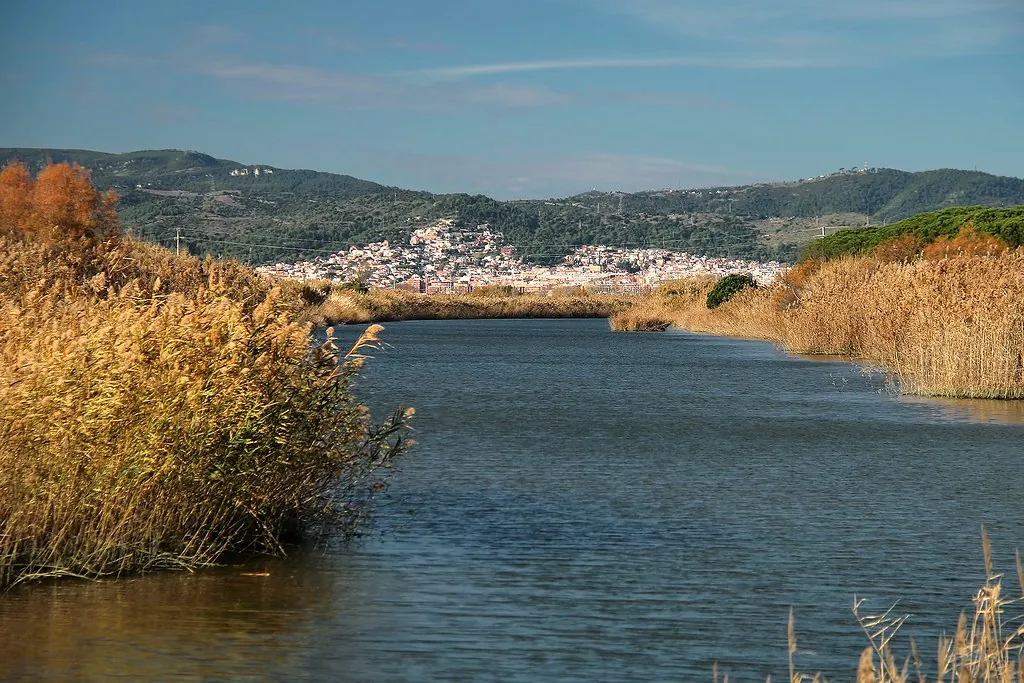
Collbató will never win beauty contests. The main road roars with quarry lorries, and the council flats by the river wouldn't feature in anyone's holiday slideshow. Yet for walkers who want Montserrat without coach-party choreography, or foodies content to swap foam and gel for honest lamb and wine that doesn't need a tasting note, it serves a purpose. Come for the caves, stay for lunch, walk it off on a ridge where the only sound is goat bells and distant Gregorian chant drifting down the mountain. Then catch the evening light as the rock turns coral, order another beer, and admit that sometimes the support act outshines the headliner.