Full Article
about Gavà
Municipality that combines beach
Hide article Read full article
Morning at the edge of the Llobregat
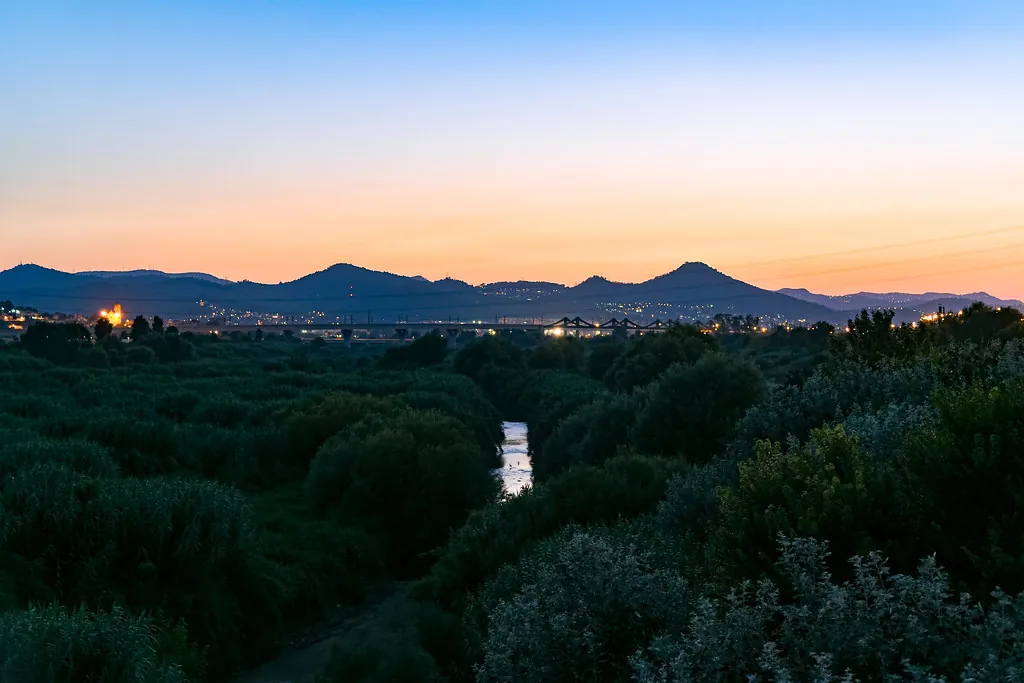
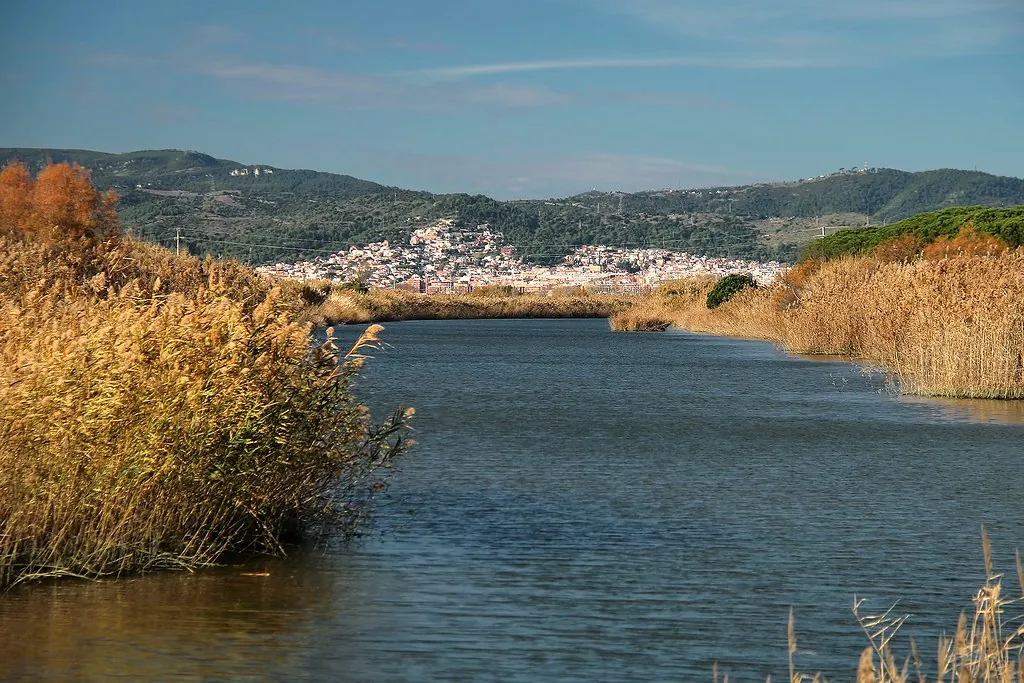
At eight in the morning, sea mist settles over the mouth of the Llobregat and the asparagus of Gavà glisten with dew in market gardens that still survive between warehouses and roads. From the coastal path, the low sound of waves mixes with the start of the day at the chiringuitos, those informal beach bars common along the Spanish coast: chairs scraping, coffee machines hissing, someone singing in Catalan while lifting a shutter. It is the moment when Gavà seems to decide whether it is a town or a city. The air carries salt and fresh bread, with a trace of aviation fuel from the nearby airport, a reminder that Barcelona is only a short distance away.
The green seam that shaped the Neolithic
The Minas Prehistòriques de Gavà came to light almost by accident during construction work in the mid twentieth century. As the ground was turned, variscite appeared, a green mineral used in the Neolithic period to make beads and small amulets. Beneath what is now the municipality lies a network of galleries carved out around 6,000 years ago.
Visits today take place in small groups. The descent follows metal stairs that cut into damp rock, with helmets and low lighting. Inside, the temperature drops sharply even in summer, and the smell is of wet earth and enclosed stone. Guides usually explain how those prehistoric miners worked, extracting pieces of variscite that would later travel along exchange routes across much of the Mediterranean. Stepping back outside, daylight often feels almost too bright.
From the hills to the sea
Climbing up to the castell d’Eramprunyá helps make sense of Gavà’s position between the Garraf hills and the delta. The route often begins in Bruguers, among pine trees and reddish rock, gradually gaining height over several kilometres.
At the top, what remains are fragments of walls and foundations, more suggestion than structure. From here the view opens over the Llobregat delta: Viladecans spread out flat, the airport with planes arriving and departing every few minutes, and beyond that the line of the sea. On spring Sundays, families appear with sandwiches, along with the occasional cyclist who has extended their route. It is wise to carry water, as there are usually no fountains along the way and the sun falls directly even outside summer.
When the beach smells of seaweed
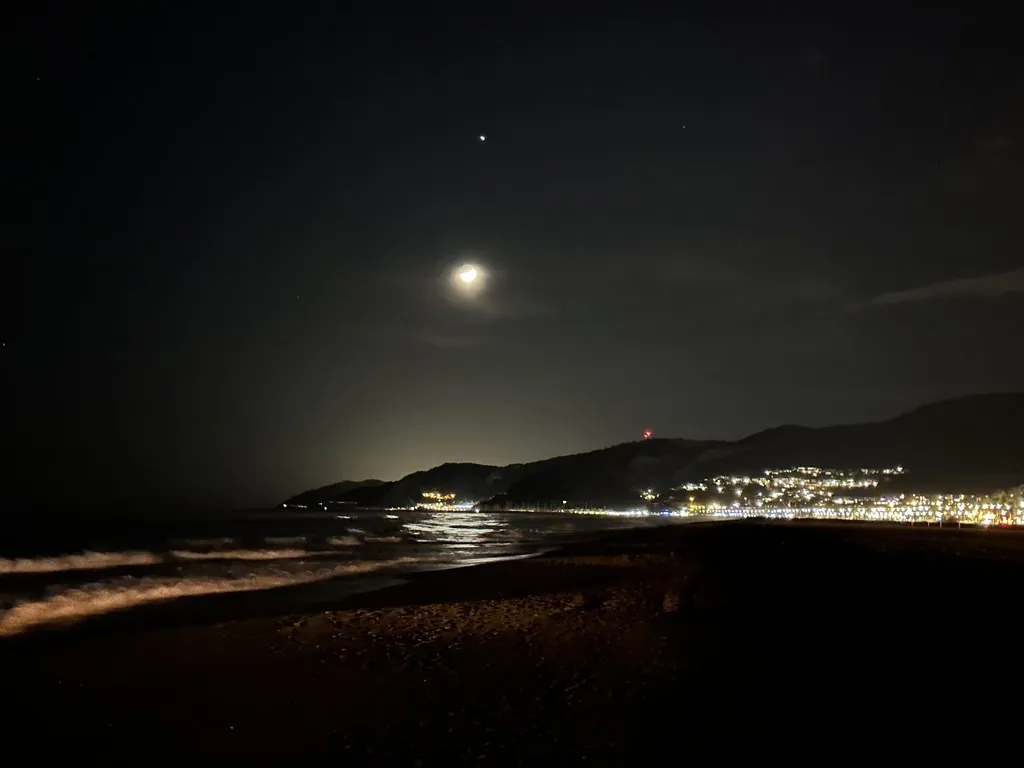
The four kilometres of sand at Gavà Mar begin where the seafront promenade ends. The landscape shifts with the seasons. In winter, when easterly winds blow in from the Mediterranean, the sea builds foam and the promenade is nearly empty, with only dogs running and waves striking the dunes.
Between October and March, the strip of vegetation that protects the beach is at its most visible. In summer it fades into the background behind towels and parasols. Early June can still bring quiet mornings for long walks along the shore, with a strong scent of seaweed drying in the sun.
On some days towards the end of summer, especially after storms, jellyfish may appear on the sand or floating close to the shoreline. It is worth checking the water before going in.
April and the scent of asparagus
The Fira de l’Espàrrec sets the local rhythm each spring. For a few days, the town centre fills with stalls and baskets of freshly cut white and green asparagus. This crop is closely tied to the Llobregat delta, where sandy soil and nearby water have supported market gardens for generations.
At the stalls, bundles are long, almost white at the base. In many homes they are still prepared in the simplest way, boiled and served with olive oil and salt. Others appear with romesco sauce or alongside seasonal dishes.
For a quieter look, the municipal market usually carries local produce during the harvest period. Early in the morning, the asparagus can still arrive with soil clinging to the stems.
Getting there and choosing your moment
Gavà has a railway station on the line linking Barcelona with the southern Baix Llobregat and the Garraf area, making it straightforward to reach from the city. By car, the coastal motorway and ring roads provide quick access, although at certain times traffic linked to the airport and the beaches can slow things down.
In July and August, especially in the afternoon, the road towards Gavà Mar fills up and finding a place to park near the sand can take patience. For a different pace, a weekday in spring offers another side of the area. Daylight stretches into the evening, the delta’s fields are active, and the air carries both the scent of the sea and that of warm rosemary.