Full Article
about Molins de Rei
Historic town on the Llobregat known for its Feria de la Candelaria
Ocultar artículo Leer artículo completo
The 22:34 R4 from Barcelona-Sants rolls in, and a tide of day-trippers spills onto the platform clutching plastic shopping bags from Zara and half-eaten bocadillos. Within five minutes the station forecourt is quiet again; the only sound is the Llobregat sliding past the floodlights. Molins de Rei has done its nightly trick: close enough to the big city to feel the pulse, far enough out to hear your own footsteps.
A Town That Never Quite Became a Suburb
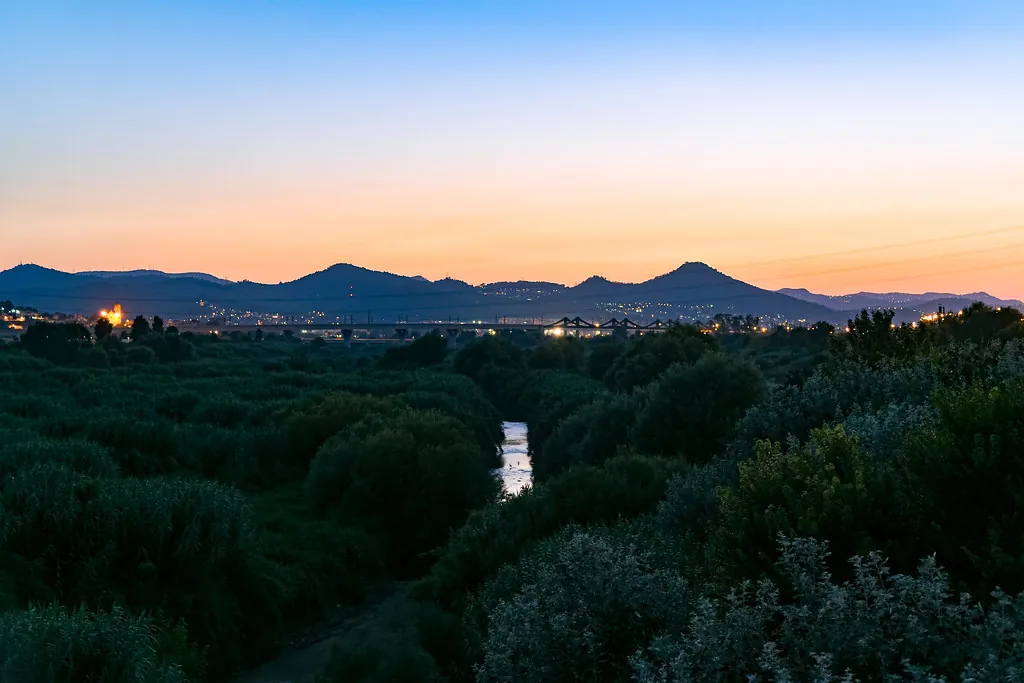
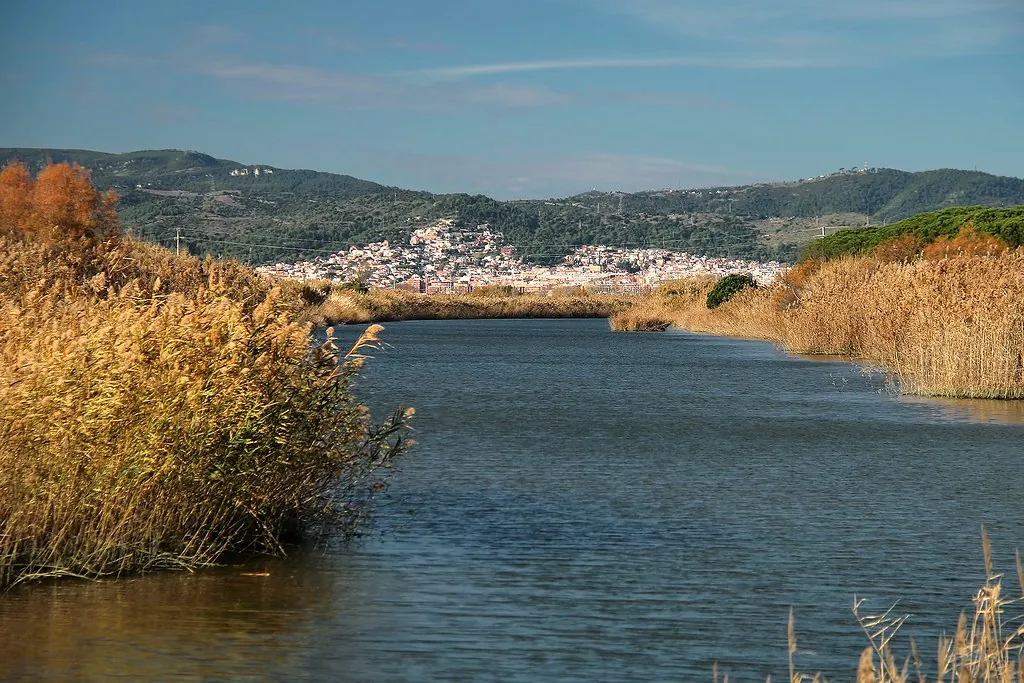
Barely 14 km from Plaça de Catalunya, Molins de Rei sits at the meeting point of the Llobregat river and the Rubí stream. The altitude is a modest 40 m, so the air is softer than on the nearby Collserola ridge, but the water still sets the temperature a degree or two below Barcelona on winter mornings. Locals claim this is why the vegetable plots along the riverbank once supplied the Boqueria market; today the lettuces are more likely to appear in the Friday municipal market held in a concrete hangar behind the police station.
The name translates literally as “King’s Mills”, a reminder that the place earned its keep grinding grain for Barcelona long before commuters arrived. Fragments of those mills survive—stone channels, a patched wheelhouse wall—though you have to know which alley to duck into behind the library. They are not attractions, more like scars the town wears without fuss.
What You Actually See on a Morning Walk
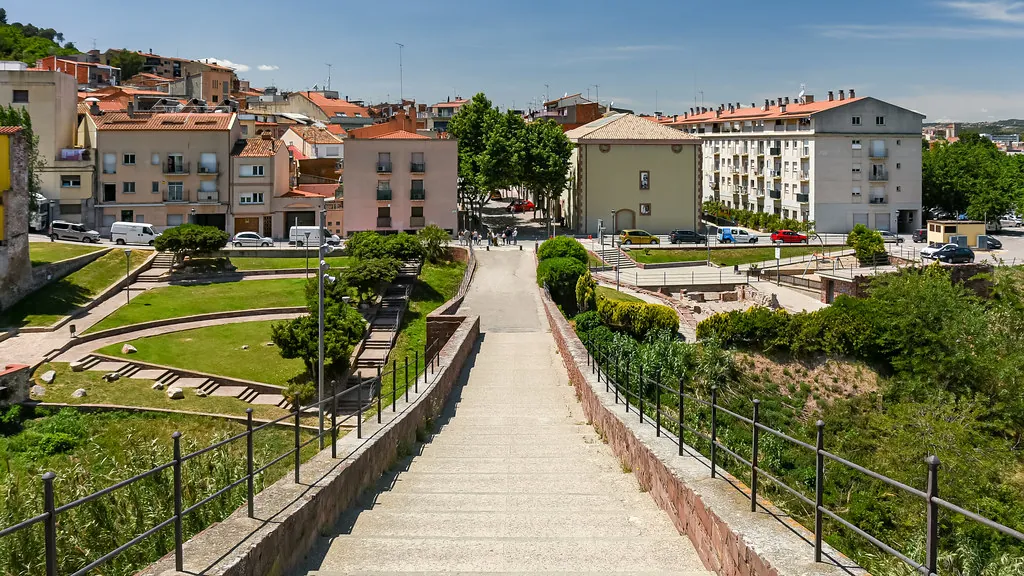
Start at the Pont Vell, the old bridge whose lowest stones are eleventh-century but whose roadway was widened for lorries in 1968. Traffic thunders across six lanes, yet if you stand on the downstream parapet you can still spot the medieval cutwaters, rounded like the spine of a tired dinosaur. From here Carrer Major climbs gently to the church of Santa María, its Romanesque bones hidden inside Baroque clothing added after the 1936 fire. The door is usually open; inside, the cool smells of wax and river damp replace the diesel above. No ticket desk, no audio guide—just a printed A4 sheet in Catalan and enough silence to hear the building creak.
Round the corner, the castle mound is now a small park where teenagers practise kick-ups against the reconstructed curtain wall. The fortress was mostly carted away in the nineteenth century to build a textile warehouse, so what remains is a raised lawn with a view over tiled rooftops towards the cereal silos of Sant Joan Despí. Interpretation boards show sepia photos of straw-hatted workers unloading barges; the river is cleaner now, but the barges are gone.
Lunch at an Hour the Guidebooks Warn About
British stomachs sometimes recoil at the thought of eating at 15:30, yet that is when Can Travi starts firing up the grill again after the morning rush. A “mixed barbecue” for two costs €24 and arrives on a dented steel platter: black-puddingish botifarra, half a chicken hacked through the bone, charred artichokes, and a pile of chips that taste of olive oil rather than freezer. Order a caña of Moritz and the waiter will mark your table with chalk so the barman knows whose round it is—an old Catalan habit that survives even when half the clientele arrived on the morning flight from Luton.
If you need something quicker before the 16:05 train back to town, Café de la Fàbrica does a decent flat white (they call it “café amb llet tèbia”) and has Wi-Fi that does not drop when the door swings open. The sandwiches are made with coca, a thin Catalan bread somewhere between focaccia and a bap; the cheese-and-quince version travels well if you end up sprinting for the platform.
Using It as a Base Without Getting Stranded
The R4 line is the single most useful piece of infrastructure for visitors. Trains leave Molins de Rei for Barcelona-Sants at 08:02, 08:17, 08:32… until 23:32, after which you are marooned until 05:47. A single ticket is €2.40; the T-Casual ten-journey pass works out at €1.17 a ride and covers the metro onward to the Ramblas. Last trains on Saturday run thirty minutes later, but Sunday service shrinks to hourly after 22:00—miss it and a taxi is a sobering €35–45.
The station itself is a fifteen-minute walk from the cluster of hotels on the eastern side of the river. Pavements are wide and lit, but the route crosses a spaghetti of junctions where traffic lights favour cars; allow twenty minutes with wheelie cases. There is no left-luggage office, so if you have a late flight out you will need to store bags at Sants or grin and bear the extra hour on public transport.
When the Town Turns the Volume Up
The fiesta mayor of Sant Bartomeu lands on the last weekend of August. For three nights the main drag becomes a correfoc, devils spinning fireworks inches from your shins; bring natural fibres and a bandana unless you fancy smelling of gunpowder for the flight home. Giants dance at noon on Saturday, but the real local moment is the Sunday morning castanyada, when chestnuts roast in perforated drums and sweet wine is handed out in plastic cups. Tourists are welcome, though the programme is printed only in Catalan—Google Translate and a sense of humour are essential.
January brings Sant Antoni, the feast that blesses animals. Dogs, hamsters and the occasional Shetland pony queue outside Santa María while a priest sprinkles holy water from a plastic gardening can. It is chaotic, faintly pagan, and finishes with shortbread biscuits called carquinyolis that fracture teeth if dunked too briefly.
The Honest Seasonal Scorecard
Spring is the sweet spot: the river path is green, temperatures sit in the high teens, and hotel rates hover around €55 for a double with breakfast. Summer turns the valley into a convection oven; afternoon highs of 36 °C are common, and the cheaper guest-houses lack air-conditioning. Autumn smells of grill smoke and new wine, but weekday trains fill with university commuters by 07:30—expect to stand until Cornellà. Winter is quiet, occasionally bleak; the castle mound is windswept, and Sunday lunch options shrink to two bars serving microwaved croquetas. Still, the light is sharp, photographs look cinematic, and you will have the river path almost to yourself.
Heading Home Without the Usual Souvenirs
There is no gift shop selling fridge magnets shaped of the Pont Vell. The best takeaway is edible: a slab of mató (fresh goat’s cheese) wrapped in chestnut leaves from the Friday market, or a bottle of arbequina olive oil pressed in nearby Pallejà. Both travel in hand luggage if you decant the oil into a 100 ml bottle and accept you will look like a chemist at security.
Molins de Rei will never tick the “charming village” box that glossy magazines love. It is scruffy around the edges, traffic is noisy, and the river still carries the odd supermarket trolley. Yet for travellers who want a bed at half the city price, a proper lunch timed to Spanish clocks, and the chance to see how Catalans live when they are not performing for visitors, it does the job with quiet competence. Board the 09:02 train, and by 09:27 you can be queuing for the Sagrada Família. The difference is you will have spent the night where the mills once turned, and the water keeps whispering stories no guidebook bothered to write down.