Full Article
about Sant Boi de Llobregat
Historic town with Roman baths and Rafael Casanova’s tomb
Hide article Read full article
The smell of roasted artichokes drifts through the train carriage just before the metallic voice announces “Sant Boi”. It is March, the month of the carxofa, and even the platform carries the scent of a Sunday lunch. From Barcelona the journey is short, barely enough time for apartment blocks to give way to open fields. The air feels different here, more humid, with a faint saline edge that arrives from the nearby Llobregat delta.
Sant Boi de Llobregat moves between two rhythms. On one side, its closeness to Barcelona, with commuters flowing in and out each day. On the other, the market gardens, the river and a history that reveals itself when the pace slows and attention shifts to the details.
Warmth Beneath the Stone: The Roman Baths
A short walk downhill through quiet central streets and the sound of traffic fades. In its place stands a low, discreet structure, almost hidden among surrounding buildings. Inside are the Roman Baths of Sant Boi, where time seems layered rather than linear.
They were built in the Roman period, when this area formed part of the territory of Barcino, the ancient city that would become Barcelona. Beneath a simple roof, the remains of the thermal complex are still visible: rooms, mosaics and the channels that once carried hot air through the hypocaust system. The stone has taken on a toasted hue after centuries of absorbing moisture.
Guided visits usually explain how the heating system worked and how the bathing ritual was organised. Look down and the small columns that once supported the heated floor can still be seen, a reminder of the engineering beneath visitors’ feet.
It is worth checking in advance before going, as visits are not available every day. Arriving early, before groups gather, gives the space a striking stillness. In those quiet moments, the baths feel less like an exhibit and more like a fragment of everyday Roman life paused in place.
Summer Houses on the Edge of the Fields
Heading uphill reveals another layer of Sant Boi’s story: the cases d’estiueig, or summer houses, built by Barcelona’s bourgeois families between the late nineteenth and early twentieth centuries.
The Ruta del Estiueig threads through former towers surrounded by gardens. Some have been restored, others sit more discreetly within neighbourhoods that have grown up around them. Many retain decorative ironwork, glazed galleries and hydraulic mosaic tiles at their entrances. At dusk, the tiles sometimes catch an orange light that evokes long, unhurried summers.
One of the former leisure societies from that era now functions as a cultural venue. Inside, high ceilings, dark wood and the slightly dry scent of a century-old building remain. The atmosphere hints at a time when Sant Boi was seen as a healthy retreat close to the countryside yet within easy reach of the city.
The route can be explored on foot without much effort. It unfolds in several sections across the urban centre, so it helps to take it slowly and allow time to wander down a side street or two. The experience is less about ticking off buildings and more about noticing how past and present sit side by side.
Artichokes, Market Gardens and Local Identity
In March, Sant Boi revolves around the artichoke of the delta. A short distance from the centre, the market gardens make this clear: orderly fields, broad green leaves opening like large flowers against damp soil.
During these weeks, food events and community gatherings take place, with the artichoke appearing in many forms: roasted, fried, in stews. The aroma lingers through the streets around lunchtime, tying the town to the surrounding farmland. For visitors unfamiliar with the area, the Llobregat delta is one of Catalonia’s key agricultural zones, and Sant Boi sits right beside it.
Sport forms another part of local identity. Sant Boi’s rugby club is one of the historic clubs in Spain. On match days the atmosphere shifts around the ground: raised voices, muddy boots, groups lingering in conversation even after evening has fallen. It is a reminder that this is not only a commuter town but a place with its own long-standing traditions.
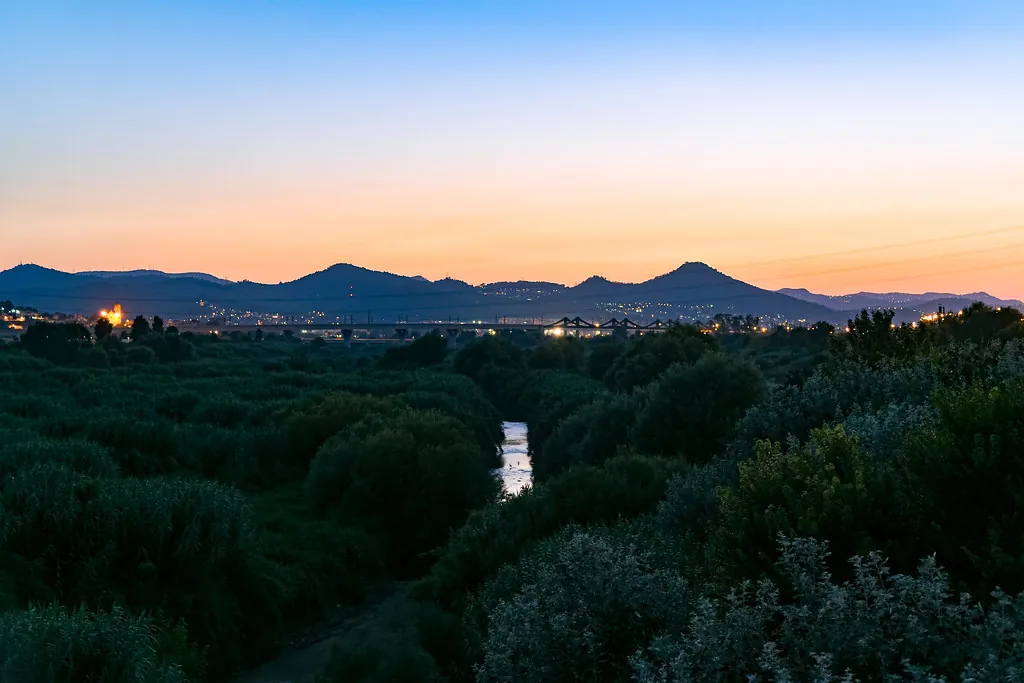
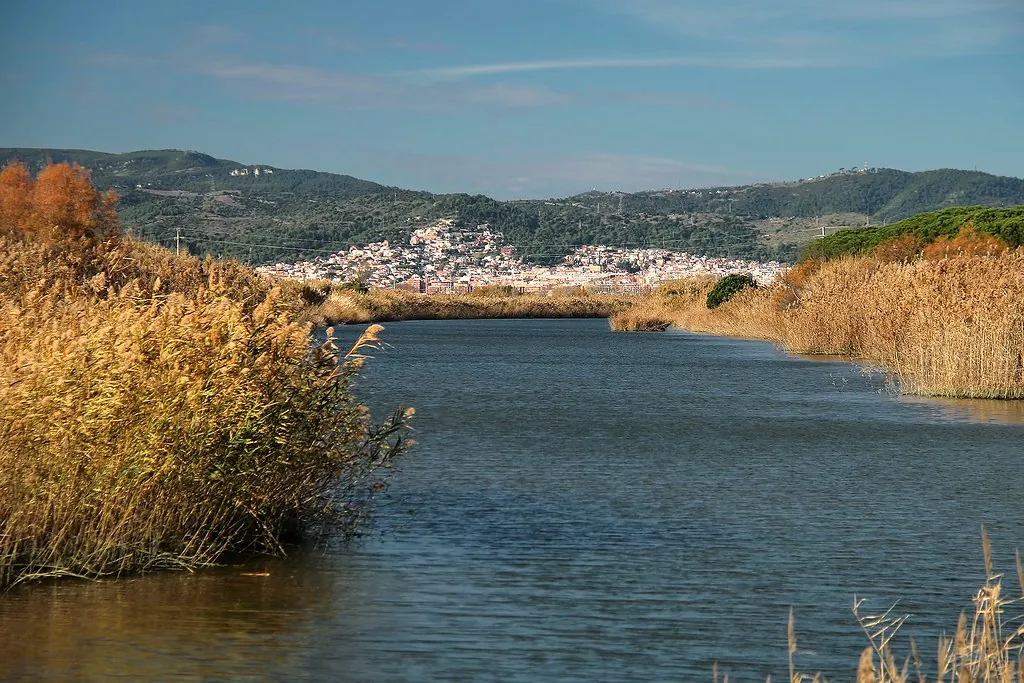
The proximity between town and countryside defines daily life here. Fields are never far away, and the river Llobregat runs close enough to shape both landscape and climate. That slightly salty note in the air makes more sense once the delta comes into view.
Evening Light on La Muntanyeta
As the sun begins to dip, many residents head towards the park of La Muntanyeta. This small hill rises within the municipality itself, offering a change of perspective without leaving town.
From the top, rooftops stretch out below, the course of the Llobregat traces a line through the landscape and, on clear days, the delta opens towards the sea. The setting is simple: winding paths, pine trees and grassy areas where families sit down for a snack. The most constant sounds tend to be balls striking the ground on the sports courts and conversations blending with the breeze.
During the week the atmosphere is calm. Late in the afternoon, light filters between the trees and casts long shadows across the ground. It is an easy place to pause, especially after walking through the centre or exploring the summer houses.
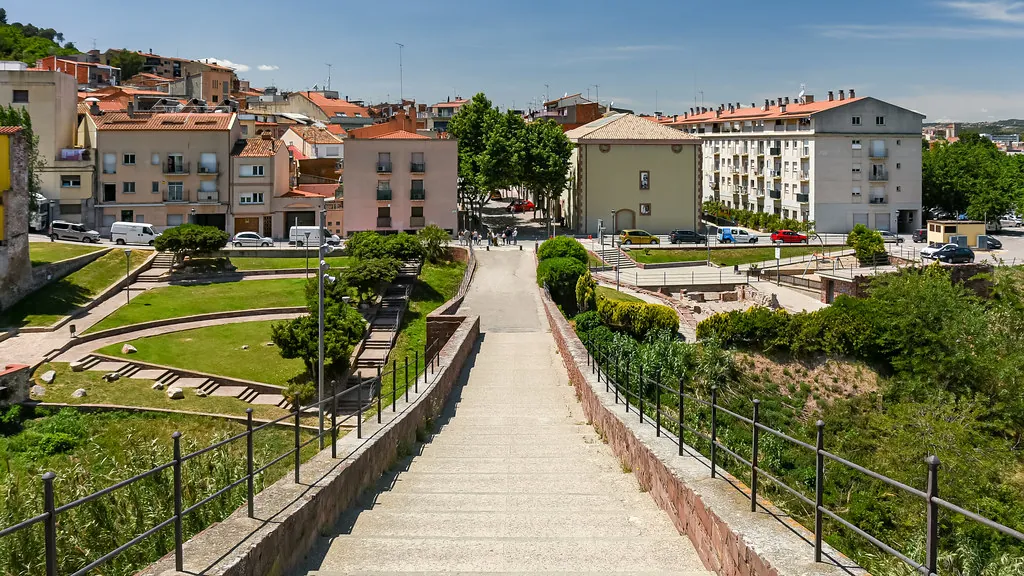
La Muntanyeta also highlights the town’s scale. Sant Boi is compact enough to cross on foot, yet varied enough to offer Roman ruins, early twentieth-century villas and agricultural land within a short distance of one another.
When to Visit and Getting Around
Sant Boi de Llobregat is well connected to Barcelona by train and road, which is why many people arrive by public transport and explore on foot. The centre can be covered quickly, but adding the market garden areas or a walk up to La Muntanyeta calls for a little more time.
March is often a good moment to visit, when the artichoke is in full season and the agricultural landscape is at its most active. The town’s link to the delta becomes particularly visible then, both in the fields and in the food events that bring people together.
In summer the heat can be intense, and the streets grow noticeably quieter during the middle hours of the day. Winter has a different mood. When the air turns cold and clear, the Roman Baths and the fields of the delta take on a sharper outline, their textures and tones standing out against the pale light.
Sant Boi does not demand a long itinerary. Its appeal lies in contrasts: Roman engineering beneath modern streets, bourgeois summer retreats beside working-class neighbourhoods, market gardens within sight of commuter trains. Slow down a little, and the layers begin to show.