Full Article
about Sant Climent de Llobregat
Town known for cherry orchards in a quiet valley
Ocultar artículo Leer artículo completo
The church bell strikes two. Within minutes, the single traffic light in Sant Climent de Llobregat clicks to red, the bakery shutters slam, and even the village dogs seem to yawn in unison. For the next three hours, this 87-metre-high ridge above Barcelona's airport becomes a ghost town—save for the occasional British traveller blinking at a locked bar door, clutching a phrasebook and wondering if civilisation has ended.
It hasn't. It's just siesta, observed with religious precision 15 kilometres from the Ramblas.
A Delta Above the Rest
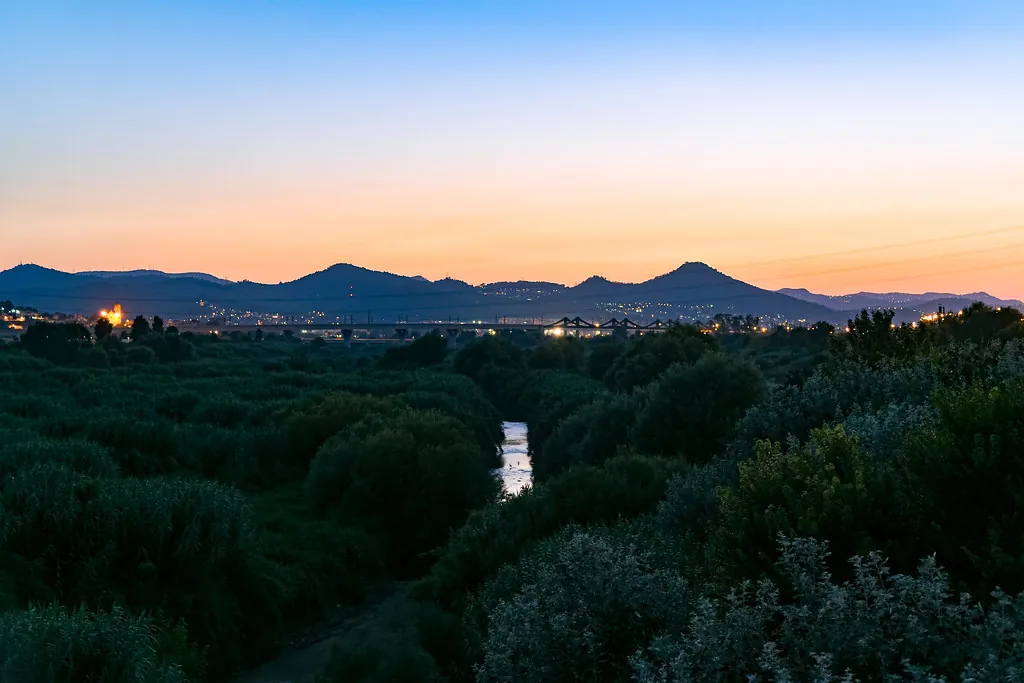
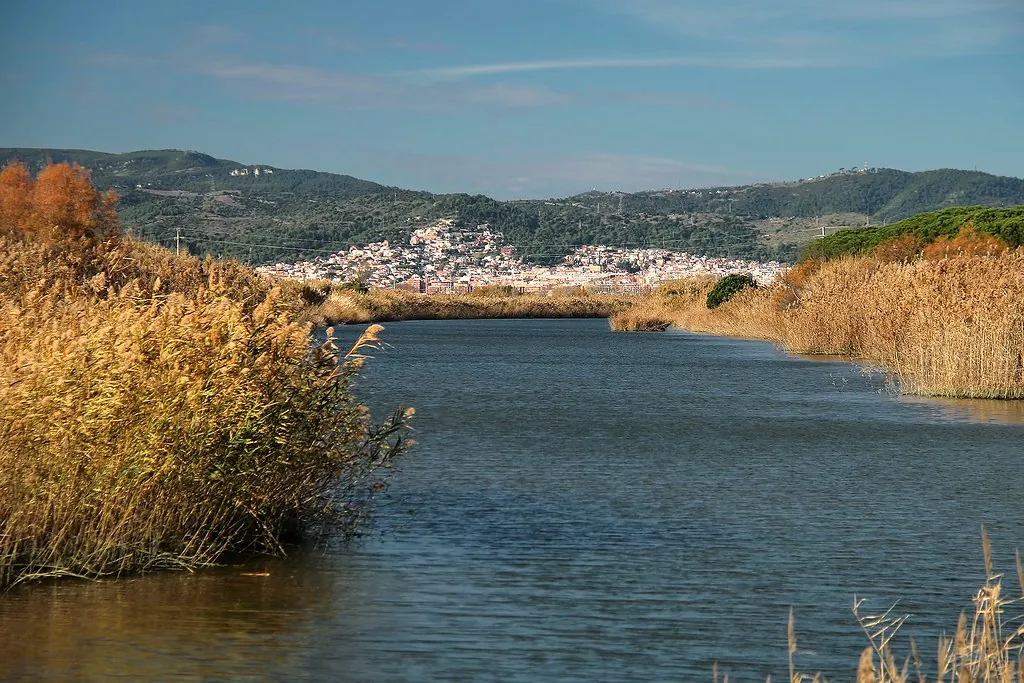
Sant Climent sits on the last ripple of land before the Llobregat delta flattens into a chessboard of artichoke fields and plastic greenhouses. From the church square you can watch descending aircraft glide in over the crops, close enough to read the livery but mercifully muted by the hill's slope. The altitude knocks two or three degrees off Barcelona's muggy heat; in July locals call it "the village air-conditioning" and refuse to apologise for the mid-afternoon closure.
The view south is working countryside, not postcard. Tractors leave mud commas on the road; irrigation ditches smell of wet earth and compost. On Tuesdays that smell mingles with frying onions from the market stalls that line Carrer Major: growers from Gavà and Viladecans unload crates of chalk-white onions, knobbly cardoons and guindilla peppers that will wrinkle your tongue. Prices are scrawled in chalk—€2 a kilo, take it or leave it—because haggling is considered bad form and tourists are still rare enough to be offered the same rate as neighbours.
One Tower, One Tapas Bar, One Terrific Video Show
The 18th-century bell tower is the only vertical thing for miles. Inside, a seven-minute projection mapping film (Catalan with English subtitles) splashes across the stone every quarter-hour, free, air-conditioned, and the nearest thing Sant Climent has to an "attraction". It tells the story of Pope Clement I being tied to an anchor and chucked into the Black Sea, which feels dramatic until you step back outside and remember the biggest drama today is whether El Racó will still serve coffee after 16:00 sharp.
Opposite the church, El Racó does a €18 menú del día—three courses, bread, wine or water, no substitutions unless you ask nicely. The roast chicken comes with proper chips, not crisscrossed "patatas bravas", and the waiters will swap the seafood paella for grilled pork if you widen your eyes and mention children. Order the local Cava by the glass; it's half the price of prosecco and tastes like green apples with a faint whiff of the sea you can't actually see.
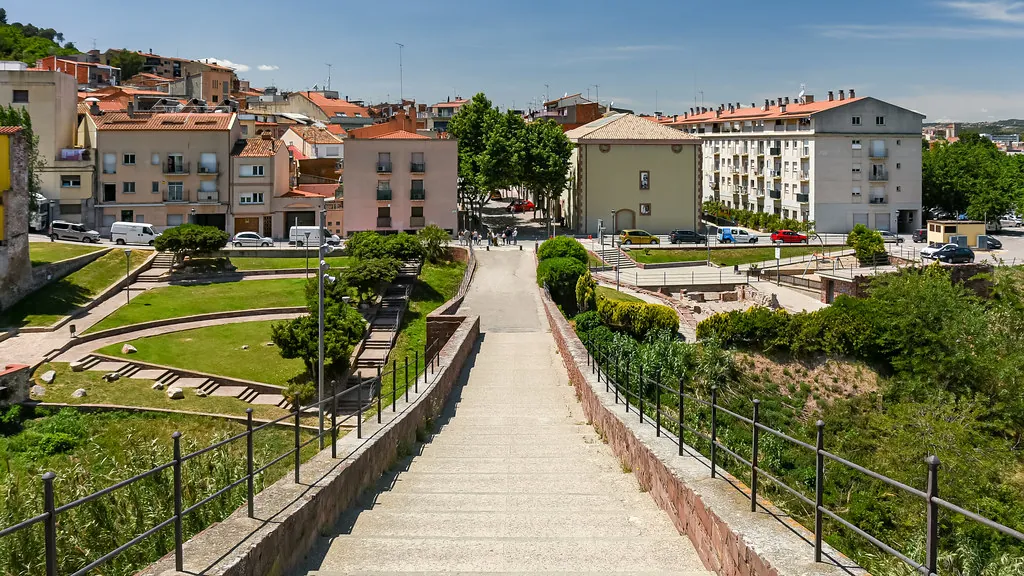
After lunch, walk the grid of narrow lanes that radiate from Plaça de l'Ajuntament. Houses are two or three storeys, pastel render flaking like old lipstick. Some doorways still have stone benches where grandmothers used to shell peas; now they're parking spots for e-bikes. The old core takes 20 minutes to cover, 30 if you stop to read the ceramic tiles that explain, in Catalan, how irrigation canals built by Moorish prisoners in the tenth century still feed the fields below.
Fields, Flat Paths and the Wrong Sort of Beach
Sant Climent isn't coastal. Anyone expecting sand will be disappointed—Sitges is 25 minutes by car, Castelldefels ten. What the village does offer is a lattice of dead-flat farm tracks that stitch together artichoke plots, cherry orchards and the occasional honesty stall selling honey. The Baix Llobregat Agricultural Park has way-marked loops of 4, 8 and 12 km; all start next to the petrol station on the BV-2002 and are graded "green", which is Spanish for "you'd have to try hard to get lost". Cyclists share the path with tractors, so a polite "bon dia" is advisable before overtaking a trailer of lettuce.
Winter mornings can be surprisingly sharp—frost feathers the windscreens even when the coast is T-shirt weather. Summer afternoons hit 32 °C but the cereal fields give off a dry rustle that sounds cooler than it is; still, set off early or you'll be the only pedestrian sharing the lane with sprinklers and thirsty dogs.
Getting There Without Losing the Will
Public transport exists, but only just. The quickest route from Britain is to fly into Barcelona-El Prat (BA, EasyJet, Ryanair from 30 UK airports), then pre-book a taxi for the 15-minute hop—€25-30 if you reserve online, €40 on the meter if you queue at the rank. A hire car costs less per day than two taxi rides and lets you stop at the roadside peach stalls on the way back.
Train enthusiasts can ride the R5 to Sant Boi de Llobregat, but buses uphill are sporadic and the 25-minute walk includes a pavement that disappears into a verge of prickly pears. Bring water and a hat; this is not the Ramblas.
When to Come, When to Leave
Tuesday, ideally before 13:00. Market day fills the plaça with gossip, tyre-kicking and the smell of fresh churros. By 13:30 every bar pulls its shutters; even the chemist locks up. Plan accordingly: picnic in the small park of Can Massallera (stone tables, shade, toddler swings) or retreat to your car and the nearest beach town for an afternoon swim.
Spring brings blossom storms in the almond orchards; autumn smells of crushed grapes and bonfires. August is hot, empty and slightly eerie—half the village decamps to family cottages on the coast. Christmas Eve sees a candlelit procession behind the local brass band; outsiders are welcome but there's no commentary, no mulled wine stall, just a slow shuffle through dark streets that ends with hot chocolate in the church hall. Donate a euro when the basket passes; the money funds the projection bulbs in the tower.
The Bottom Line
Sant Climent won't change your life. It has one church, one decent restaurant, one market morning and a view of aeroplanes. What it does offer is a slice of Catalan routine that hasn't been repackaged for visitors: the clatter of farming vans, the Tuesday gossip circuit, the certainty that everything stops at two. Turn up, order the set lunch, watch the video in the tower, and be back down the hill before the siesta ends. You'll have seen a village that functions for itself, not for Instagram—and that, these days, is rarer than any hidden gem.