Full Article
about Sant Feliu de Llobregat
County capital with modernist heritage and the Rose Festival
Hide article Read full article
Morning by the Llobregat
At eight in the morning, the Llobregat river carries a damp scent mixed with fresh bread drifting in from the streets of the centre. Some people cross the bridge towards the station almost on autopilot, coffee in hand. Sant Feliu de Llobregat wakes without much noise, with the steady calm of a place that sits right beside Barcelona yet keeps its own pace.
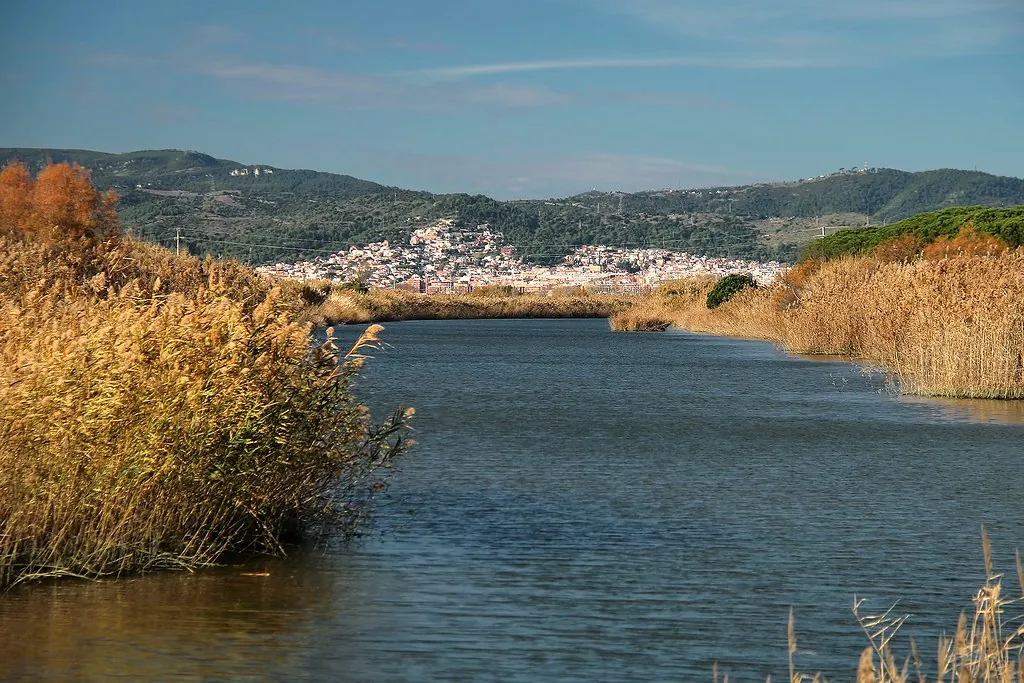
From the riverside path, the water moves thick and slightly murky, shifting between green and brown depending on the light. Early in the day, the sounds are simple and familiar: bicycles passing, dogs pulling on leads, the sharp knock of pétanque balls from a nearby court.
The river park stretches out as a long band of trees and dirt paths where the town seems to breathe a little more easily. Plane trees provide shade in summer, while in winter their bare branches let in a cooler light that falls at an angle across the ground. It is not a park designed to impress. It is where people go for a walk after lunch or head out for a run as the afternoon begins to fade.
Spring is usually the most pleasant time to come this way. The trees are at their best and the path fills with cyclists. In high summer, the heat of the Llobregat valley tends to build strongly by mid-afternoon.
A Cathedral with a Recent Story
The outline of the cathedral of Sant Llorenç appears suddenly among modern buildings. It is not an old cathedral in the traditional sense. The current structure was built after the Spanish Civil War and for decades it served simply as the town’s main church.
That changed in 2004, when it became a cathedral following the creation of the Diocese of Sant Feliu de Llobregat. The interior reflects this relatively recent shift. There is a mix of elements from different moments: restrained stonework, light wooden pews and a sense of space that still feels new.
Mid-morning is often the quietest time inside. Footsteps echo lightly and little else breaks the silence. Outside, the square in front tells a different story depending on the day. During the week it remains calm, while on market days in the surrounding streets it becomes noticeably busier.
Palau Falguera and the Town’s Green Spaces
A short walk from the centre leads to Palau Falguera, set behind a gate and surrounded by gardens. The building has the air of a former stately residence, a reminder of when this area was filled with agricultural estates and summer houses.
Today, the gardens have become one of the most peaceful spots in the municipality. Gravel paths wind between trees, benches sit in the shade, and patches of grass often fill with families spending the afternoon outdoors. As the sun lowers, the façade of the palace takes on a warm golden tone.
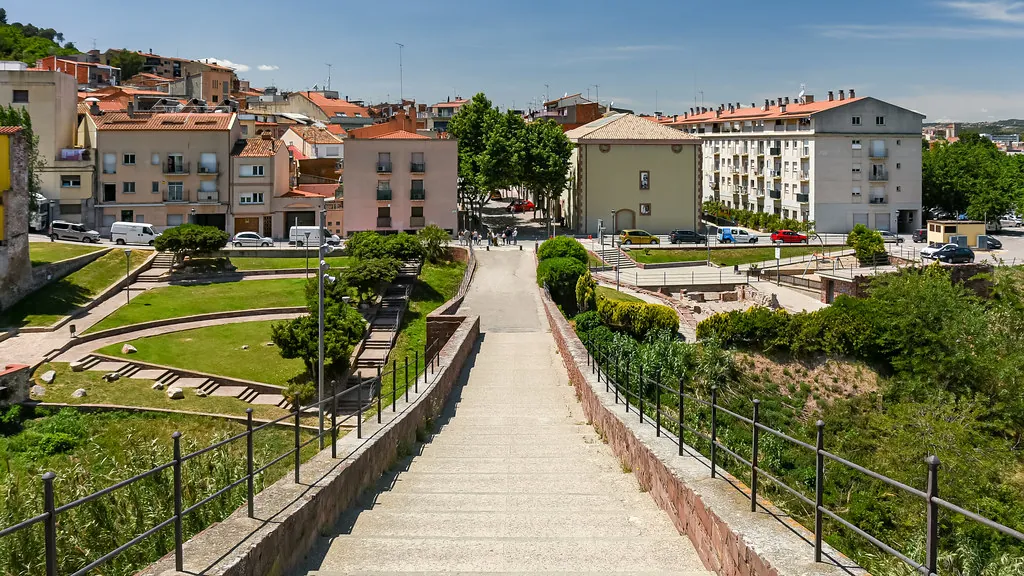
Elsewhere in Sant Feliu, a few older houses still appear among the later urban growth of the 1970s. They show themselves in small details: tiled façades, narrow balconies, interior courtyards barely visible from the street. They do not form a grand historic district. Instead, they offer scattered hints of what the town looked like before it developed into part of the wider metropolitan area.
The City of Roses
If there is one thing that returns each spring, it is roses. Sant Feliu has long been linked to the cultivation and exhibition of this flower, and when May arrives their scent can be noticed in different parts of the centre.
During this period, exhibitions and activities are organised around Palau Falguera and nearby areas. Visitors also come from Barcelona and across the Baix Llobregat region, giving the town a noticeably different atmosphere compared to an ordinary weekend.
For those who prefer a quieter visit, these days are best avoided. Outside the rose season, Sant Feliu returns to its usual rhythm, more local and unhurried.
When the Pace Slows
Spring tends to be the most comfortable season for walking around Sant Feliu. Temperatures are mild and there is a sense of life in the streets. The weekly market brings extra movement to several central roads and shows clearly that this is still a place shaped by neighbourhood routines.
August feels different. Some shops close and the heat lingers between buildings. Even so, around the feast of Sant Llorenç at the beginning of the month, the town celebrates its festa major. For a few days, the atmosphere shifts completely.
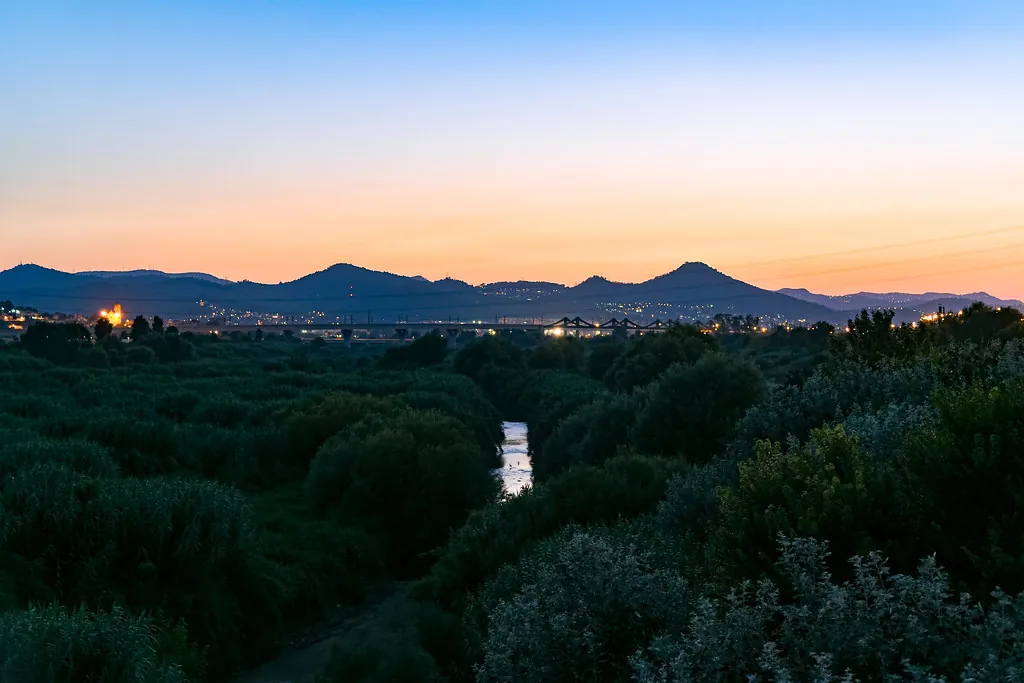
As evening approaches, the river becomes the place to return to. Lights from the motorway reflect on the dark surface of the water, while the steady sound of traffic blends with the croaking of frogs and the soft whirr of bicycle wheels passing along the path.
Sant Feliu de Llobregat does not try to present itself as anything other than what it is. It is a lived-in town, closely tied to the river and the railway, where the day draws to a slow and steady close.