Vista de l'església de Sant Martí de Torrelles.jpeg
Josep Salvany i Blanch · Public domain
Cataluña · Sea, Mountains & Culture

Torrelles de Llobregat

Twenty kilometres after leaving Barcelona’s airport, the motorway thins to a dual carriageway, then a country lane that corkscrews uphill for three...

6,170 inhabitants · INE 2025
126m Altitude

Why Visit

Catalunya en Miniatura Visit the theme park

Best Time to Visit

year-round

Cherry Festival (June) junio

Things to See & Do
in Torrelles de Llobregat

Heritage

  • Catalunya en Miniatura
  • Church of San Martín

Activities

  • Visit the theme park
  • Cherry Festival

Festivals
& & Traditions

Fecha junio

Fiesta de la Cereza (junio)

Las fiestas locales son el momento perfecto para vivir la autenticidad de Torrelles de Llobregat.

Full Article
about Torrelles de Llobregat

Known for the Catalunya en Miniatura park and its cherries

Ocultar artículo Leer artículo completo

The last roundabout before silence

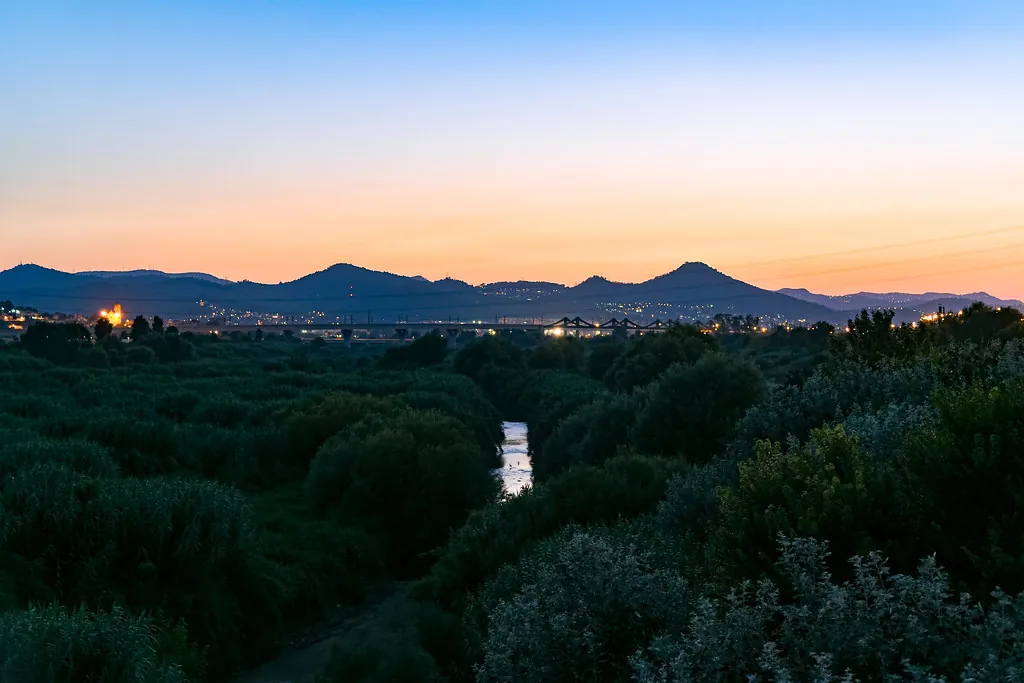
Twenty kilometres after leaving Barcelona’s airport, the motorway thins to a dual carriageway, then a country lane that corkscrews uphill for three kilometres. Mobile reception flickers. The temperature drops three degrees. By the time the road flattens out, the city’s soundtrack of horns and drill rigs has been replaced by the hiss of sprinklers in cherry orchards and the occasional clank of a tractor. Torrelles de Llobregat sits at 126 m above the Llobregat delta, close enough to see the sea haze on a clear day, high enough to escape the mosquitoes that terrorise the coastal campsites.

Six thousand people live here, but you’d never guess it after nine o’clock. The bakery shutters come down, the single cash machine retreats behind its metal grille, and the village obeys a rural curfew that most British arrivals assume is a joke—until they tramp the empty lanes looking for a late-night crisps fix and find nothing but cats under the plane trees.

A church, a fortified farmhouse and 800 hectares of cherries

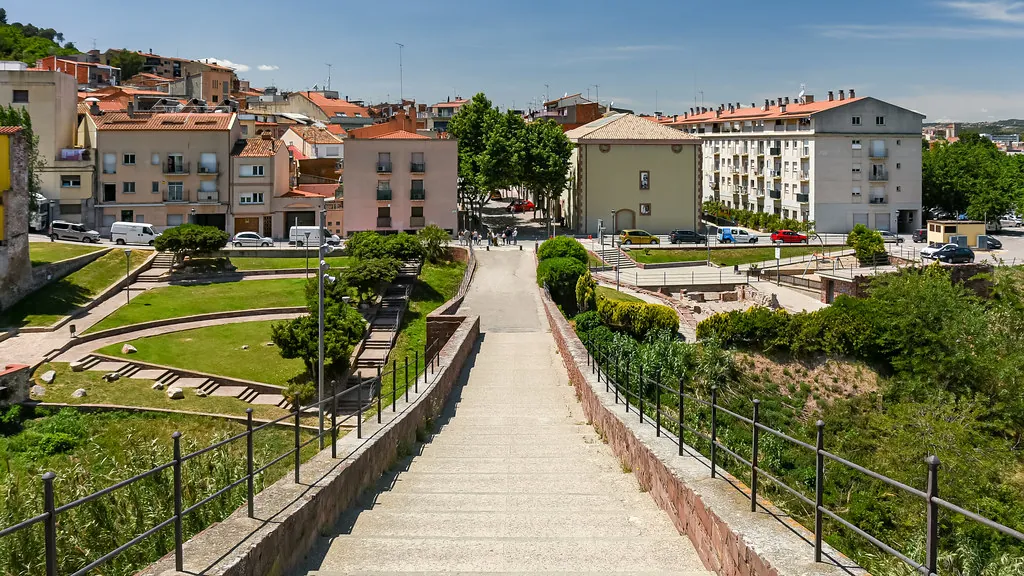
There’s no postcard plaza with geranium pots and a tinkling fountain. Torrelles grew as a scatter of masías, stone farmhouses built for defence rather than decoration. The easiest to spot is Can Pascol, a sixteenth-century tower house whose ground-floor slots once held the beams of a drawbridge. It’s privately owned, so you can only gawp from the lane, but the message is clear: this was border country between bandits and barley barons.

The parish church of Sant Martí is more accommodating. Romanesque bones survive inside, though successive rebuilds have cloaked them in stucco and whitewash. Sunday Mass still draws a crowd; if you slip in at 11 a.m. you’ll hear Catalan sung in the same cadence locals’ grandparents used, while teenagers in FC Barcelona hoodies file out for a smoke on the steps.

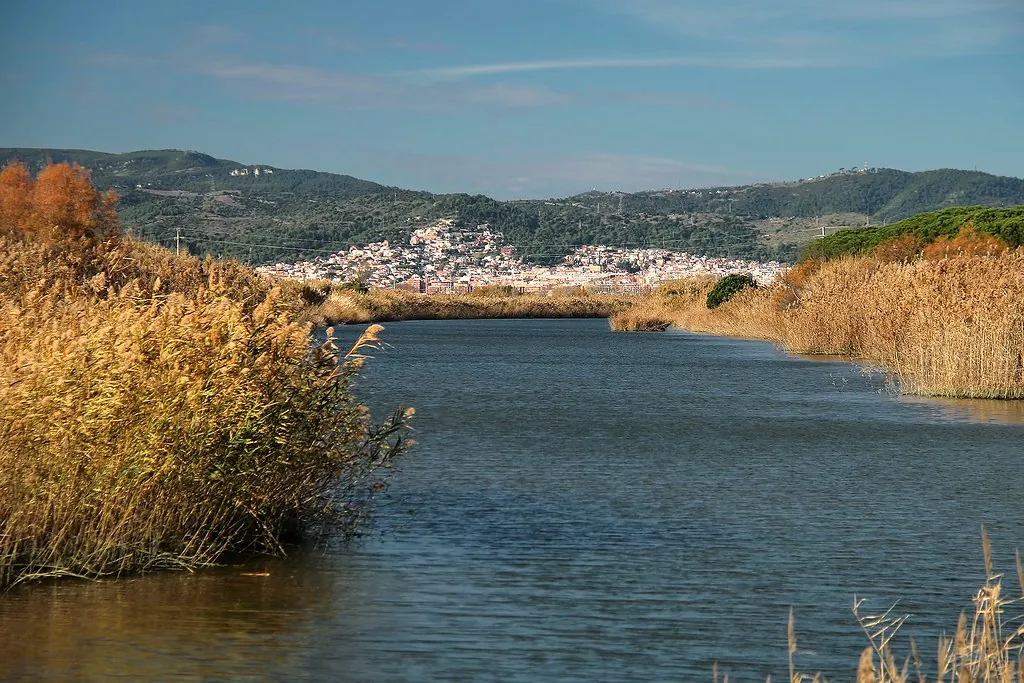
Beyond the stone roofs, the municipality is one uninterrupted orchard. Cherry trees dominate—nearly 400 small growers between them hold 800 ha—and for ten days each April the slopes look like someone’s upended two tonnes of icing sugar. Come back in late May and the same branches sag with Picota-type fruit, the deep-crimson variety Spain reserves for export and the village reserves for itself. Roadside honesty boxes ask €4 a kilo; bring €10 notes and you’ll go home embarrassed.

Where to refuel after losing to a Catalan grandmother at cards

Can Travi, the village’s only full-service restaurant, occupies a 1740 stable block with metre-thick walls. The menu is short and seasonal: grilled rabbit with romesco in spring, botifarra sausage and white beans in winter. A “mixed grill for two” arrives on a plank the size of a cricket bat; Brits who’ve spent the day clinging to a via ferrata proclaim it “proper meat, no mysterious bits”. Chips are available on request—thin, crisp and obligingly un-Spanish.

If you’re self-catering, stock up before Saturday 2 p.m. The solitary Spar locks its doors for the weekend and the nearest supermarket is a ten-minute drive down the switch-backs to Sant Vicenç. Friday night therefore resembles a polite rugby scrum: locals clutching loaves of coca (a rectangular flatbread topped with roasted vegetables), visitors counting out cents for bottles of Penedès house wine that cost less than a London pint.

Rope bridges, Roman roads and the 22:30 train rule

Torrellencs don’t go in for guided tours; they point you at a path and expect you back before the sprinklers start. The signed walk to the Font del Ferro spring is 40 minutes each way, almost entirely under holm oak. Fill a bottle: the water is potable and tastes of wet slate. More ambitious hikers can pick up the GR-6 long-distance trail, which roller-coasters across Collserola to the sea at Castelldefels—18 km, 700 m of ascent, bus back twice daily in July only.

Mountain bikers use the same web of farm tracks. The climbs are short, rarely longer than 400 m, but gradients touch 18% and the surface switches from gravel to concrete without warning. Rent bikes at the Parc de Collserola information hut (€15 half-day) and they’ll include a laminated map showing which tracks are legal—Catalan park rangers fine stray riders on sight.

Families seeking less lycra and more harness head to Parc d’Aventura, a high-rope circuit threaded through pine canopy on the village edge. Staff give the safety briefing in English, a rarity this side of the motorway, and the zip-line finale sails over the orchard you’ll be picking from next season. Book online: the park caps numbers at 120 and sells out at weekends.

The unbreakable rule is transport. The last R5 commuter train leaves Barcelona–Plaça Espanya at 22:30; miss it and a taxi costs €45–€50 if you can persuade one to come out. Uber barely operates beyond the airport ring road. Hire cars therefore clog the farm lanes, and August weekends resemble a Surrey car park—except the spaces are marked by olive trees and the ticket machine is an elderly man with a wheelbarrow who expects exact change.

When the cherries are gone

Visit in late September and the orchards look post-apocalyptic: bare branches, nets bundled, growers burning trimmings in small, controlled pyres. The temperature hovers round 24 °C, ideal for cycling without the summer swarm, and hotel rates drop 30%. The village wine cooperative—basically a stainless-steel barn behind the sports ground—opens for tastings on Friday evenings. Pourings are generous, spittoons optional, and the young winemaker will apologise for his “school” English before launching into a ten-minute disquisition on xarel·lo acidity that puts British oenophiles to shame.

Winter brings risks. A tramuntana wind can whistle down the valley and push the perceived temperature below zero even when the thermometer says 6 °C. Roads ice over; the 2019 cold snap cut the village off for 36 hours. Yet the same chill produces the other local speciality, calcots—long, sweet onions charred over vine stumps, wrapped in newspaper and eaten with romesco in January feasts that run well past midnight. If you’re invited, bring your own bib; the ritual is messy, communal and impossible to replicate in a UK back garden.

Check-out time, with no regrets

Torrelles doesn’t beg to be loved. It has no souvenir shops, no cocktail bars, no beachfront selfie pier. What it offers is a calibration device for urban clocks: cherries that ripen when they’re ready, not when Tesco orders them; a church bell that still dictates lunch; darkness thick enough to need a torch from the car to the front door. Use it as a cheap Barcelona bed and you’ll be mildly inconvenienced and ultimately converted. Treat it as the destination and you’ll leave with purple fingers, vineyard dust on your shoes, and the realisation that “only twenty kilometres” can measure two entirely different planets.

Key Facts

Region
Cataluña
District
Baix Llobregat
Coast
No
Mountain
No
Season
year-round

Official Data

Institutional records and open data (when available).

  • Can Riera
    bic Conjunt arquitectònic ~1.8 km
  • Can Valent - Can Pi de la Serra
    bic Conjunt arquitectònic ~1.6 km
  • Can Ràfols - Mas Trobat
    bic Conjunt arquitectònic ~1.4 km
  • Silene neglecta
    bic Espècimen botànic ~1.9 km
  • Puig Vicenç
    bic Zona d'interès ~2.4 km
  • Barraca de Can Riera
    bic Edifici ~1.7 km
Ver más (7)
  • Barraca de Can Valent 4
    bic Edifici
  • Molí de vent de Can Riera
    bic Element arquitectònic
  • Rellotge de Sol de Can Ràfols
    bic Element arquitectònic
  • Sector de les Penya del Cucut–Puig Vicenç–Collet de can Riera
    bic Zona d'interès
  • Pont de Can Valent
    bic Obra civil
  • Mina i font de Can Riera
    bic Obra civil
  • Puig Vicenç
    bic Zona d'interès

Planning Your Visit?

Discover more villages in the Baix Llobregat.

View full region →

More villages in Baix Llobregat

Traveler Reviews