Full Article
about Viladecans
Modern city with natural beaches and delta farmland
Ocultar artículo Leer artículo completo
Planes, Peppers and a Fifteenth-Century Farmhouse
The 07:14 to Barcelona passes a field of artichokes, then moments later an Airbus A330 lifts off so low you can read the registration. Welcome to Viladecans, a place that refuses to choose between city and country, between jet fuel and topsoil. At a mere 18 metres above sea level, this commuter town of 67,000 sits squarely in the flight path of El Prat airport, yet half its municipal boundary is given over to working farmland that still supplies produce to Barcelona's markets.
Most British visitors only see the place through a taxi window on the dash from terminal to hotel. That is their loss. Stay the night and you discover a layered suburb where medieval defence towers rise beside 1970s apartment blocks, and where the evening paseo happens to a soundtrack of reverse thrusters. The R2 suburban train connects the airport in seven minutes and Plaça Catalunya in twenty-five, so you can breakfast on calcots (grilled spring onions) in the delta, then be admiring Gaudí’s façades before the morning coffee has cooled.
The Old Core: More lived-in than lovely
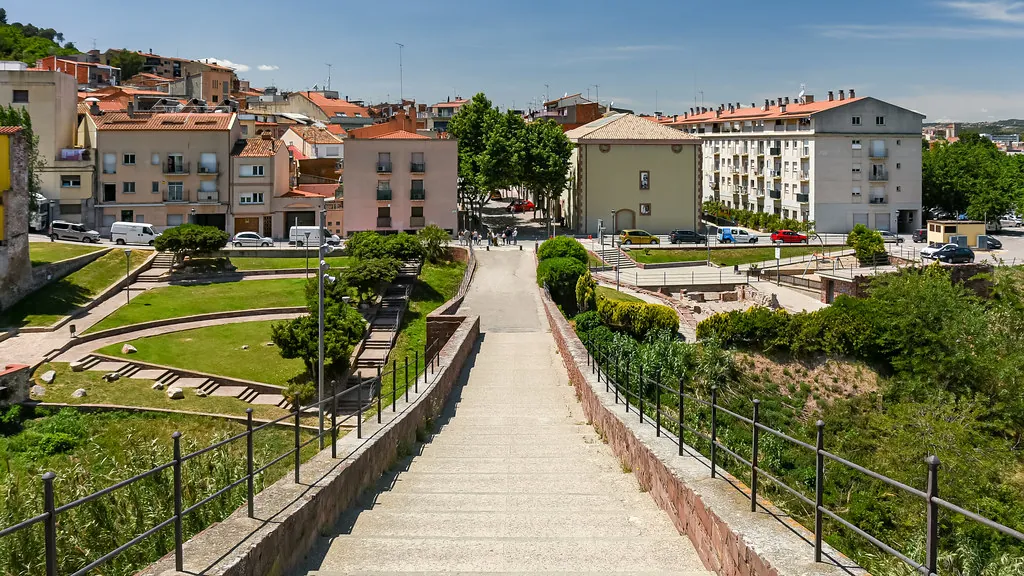
The Barri Centre clusters around the church of Sant Joan Baptista, an eighteenth-century rebuild of an eleventh-century original. Its ochre façade is baroque without the bombast; inside, the cool darkness smells of candle wax and floor-wax rather than incense and tourism. Elderly residents gather on the stone benches outside to argue about football while their grandchildren chase pigeons across the square. There are no ticket desks, no audio guides, simply a working parish that happens to be older than Parliament.
Two minutes north, Carrer Major narrows to the width of a single Citroën. Half-timbered balconies lean at geometrically impossible angles, their terracotta pots spilling rosemary and trailing geraniums. Number 56 is Can Xicarró, a neighbourhood restaurant whose English menu is mercifully short on Google-translate horrors. Order the paella mixta and you get proper saffron, not the neon yellow rice that haunts coastal resorts. A plate feeds two hungry adults for €18; add a jug of house white and you will still struggle to hit forty quid.
Detour five minutes east to find Can Calderon, a fortified farmhouse built in 1548 when this edge of the delta was frontier territory. The stone walls are four metres thick, the arrow slits now frame satellite dishes. You cannot always go inside—open days are advertised on a rolling A4 sheet in the town-hall window—but the exterior tells the story: agricultural wealth, bandits from the marshes, a need for defensive architecture that predates the airport fence by several centuries.
Fields Between the Runways
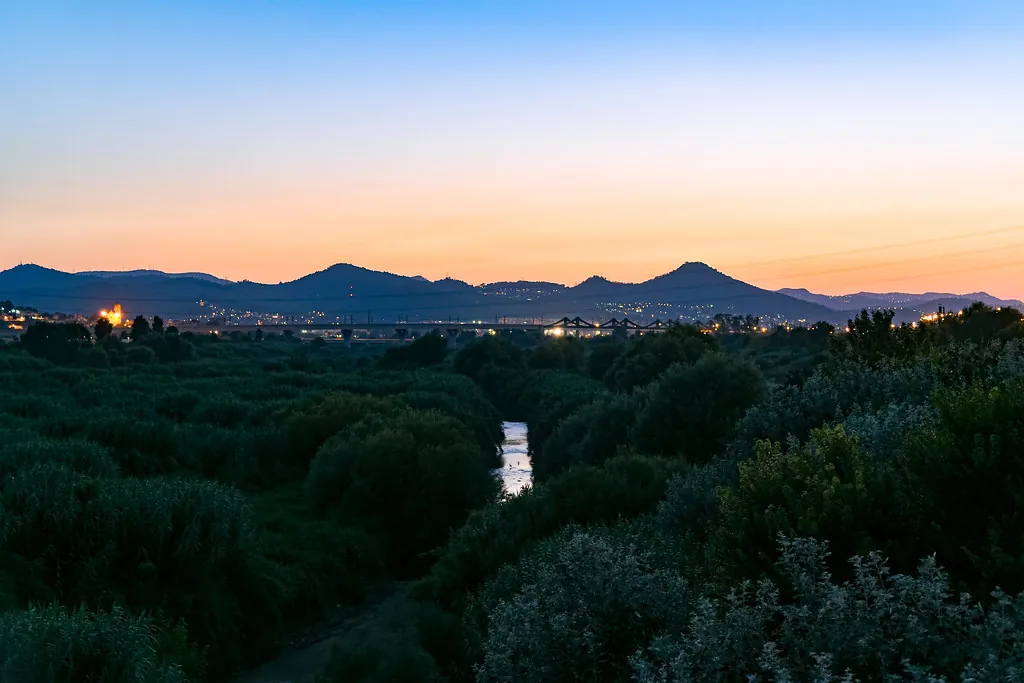
Leave the old core southwards and the tarmac thins out. Maize gives way to cherry tomatoes, irrigation channels glint like quicksilver, and the hum of the B-23 motorway fades behind a chorus of skylarks. This is the Parc Agrari del Baix Llobregat, a 3,000-hectare green wedge protected since 2002. Unlike many European "food heritage" parks, this one still earns its keep: 1,400 farmers produce 40 percent of the vegetables consumed in metropolitan Barcelona.
A flat, way-marked loop leaves from the Torre de Sant Joan and follows drainage ditches first dug by the Romans. In April the air smells of fennel and wet earth; in September you cycle between walls of sweet-corn higher than a double-decker bus. There are no gift shops, no tasting menus, just the odd honesty stall where a handwritten board advertises kilo bags of peppers for two euros. Drop coins in the tin, pocket your change, feel briefly like a local.
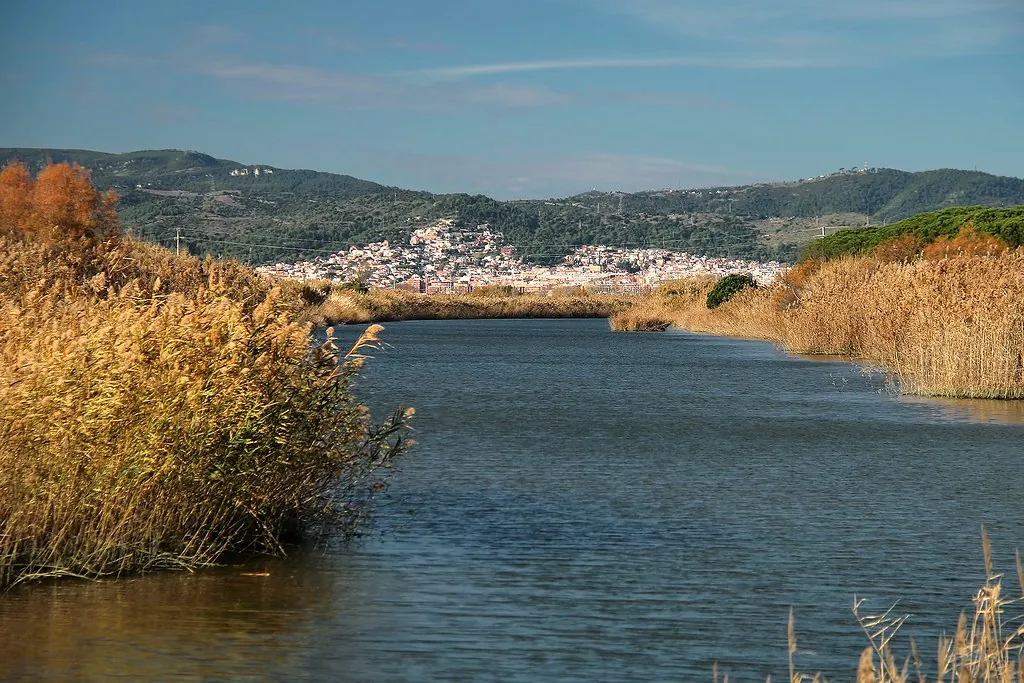
Bird-watchers bring binoculars: the neighbouring Remolar-Filipines reserve records 350 species, including glossy ibis that winter in Senegal and return each spring to the same reed bed. Visit at dusk and you will need repellent—the delta mosquito is a Catalan institution. Mornings are safer, and the light turns the irrigation canals copper just after sunrise.
Retail Therapy, Catalan Style
Even the most culture-hardened traveller occasionally needs a new pair of trainers. Viladecans delivers via The Style Outlets, five minutes' walk from the station. The complex is mid-sized—120 units rather than the aircraft-hangar scale of Bicester—but prices are pegged 30–70 percent below high-street tags. A British visitor in January 2020 reported "very reasonable Lacoste polo shirts for €35" and the food court sells properly strong coffee for €1.80, a fraction of airport tariffs.
A free weekend shuttle runs from Plaça de la Universitat in Barcelona; book online to guarantee a seat because locals use it too. If you are staying overnight, time your spree for late afternoon when day-trippers head back to the city and changing rooms become civilised again. The on-site Carrefour Express is the only supermarket open past 14:00 on Sundays, handy if you need flight-friendly snacks.
Beaches Airlines Forgot to Mention
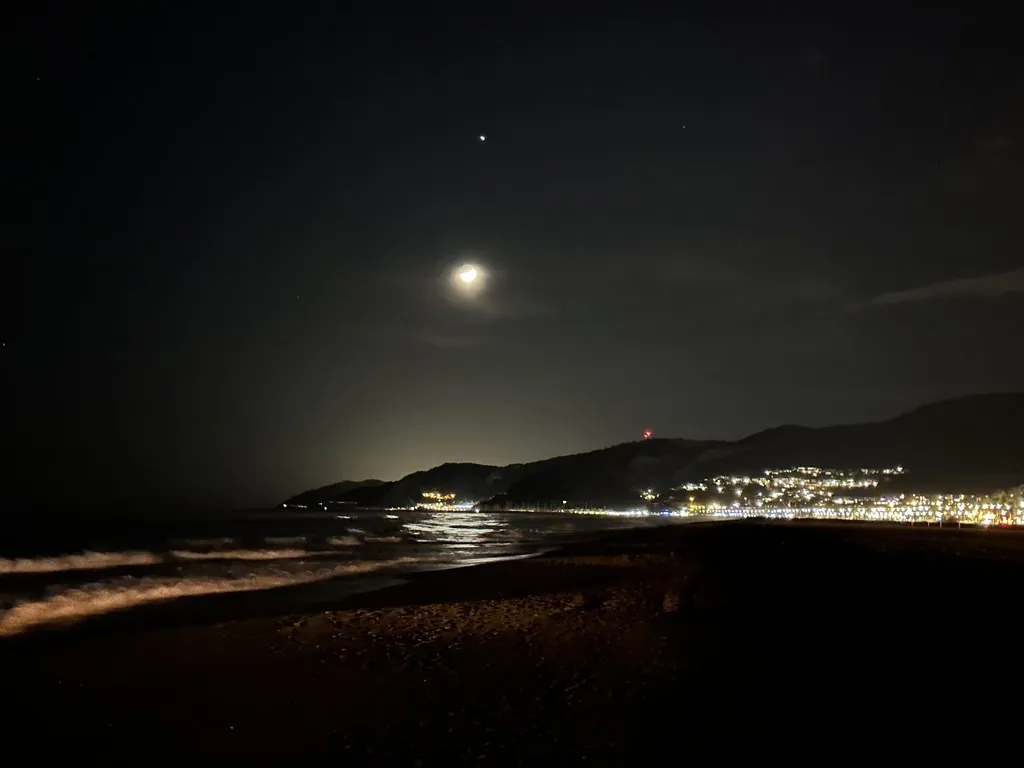
Most guidebooks stop at the municipal frontier, which is why British tourists still believe Barcelona itself has beaches. Ten minutes by bus from Viladecans station, La Pineda and El Remolar are wide, clean and mercifully free of the hawkers and beer-promoters that infest Barceloneta. The sand is honey-coloured, the slope gentle, and on weekdays you can walk half a kilometre without dodging a football. Bring shade—there are no serried ranks of sun-loungers for hire, just a couple of chiringuito beach bars playing Catalan pop at conversational volume.
Parking in July and August turns competitive; arrive before 11 a.m. or use the paid lot at Les Filipines (€6 all day). The same R2 train continues to Sitges should you crave a prettier promenade, but you will share the sand with six stag parties and a hen do in inflatable flamingos. Viladecans' beaches remain, for now, the choice of families from Baix Llobregat rather than bucket-list Britain.
When to Come, When to Skip
Spring and early autumn give warm days without the furnace heat of the Catalan July. Winter is mild—think Bournemouth in April—but the delta wind can slice straight through a fleece. August feels empty: locals shut their shutters and head to mountain second homes, leaving the streets to airport workers and the occasional bewildered tourist who misread the map.
Festival-wise, the main bash is Festa Major de Sant Joan in late June. A week of street theatre, sardana dancing and midnight fireworks culminates with the correfoc, devils running with fireworks, best viewed from behind the safety barrier with a plastic cup of vermouth. Accommodation prices hold steady—there are only two hotels—so book early or base yourself in Barcelona and commute.
Check-out Time
Viladecans will never vie with the postcard perfection of Cadaqués or the Gothic grandeur of Girona. It is a hybrid place, half metropolis, half market garden, where budget travellers sleep soundly under the flight path and wake to church bells and vegetable stalls. Come for a single night before an early flight and you risk missing the point: stay a day longer, swap duty-free for delta tomatoes, and you will understand why many Catalans would rather commute from here than live in the centre of Barcelona.