Full Article
about Calafell
Family beach destination with long stretches of sand
Hide article Read full article
Sardines grilling at eight in the evening smell like summer, even in the middle of winter. Smoke rises from the stalls of the Fiesta de la Sardina and drifts into the salty air, creating a scent that locals recognise instantly. From the seafront promenade, if you look up towards the castle as daylight fades, the medieval outline stands out against a sky turning violet.
Calafell sits on the Costa Daurada in Catalonia, facing the Mediterranean. It is a place where beach life, layered history and working traditions overlap without fuss. The sea is always close, and so is the past.
Where Time Folds In On Itself
Climbing up to the Castell de la Santa Creu feels like stepping into a slightly creaky time machine. On one side stands the Iberian citadel, with dry‑stone walls that hold the day’s warmth as the sun goes down. On the other, blocks of flats built during the major tourism expansion of the twentieth century edge surprisingly close. The contrast does not jar. It is simply part of everyday scenery here.
From the top, the Mediterranean lies flat and metallic, and the beaches of Calafell trace a pale line that continues towards Segur de Calafell. A little further inland, the vineyards of the Penedès begin, descending in gentle terraces towards the sea.
The castle has been documented since at least the eleventh century. Rosemary and thyme grow between its walls, and at sunset the air smells of warm earth. On days of strong wind, air slips through the arrow slits and produces a curious whistling sound. Some local guides call it “el canto de la templaria”, the song of the Templar, although there is no clear evidence that the Knights Templar ever passed through here.
The route up is part of a wider network of signposted paths linking Calafell’s historical sites. The full walk is around three kilometres. On paper it takes about an hour, but the climb to the old quarter is steep and the stones have been polished smooth by centuries of footsteps, so most people take their time.
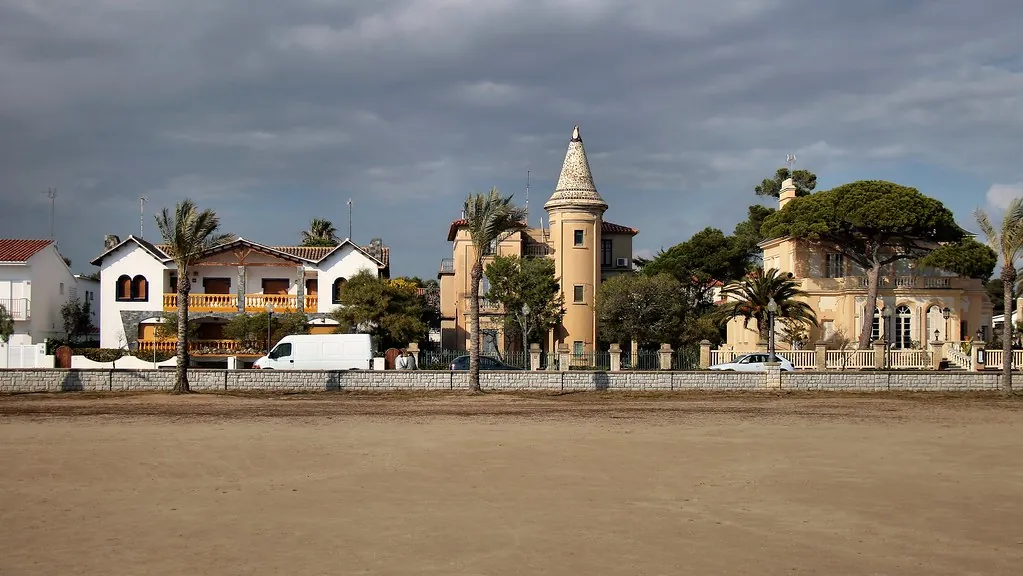
At the lower end of town, a few indiano houses can still be recognised. These were built by families who returned from the Americas with money to invest. Colourful tiles, wrought‑iron balconies and façades designed to be noticed speak of a period when coming back from overseas meant building a home that showed the journey had paid off.
Three Towns, One Municipality
Calafell is not a single centre but three distinct areas living side by side, each with its own rhythm.
Calafell pueblo, the oldest part, wakes early. Metal shutters rattle open first thing, and brief conversations fill the square as the day’s first coffees are served.
Calafell playa starts later. By mid‑morning, people cross the old N‑340 road with towels over their shoulders and feet still cool from apartment floors. The seafront promenade gathers sound gradually, the noise building in waves rather than all at once.
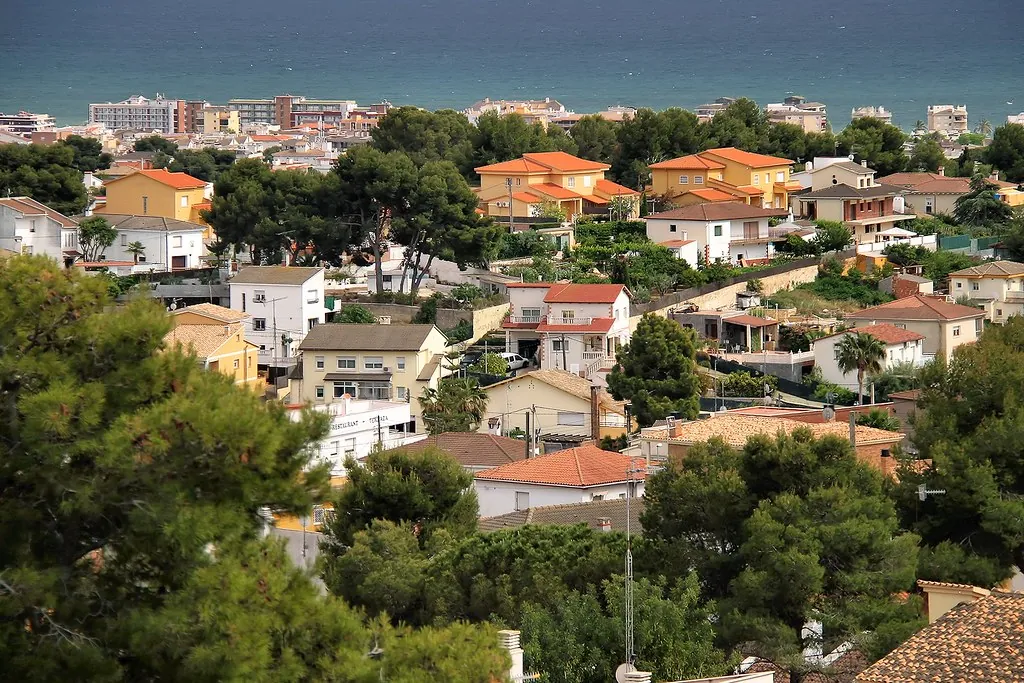
Segur de Calafell is more recent and follows a different logic. Long streets, houses with small gardens and cars parked in rows define the layout. Many residents live here year‑round and commute to nearby municipalities for work.
Together, these three pieces form a single municipality that balances tourism and everyday life. The sea draws visitors, but much of Calafell continues at a steady, local pace beyond the beach.
When the Sea Tastes of Vineyards
Food in Calafell reflects both coast and countryside. The xató here has its own character. This traditional Catalan dish is based on escarole, topped with a thick romesco sauce made from nuts, peppers and olive oil, and finished with salted fish for contrast. Some say the version in Calafell is slightly more intense than in neighbouring towns, though each household defends its own recipe.
Anchovies often come from nearby parts of the Penedès or the Garraf, and sardines still carry weight in local cooking. A few boats continue to head out from the port of Segur, inheriting nets and working methods passed from parents to children.
Rice appears regularly on family tables. It usually includes seafood such as langoustines and mussels, and takes on the orange tone of a well‑prepared sofrito base. It is not an everyday dish in many homes. More often, it is reserved for long Sunday gatherings when lunch stretches into late afternoon.
Wine belongs to the surrounding DO Penedès, one of Catalonia’s recognised wine regions. Within the municipal boundaries there are still plots of vineyard, mainly in the more inland areas. During the grape harvest, which falls in late summer or early autumn depending on the year, the air can smell of must as trailers loaded with grapes head down towards wineries elsewhere in the comarca.
Here, sea and vine meet without ceremony. Beaches and terraces of grapes sit within the same view.
The Light at Half Past Four
There is a particular moment on the beach when everything slows, around half past four in the afternoon. The sun no longer falls straight down, yet the sand remains warm. Shadows from the sculptures along the promenade stretch out, and the figures of fishermen seem to move across the paving.
Children arrive after school at that hour. They mix with retirees walking at an unhurried pace and with people taking the chance to stroll beside the sea before night sets in.
The coastal path that runs along part of the shoreline measures roughly five kilometres if walked in full. It links several beaches and wilder stretches of sand, including the area known as les Madrigueres. In winter, walkers tend to move briskly in coats. In summer, the mood shifts. Bicycles and scooters pass by, and people stop every few metres to look out over the water.
At the end of June, the town celebrates its festa major linked to San Pedro, Saint Peter, traditionally associated with fishermen. During those days the grilled sardines return, habaneras are sung from balconies and fireworks burst over the harbour water. The same smell of smoke and salt that marks the Fiesta de la Sardina drifts once again through the streets.
As evening falls and the castle silhouette darkens above the town, Calafell feels held between eras. Iberian stones, medieval walls, twentieth‑century apartment blocks and present‑day beach life occupy the same narrow strip between vineyard and sea. Nothing is hidden, and nothing is overstated. It is simply how this stretch of the Catalan coast has grown, layer upon layer, with the Mediterranean always in view.