Full Article
about Cunit
Residential coastal municipality with long beaches protected by breakwaters and a Romanesque church near the sea.
Ocultar artículo Leer artículo completo
Cunit’s beach is wide enough that even on the busiest August afternoon you can still lay your towel without parking it on someone else’s paperback. The sand runs for nearly three kilometres, flanked by a promenade so flat that grandparents push twins in buggies while teenage skateboarders weave around them without anyone losing patience. This is the first surprise: a Costa Daurada resort that feels organised for people who actually live here, not just flown-in chaos.
The town sits ten metres above sea level, low enough for the sea breeze to nudge the thermometer down a couple of degrees when inland villages are melting. Trains from Barcelona slip inland behind the marshes, delivering day-trippers in 47 minutes. Step off at the tiny station and the beach is a ten-minute stroll straight down Carrer de la Verge de Montserrat; no hills, no taxi required. If you land at Reus instead, a hire-car is optional – the 40-minute drive is handy for supermarket runs, but parking bays near the front disappear by 11 a.m. in July.
Sea First, Everything Else Second
The water is shallow for a good fifty metres, which makes it boring for strong swimmers and perfect for parents who prefer to supervise from a deckchair. Breakwaters divide the beach into gentle bays, so the waves rarely rise above a polite ripple. Lifeguards, blue-flag loos and a first-aid hut occupy the central stretch; walk five minutes east towards the railway footbridge and the crowds thin out, though you will share the shoreline with the odd dog-walker because this end toleres canes outside peak season. Sun-loungers cost €5 for the day; turn up after three o’clock and the guy in the hut usually knocks it down to €3 because he wants to go home.
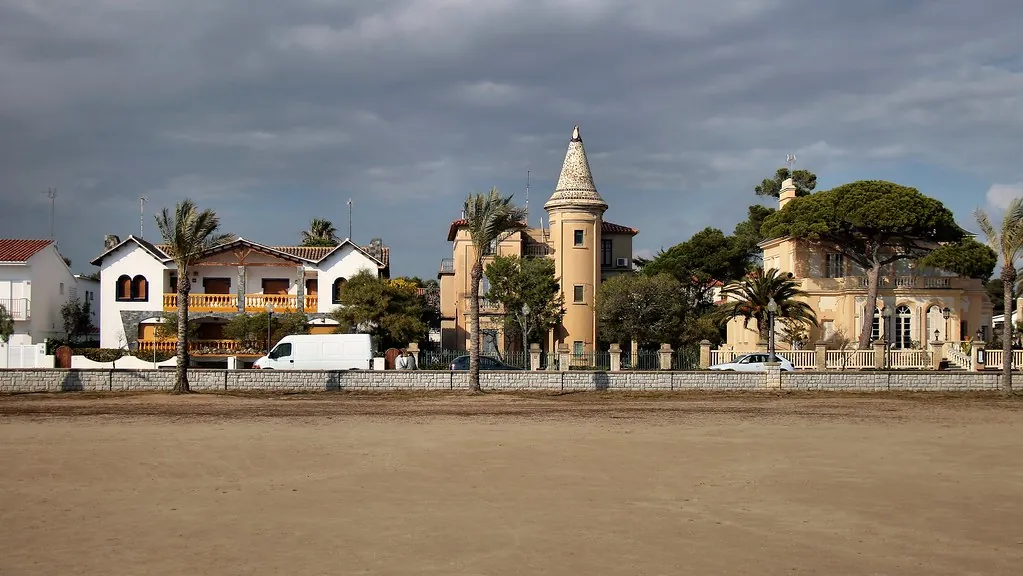
Behind the sand, the promenade is a textbook Spanish paseo: wide, clean, lined with low-rise blocks painted the colour of Mediterranean leftovers – salmon, ochre, faded pistachio. Cafés spill onto the pavement with identical white plastic chairs; what varies is whether the house wine comes in a proper carafe or has been sneaked out of a five-litre box. Can Marti, halfway along, still grills squid over coals and will do chips instead of fried potatoes without raising an eyebrow. They keep an English menu behind the bar, but ask for the daily fish written on the blackboard; it’s usually cheaper and tastes of something.
Concrete Beginnings, Not Medieval Dreams
Guidebooks sometimes promise “old-world Spain” and then dump you in Cunit, which is honest enough to admit it was largely built in the 1960s. The historical core is literally two streets: Carrer Major and Carrer de l’Església. The neoclassical church of Sant Cristòfol stands at their junction, bright white and symmetrical, more like a miniature town hall than a cathedral. Inside, the cool darkness smells of candle wax and floor polish; five minutes is enough to see the lot, but the benches make a decent refuge if you’ve mis-timed the shops and everything’s shut between two and five.
Pirate-watchers can hunt down the Torre de les Bruixes at the eastern edge of town. The small stone tower once scanned for Berber ships; now it scans for Instagrammers. You can’t climb it – the door is locked and the interior is empty – but the surrounding pine patch gives shade and a vantage point back along the coast. Combine it with an iced coffee from the kiosk on the rail-trail and you’ve ticked “culture” before lunch.
Flat Trails and Rice that Refuses to Rush
The old coastal railway has been ripped up and relaid as a via verde, a tarmacked cycle path that rolls west to Calafell and east to Cubelles. The gradient is negligible; hire bikes from the shop opposite the tourist office (€12 a day) and you can do the return trip to Calafell castle in a lazy morning. Take water – the route is exposed and the sea breeze tricks you into underestimating sunburn.
Back in town, lunch starts at two and cannot be hurried. L’Arrosseria will sell you a paella for two even if you are one adult and a six-year-old; they simply bring half portions in the same pan. Ask for the “sense marisc” version if someone in the party thinks prawns are creepy. Rice here is cooked to order, so expect a 25-minute wait; order bread rubbed with tomato and a plate of anchovies to bridge the gap and stop the children demanding crisps.
Evenings belong to the promenade again. Around seven the sun drops behind the breakwaters, turning the sky a shade of peach that would look fake on a postcard. Spanish families surface for their paseo, grandparents first, teenagers last, everyone walking in the same direction as if following an invisible rail. By ten the restaurants refill; kitchens close abruptly at four-thirty and reopen at eight-thirty, so don’t expect an early-bird special.
Day-Trip Leverage
Cunit’s trump card is what lies just outside it. Twenty minutes up the AP-7 (or 35 on the slower coastal road) the vineyards of the Penedès start to stripe the hills. Bodegas such as Jean Leon or Torres welcome drop-ins for €12 tastings, and the staff switch to English without sighing. If someone in the group wants Roman history instead of grapes, Tarragona is 25 minutes south: amphitheatre, aqueduct, and a cathedral that squats on top of a temple like architectural lasagne. Trains run twice an hour; buy the T-10 multitrip at the machine and the fare works out cheaper than petrol plus parking.
Sitges, with its pricier restaurants and smarter boutiques, is only three stops closer to Barcelona. Go there if you need white tablecloths; come back to Cunit if you just want a second ice-cream without queueing.
What to Pack, What to Overlook
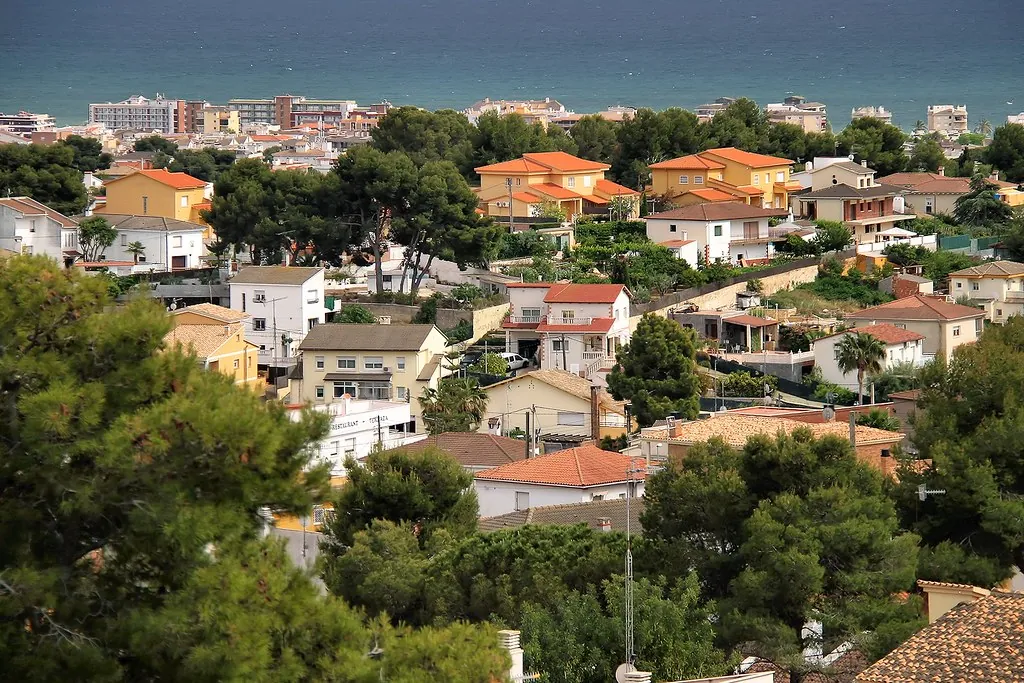
Accommodation splits into two camps: apartments on the seafront and housing estates on the low hill behind. The latter are cheaper for a reason – the walk back from the beach with tired children and a bucket of shells feels twice as long when it’s uphill. Check Google Earth before you book; anything north of the railway line is a twenty-minute slog to the sand.
Mosquitoes breed in the marshes west of town. Bring repellent for summer evenings or you’ll spend cocktail hour slapping your own ankles. Plug sockets in most hotels are the thin two-pin Euro type; the old British adaptor doesn’t fit, so spend three euros at the airport or the Chinese bazaar on Carrer Madrid.
Rain is rare but not impossible; when it comes the beach empties and the promenade turns into a wind tunnel. There is no indoor aquarium, no medieval arcade to shelter in, just a single-screen cinema that shows one Spanish-dubbed film per night. Pack a pack of cards and treat a wet afternoon as the village forcing you to do nothing.
Should You Bother?
Cunit will never win Spain’s beauty contest. It lacks the honey-stone arcades of Besalú or the yacht-filled glamour of Sitges, but it compensates with space, simplicity and a train timetable that lets you breakfast on churros, lunch in Barcelona and still be back for a swim before the sun sinks. If your idea of a holiday is queue-free sand, reasonably priced grilled fish and the faint possibility the barman will remember your name on the third visit, Cunit delivers. If you need historic alleys or thumping nightlife, stay on the train for another 30 minutes – both you and the villagers will be happier.