Full Article
about Llorenç del Penedès
Wine-growing town with a notable modernist winery and lively cultural scene
Hide article Read full article
A village slightly above the vines
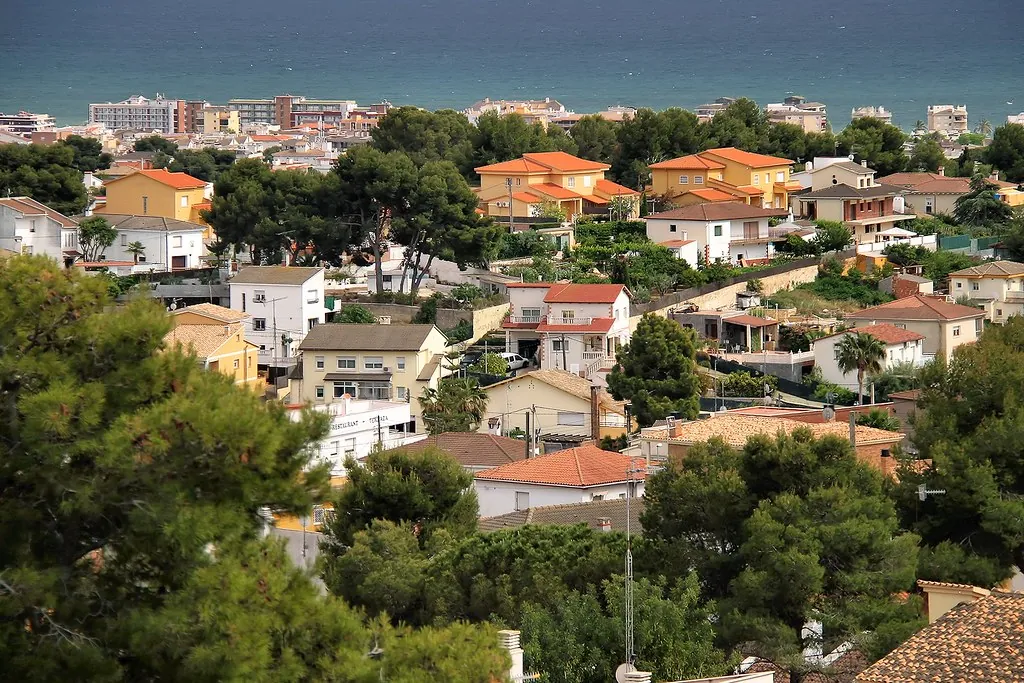
Llorenç del Penedès sits on a gentle rise in the middle of the Baix Penedès wine plain. The elevation is subtle, only just higher than the surrounding fields, yet enough to give a clear view across the vineyards that cover much of the municipality. With just over four square kilometres and around 2,400 residents, it counts among the smaller places in the comarca.
Its scale can feel modest, but the village holds a particular place in Catalonia’s agricultural history. More than a century ago, local producers made a decision that would shape rural life: organising wine and olive oil production through a cooperative. That structure still underpins much of the local economy today, linking past and present through everyday work in the fields and cellars.
Sant Llorenç church and an older trace
The parish church of Sant Llorenç dates back to the 14th century, although what stands today is largely the result of a 20th-century reconstruction. It is not a large building, and its role in the village is as much practical as symbolic. The streets are arranged around it, making it a clear point of orientation within the town.
Inside, there is a much older element: a pre-Romanesque baptismal font. It predates the church itself and likely comes from an earlier religious building in the area. This kind of reuse was common in rural parishes, where liturgical objects often remained in circulation for centuries rather than being replaced. The font quietly connects the present building to a deeper, less visible past.
The bell tower was added later. It rises above the low houses of the centre but does so without dominating them. Instead, it blends into the skyline, marking the village without overwhelming its scale.
The cooperative and agricultural modernisme
One of the clearest ways to understand Llorenç del Penedès is through its former agricultural cooperative building. Designed in 1920 by Cèsar Martinell, an architect associated with Gaudí’s circle, it reflects a broader movement known as agricultural modernisme. Martinell was responsible for several cooperative wineries across Catalonia, and this building follows the same practical and aesthetic logic.
Exposed brick, wide arches and careful ventilation define the structure. Every element serves a purpose linked to producing and storing wine and olive oil. These were not simply industrial facilities. They expressed a collective way of organising agricultural life during the early decades of the 20th century, when cooperation offered stability and shared resources in a changing rural economy.
The building remains connected to local agricultural activity. At certain times, organised visits allow a look inside, offering a sense of how these spaces were designed to function and how they continue to adapt.
Festivals and shared traditions
The main annual celebration, the Fiesta Mayor, takes place on the first Sunday after 10 August. During those days, the central square and nearby streets become the focus of village life, with activity concentrated in a relatively small area.
Castells, the human towers closely associated with Catalan culture, are also part of the festivities. Llorenç del Penedès does not always have a permanent local group, but it is common for pillars or smaller constructions to be raised in the square. This practice is widespread across this part of the Penedès and remains an important form of collective expression.
In spring, a day dedicated to wine and cava is usually held along the main rambla. Producers from the surrounding area present their wines and sparkling wines, and the atmosphere combines tasting with music and cultural events. At times, this celebration is linked to a walk through the vineyards towards a nearby hermitage located in the neighbouring municipality of Albinyana. The route adds a physical dimension to the experience, connecting the products on display with the landscape they come from.
Walking out into the landscape
The urban centre of Llorenç del Penedès can be covered quickly on foot. What tends to hold attention lies beyond it, along the agricultural tracks that lead out towards the vineyards.
Some cycling routes in the Penedès pass relatively close by, making it possible to connect with quieter rural paths. Walking is just as straightforward. The terrain is open, and the plots are linked by farm tracks that allow movement without much planning.
It is worth wearing closed footwear when heading into the vineyards, particularly after rain or during periods of fieldwork. The ground can be uneven or muddy depending on the season. Parking in the village is generally uncomplicated, except during specific moments in the festive calendar when activity increases.
Llorenç del Penedès does not try to draw attention to itself. It operates much like many agricultural villages in the Penedès: surrounded by vines, supported by a cooperative that remains active, and shaped by a rhythm still tied to the grape harvest and the olive oil season.