Full Article
about Masllorenç
Small village bordering Alt Camp, known for its quiet atmosphere and furniture making.
Hide article Read full article
A Small Village Among Vines
Masllorenc appears almost without warning. The road runs between vineyards and the occasional masía, a traditional Catalan farmhouse, and then the village comes into view. It is small and unassuming. The sort of place that does not seem to be waiting for visitors. That may be why tourism in Masllorenc feels calm, almost accidental.
With just over five hundred inhabitants and sitting at around 300 metres above sea level, the municipality is closely tied to the land. Vineyards, olive groves and cereal fields shape daily life. They are not decorative backdrops but working plots that have been cultivated for generations. The landscape here was not designed for photographs. It is simply the result of people farming the same soil year after year.
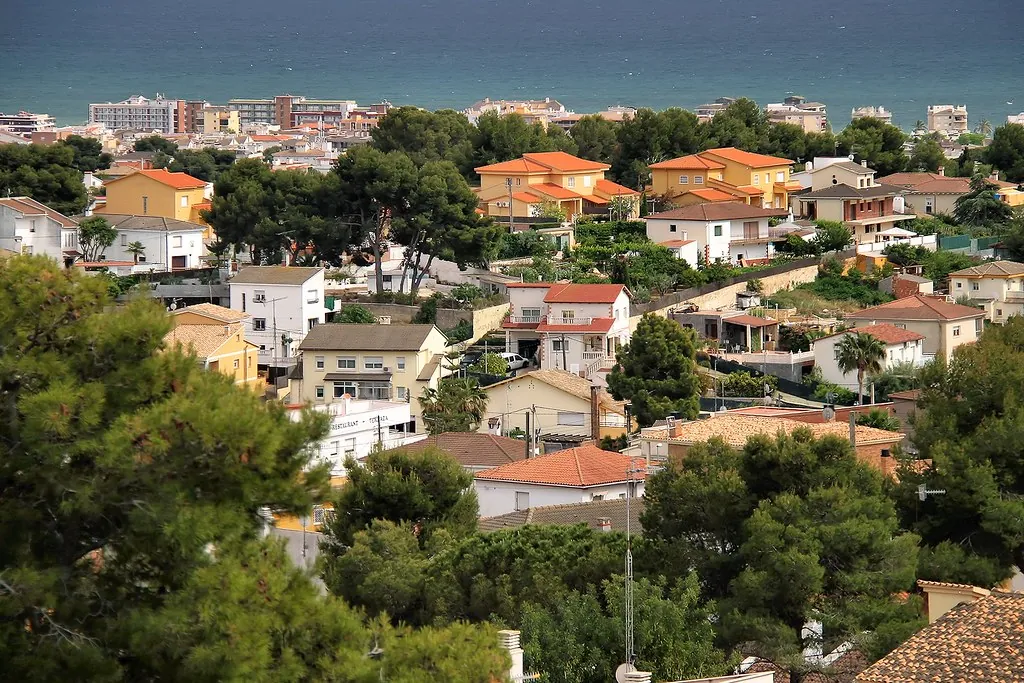
Open fields surround the cluster of houses. The colours shift noticeably as the months pass. In summer, dry yellow tones dominate the fields. Spring turns everything green, and the contrast becomes sharper. From the higher streets, on clear days, the Prades mountains are visible to the west. Sometimes a thin strip of sea can be made out to the south-east. Tarragona and El Vendrell lie nearby, so reaching Masllorenc usually means turning off the main road for a while rather than embarking on a long journey.
A walk through the village reveals a very recognisable version of inland Catalonia. Worn stone doorways line the streets. Conversations stretch out in the square towards evening. Paths slip away between vineyards almost from the last house. There is no elaborate staging. This is simply how the place is.
The Heart of Masllorenc
The centre revolves around the parish church of Sant Jaume. Its origins are medieval, although it has undergone several alterations over the centuries. The bell tower rises above the rooftops and can be seen from almost anywhere in the village. It acts as a reference point while wandering through the narrow streets.
Inside, there are no grand artistic treasures to seek out. This is a rural church, sober in style, with a few elements of sacred art that hint at the village’s age. Its interest lies more in understanding how it fits into local life than in examining individual decorative details.
The old quarter can be covered quickly. In less than an hour it is possible to gain a clear sense of the layout. Even so, it is worth slowing down to look at doorways and façades. Some manor houses still display carefully worked voussoirs, the wedge-shaped stones forming arches, or old coats of arms. These are small clues to periods when the village experienced a little more economic activity than it does today.
Masllorenc does not overwhelm with monuments. Its appeal rests in proportion and scale. Everything feels close at hand, and the transition from built streets to open countryside happens almost immediately.
Tracks Through Vineyards and Farmhouses
Agricultural tracks begin as soon as you leave the centre. These are simple paths that cross cultivated fields, small pine woods and the occasional patch of holm oak. The scenery is neither dramatic nor wild. It is a worked landscape, typical of the Baix Penedès comarca, a county known for its agricultural character.
One of the usual walks leads up to the sanctuary of Sant Ramon, set on a nearby hill. The ascent is not long. At the top, the horizon opens out across the surrounding countryside. The mosaic of vineyards and neighbouring villages becomes easy to distinguish from this vantage point.
The walk is short overall. A relaxed morning is enough if you take your time and stop to look at the view. From above, Masllorenc appears small, almost folded into the fields around it. The pattern of cultivated plots makes more sense from this higher ground.
Beyond this route, other tracks invite unhurried exploration. They follow the logic of the farmland, linking plots and farmhouses rather than aiming at scenic highlights. The experience is straightforward: open skies, the smell of dry earth in summer, greener tones in spring, and the steady presence of vines.
In the Land of Penedès Wine
Masllorenc sits within a part of Catalonia closely associated with Penedès wine. Vineyards form an almost continuous presence across the comarca, shaping both the economy and the visual identity of the area. Not every agricultural holding is open to visitors, but travelling along the secondary roads helps convey the scale of wine production here.
These same roads are popular with cyclists. Traffic tends to be light, the gradients are gentle, and villages lie relatively close to one another. It is easy to link several in the course of a morning without much difficulty. The rhythm of the countryside suits slow travel, whether on foot, by bicycle or by car.
Food in the area follows the same logic as the landscape: straightforward and substantial. Stews appear regularly, along with embutidos, the cured sausages typical of Catalonia, and seasonal vegetables. Anyone in search of coastal fish usually heads a few kilometres towards the sea. Inland cooking here reflects what the land provides.
The wider Baix Penedès frames Masllorenc within a network of small settlements. Each has its own church, square and surrounding fields. Together they form a patchwork that feels coherent and lived-in rather than curated for tourism.
How Long to Spend in Masllorenc
Masllorenc does not demand much time. A circuit of the old quarter, a visit to the church of Sant Jaume and a short walk along the nearby tracks are enough to form a clear impression.
Those with a little more time can climb to the sanctuary of Sant Ramon or wander further among the vineyards. From above or at the edge of the fields, the village sits below, compact and quiet, surrounded by cultivated land. The relationship between settlement and agriculture becomes evident.
Masllorenc works best as a pause rather than a destination filled with sights. It offers a view of everyday life in the Baix Penedès, away from busier routes. The scale remains human, the setting agricultural, and the pace unhurried. For travellers passing between Tarragona, El Vendrell and the inland roads of Catalonia, it provides a brief but grounded encounter with a landscape shaped by vines and time.