Full Article
about La Floresta
Hide article Read full article
A Stop That Feels Like a Question
Tourism in La Floresta begins with a slightly odd sensation. It is the feeling of driving into a village to fill up with petrol, then realising there is no petrol station. The car rolls to a halt. You look around and think, “Is this really it?”
A stone bench. A sign leaning at a mild angle. An olive tree that seems older than the road itself.
That is La Floresta. Population: 159 people. Area: just over five square kilometres. The silence has the quality of a Sunday afternoon when everyone has already gone home.
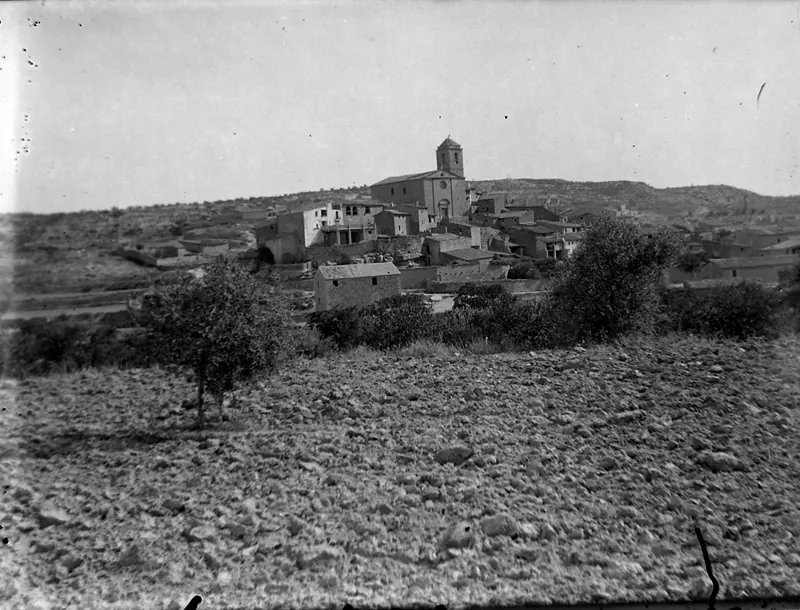
Set in Catalonia, it does not present itself as a destination in the conventional sense. There are no big entrances or viewpoints arranged for effect. It simply exists, small and self-contained, as if it has quietly agreed not to compete with anywhere else.
The Village That Never Tried to Grow
La Floresta is one of those places that never made the leap to becoming a “big village”. No factories arrived. No busy station altered its rhythm. The streets never filled with cars.
What defines the place is dry stone, olive trees and the occasional almond tree that bursts into bloom in March, as if someone has switched on a light in the middle of the fields.
Residents summarise it plainly: there are no bars, no shops, no health centre. They say it in the same tone someone might use to explain that their building has no lift. It does not sound like a complaint, more a statement of how things work here.
The main square is small. The kind you can cross in ten steps, like the playground of a rural school. The town hall occupies a house that could easily pass for any neighbour’s home, painted door, shutters, tiled roof. The mayor is usually someone you might meet on the street. A greeting, a quick question about where you have come from, and that is that.
Nothing in La Floresta tries to impress. Its scale remains human. You are always close to the edge of the village, and beyond that, open countryside.
La Balma de la Coveta: Marks from the First Inhabitants
About ten minutes on foot from the village lies La Balma de la Coveta. The path does not look official. It resembles the sort of track formed over years by goats, a shepherd or a handful of curious walkers.
The balma is a rock shelter containing prehistoric cave paintings. Monumental is not the word. The figures are simple: deer antlers, human shapes that bring to mind the drawings of a child discovering felt-tip pens for the first time.
Sit there for a while, with the rock at your back and the landscape stretching out in front, and the choice of location begins to make sense. It feels similar to finding the best bench in a park and deciding you would stay put as well.
There is no interpretation centre and no large explanatory panels. A discreet plaque is about all you will find. After rain, it is wise to take care. The path becomes slippery, like stepping on wet soil in a vegetable garden after watering.
La Balma de la Coveta does not attempt to reconstruct the past for you. It leaves space for imagination, and for the simple fact that people stood here long before any village existed.
When the Countryside Becomes a Weekend Address
Another curious detail about La Floresta is that for much of the year there are more houses than residents. Many properties belong to people who live in nearby cities and appear at weekends.
Long-time neighbours tell this with a touch of humour. They used to know every household, even every dog. Now they sometimes exchange greetings without knowing whether the person in front of them lives there all year or has come for two days from Barcelona.
Even so, this coming and going keeps many houses standing. Roofs are repaired. Windows are opened. Vegetable plots are cleared. It resembles sharing a flat with someone who is rarely at home. You do not see them often, yet their presence keeps the place functioning.
The result is a village that never quite empties, though it never feels busy either. There are moments when shutters are closed and the streets seem paused, followed by weekends when doors open and a little movement returns.
The Olive Tree as a Clock
In La Floresta, the calendar is marked by trees rather than events. When the olive trees begin to fill with fruit, autumn is on its way. When the almond trees flower, the fields look as if someone has dusted them with sugar.
Olive trees dominate the landscape. Old and twisted, their trunks resemble giant hands gripping the soil. Some have stood there for centuries. Near the bench at the entrance to the village, there is one that residents say is more than a thousand years old.
A thousand years is difficult to picture. Think of how many mobile phones, cars or fashions have come and gone while that tree has remained exactly where it is.
Stand in front of it for a moment and the effect is similar to looking at a wide, open sea or a sky thick with stars. Perspective shifts. The village, with its 159 inhabitants and small square, feels even smaller, yet also more grounded.
There are no signs declaring the tree extraordinary. It is simply part of daily life, another presence that measures time without hurry.
Is It Worth the Detour?
La Floresta does not work as an excursion packed with plans. There are no shop windows, no lively streets, no schedule of activities.
The experience is closer to pulling into a motorway service area, stepping out of the car and realising that what was needed was a pause.
If you come, bring water, something to eat and comfortable footwear. Do not rely entirely on your mobile phone for orientation. Coverage appears and disappears like an old radio losing signal as it enters a tunnel.
When you leave and drive back down the road, watching the village recede in the rear-view mirror, an automatic question may surface: “Is that all?”
Yes. That is all.
Sometimes La Floresta is like a short coffee taken at a quiet counter. It does not last long. It leaves a good taste behind.