

Full Article
about Badalona
Large coastal city with a significant Roman legacy and a long urban beach next to Barcelona.
Hide article Read full article
A Seaside City Next to Barcelona
If you are considering tourism in Badalona, start with the practicalities. Parking near the seafront promenade is often difficult when the weather is good. On sunny days much of Barcelona seems to have the same plan. Coming by metro or train from Barcelona is usually easier. Both leave you within walking distance of the beach and the Roman museum, and you avoid threading a car through central streets.
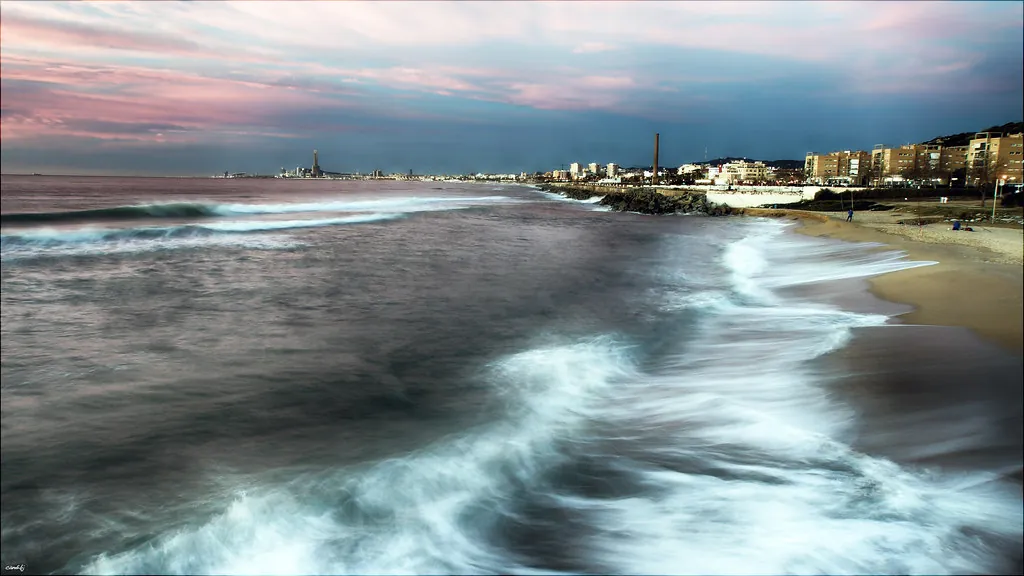
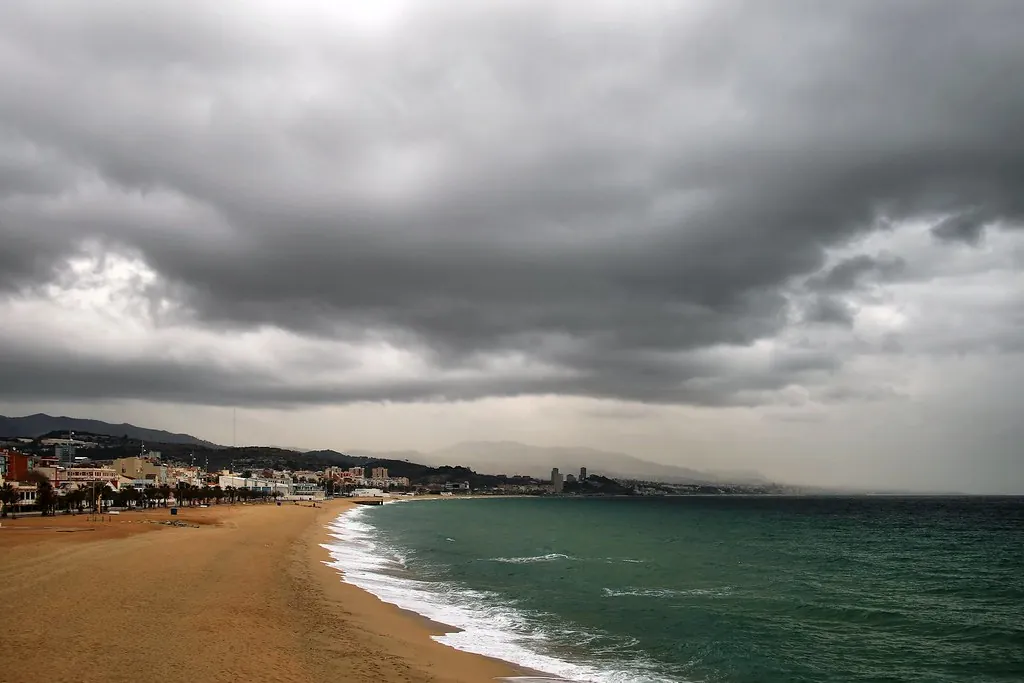
Badalona smells of salt and industry. It is not a picture-postcard town. This is a city attached to Barcelona, one that expanded along the coastline with rows of apartment blocks. The beach works as a kind of front yard and the promenade is used more by residents than by visitors. Life carries on at a local pace: people walking dogs, sitting on benches, chatting in the open air.
That everyday feel is part of the point. Badalona does not stage itself. It functions as a lived-in Mediterranean city with a long history under its pavements and a working-class edge along its shore.
Baetulo Beneath Your Feet
The most interesting part of Badalona lies underground. The Museu de Badalona preserves remains of the ancient Roman city of Baetulo, founded when this stretch of the Catalan coast formed part of the Roman province of Hispania.
The visit takes you below modern street level. There are cobbled streets, sections of sewer system, public baths and a Roman house where mosaics have survived the centuries. The layout helps make sense of how the city once worked: where people walked, washed and lived. It is compact and clear rather than overwhelming.
You do not need hours. In about one hour it is possible to gain a solid idea of what Baetulo was like. The scale is manageable, the route straightforward. Then you step back out into the square above and return to the ordinary noise of a neighbourhood in the Barcelonès, the county that includes Barcelona and its closest surroundings. The contrast is sharp and effective: Roman stones below, present-day routines above.
The Old Quarter on the Hill
Badalona’s historic centre occupies a small hill overlooking the sea. The climb is gentle but noticeable. Streets narrow, steps appear between houses and façades lean at slight angles. It feels older, though not curated for effect.
At the top stands the church of Santa María. The current building dates from the 18th century. It is white and fairly sober in style, without elaborate decoration. From here the sea is close enough to sense, even when not directly visible.
The square around the church is calm. There are benches, people talking and neighbourhood bars. There is no historical staging, no attempt to recreate a lost era. Outside specific moments it functions as an ordinary centre for local life.
One of those moments is the Magna Celebratio, held in spring. During this festival, Roman re-enactors appear and the atmosphere becomes more animated. The link to Baetulo resurfaces in costume and activity. For the rest of the year, the hill returns to its usual rhythm.
The appeal of this part of Badalona lies in that mix. It has survived urban expansion and the pressure of the nearby metropolis, yet it has not been polished into a heritage set piece.
The Pier That Walks into the Sea
The most photographed spot in Badalona is the Pont del Petroli. Originally an industrial pier, it now stretches more than two hundred metres into the Mediterranean as a pedestrian walkway.
Its attraction is simple. Walk to the end and look back at the coastline. The city runs along the shore, with Barcelona not far away. The perspective changes as you move further out, the land flattening into a strip between sea and sky.
At sunset the pier usually fills with people sitting along the railing. There is not much else around it. Just sea and wind. The setting does not try to entertain you. It offers space, horizon and the steady movement of water.
Because it was once an industrial structure, the Pont del Petroli also reflects another side of Badalona’s identity. The city grew with factories as well as housing. The pier’s new role as a public walkway connects that past to present-day use of the coast.
Up to Sant Jeroni de la Murtra
A few kilometres from the centre, in the Serra de la Marina, stands the monastery of Sant Jeroni de la Murtra. Here the landscape shifts. The surroundings feel more like hillside than city, with pines and scrub replacing apartment blocks.
The monastery complex is Gothic in style and includes a cloister and monastic buildings. Its architecture belongs to a different chapter of the region’s history, one tied to religious life and retreat rather than to Roman urban planning or industrial expansion.
Reaching it involves following a path that begins among houses and gradually leaves them behind. The transition is gradual: streets give way to tracks, concrete to earth, noise to quieter air. The walk itself forms part of the experience.
A visit makes sense if you feel like stretching your legs and stepping away from the coastal strip. It offers a change of perspective and a reminder that Badalona is backed by hills as well as bordered by sea.
Getting Around
From Barcelona, Badalona is quick to reach by metro or train. In around twenty minutes you can be there. The station sits close to both the museum and the beach, which means most of what the city offers can be covered on foot.
By car, the situation is different. Traffic builds up when the weather is good and finding a space near the sea can be difficult. In summer, arriving early helps. By mid-morning many others have already made the same decision.
Badalona works best with modest expectations. It is a place of layers: Roman Baetulo under modern pavements, an 18th-century church above the sea, an industrial pier turned promenade, a Gothic monastery in the hills. It does not compete with Barcelona for spectacle. Instead, it offers fragments of history and stretches of coastline that belong first to the people who live there.