Full Article
about Barcelona
Cosmopolitan capital of Catalonia, world-famous for its modernista architecture and vibrant city life.
Ocultar artículo Leer artículo completo
The queue outside La Boqueria market snakes past a man slicing jamón with surgical precision whilst a pickpocket—spot him by the oversized shopping bag—works the crowd at 9:30 am sharp. This is Barcelona in microcosm: sensory overload, medieval commerce, and metropolitan edge packed into one 1.2-kilometre sweep of Las Ramblas.
City of Contrasts, Coast to Mountain
Barcelona spreads from the Mediterranean to the forested Collserola ridge in barely eight kilometres, so flat that the Olympic marathon course had to loop Montjuïc hill to find any gradient. At barely twelve metres above sea level, the air stays humid and mild; January afternoons often hit 14 °C, while August thermometers nudge 32 °C and the stone pavements radiate heat long after dusk. The climate lures Britons in February half-term, but bring a jacket—the wind off the sea can slice through a cotton jumper.
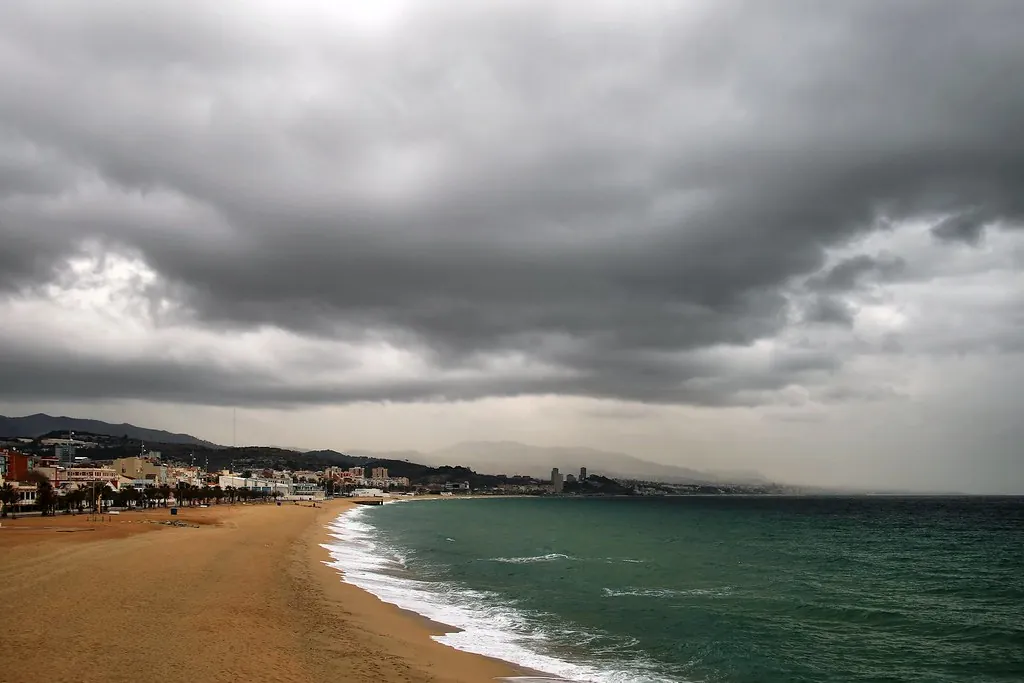
The shoreline itself is a late-twentieth-century invention. Sand was dredged for the 1992 Olympics to create the 4 km urban strand that begins at Barceloneta. Expect volleyball nets, pumped-up house music and, at weekends, towel-to-towel crowds. Walk five blocks inland and you are back in a grid of 19th-century apartments where elderly residents still lower baskets from balconies for the baker to fill.
Layers of History You Can Walk Through
Start in the Barri Gòtic before the cruise-ship coaches arrive. By 8:30 am the cathedral cloisters echo only with swallow wings and the occasional priest late for mass. Two streets east, fragments of Roman wall sit inside a 1960s office foyer on Carrer del Sotstinent Navarro—security guards are used to visitors photographing the 4th-century stones beside the lift doors. Duck south into Plaça Sant Felip Neri: pock-marks on the church façade are shrapnel scars from a 1938 bombing raid during the Civil War, a reminder that Barcelona’s past is more recent than the guidebooks suggest.
Hop two metro stops to Passeig de Gràcia for the bourgeois 1900s. Morning light hits the undulating stone of Casa Milà at 45 °C in summer, but at 9 am you can stroke the iron balconies without a queue. Book Sagrada Família for the first slot (entry £23 online) if you want interior photos without a forest of selfie sticks; after 11 am the wait stretches to 45 minutes even with pre-booked tickets. Gaudí’s basilica is still scaffolding after 140 years—check the crane coordinates on the Nativity façade; they move every few months.
Eating on Catalan Time
Lunch menus hover around €14–€16 (£12–£14) and run until 4 pm; turn up at 12:30 and you will dine with accountants and builders, not tourists. Order the menú del dia—three courses, bread, wine and water included. Expect grilled calçots (giant spring onions) in season, smothered with romesco sauce that tastes of roasted pepper rather than chilli heat. Dinner at 7:30 pm screams “visitor”; locals eat after 9 pm, so book an 8 pm table if you cannot face midnight.
Avoid Las Ramblas restaurants whose waiters wave laminated cards. Instead, head to Mercat de Sant Antoni (open Monday–Saturday) where El Xampanyet clone-bar La Esquinica serves sizzling prawns and a glass of cava for €3.80. In Gràcia, a plaça full of toddlers on tricycles surrounds Can Codina, a 1940s bodega pouring vermut on tap at €2 a glass. Carry small notes; many old-school counters still refuse cards under €10.
Moving About (and Keeping Your Wallet)
Barcelona pickpockets treat the metro like a mobile classroom. Keep bags zipped and forward-facing—backpacks go on your chest between stations. Buy a T-Casual ten-journey card (£9.60) at the airport machines; each ride covers buses, metro and local trains for 75 minutes. The Aerobús (£5.90, 35 minutes) is faster than the metro to town and drops you at Plaça de Catalunya, a magnet for phone-snatchers so stand away from the kerb while orientating Google Maps.
Sunday shuts most supermarkets; only Pakistani-run supermercats stay open, charging 30p extra for milk. Stock up Saturday evening if you are self-catering. Museums open free the first Sunday of each month—queues start at 8:30 am for the Picasso Museum, so arrive earlier than you think necessary.
Neighbourhoods Beyond the Postcard
Poblenou was the 19th-century textile belt; brick chimneys now poke above co-working cafés. Rambla de Poblenou offers €3 cortados and space to push a pram without dodging suitcases. In April the Festa Major de Sant Jordi turns every balcony into a rose stall; locals gift books and flowers in a Catalan spin on Valentine’s Day.
Gràcia, once a separate village, keeps a small-town grid. August’s week-long street festival sees residents compete to build papier-mâché giants in alleys barely two metres wide. Expect late-night correfoc (fire-run) where devils spit sparks—protective hoodies advised.
For a lungful of green, take the 25-minute suburban train to Baixador de Vallvidrera then walk into Parc de Collserola. Pine-scented trails overlook the entire urban sprawl; in October mushrooms sprout beside the path and locals forage with pocket knives. Carry water—the 512-metre summit at Tibidabo is farther than the funicular makes it look.
When Crowds Peak and Prices Follow
June and September deliver 27 °C seawater and hotel rates 25% lower than August, when stag parties colonise Barceloneta and the council hoses down streets at dawn. Winter daylight shrinks to ten hours but galleries empty; you can stand eye-level with a Picasso Blue Period canvas without a queue, then eat churros for breakfast at Granja M. Viader, open since 1870. Easter week is a local holiday; book trains outward early or battle stand-only carriages to Girona.
Parting Shots
Barcelona rewards curiosity and punishes complacency. Look up from the map and you will notice Catalan flags dangling from half the balconies—a quiet reminder that this is not provincial Spain but a region debating independence in university lecture halls and family lunch tables alike. Learn a token Bon dia rather than Hola; doors open faster. Expect service that feels brisk rather than chummy—staff earn proper wages, so tipping 5% is generous. Keep an eye on your phone, but keep the other eye free for Modernista mosaics, Roman walls and 4 pm sunlight ricocheting off a medieval alley. Miss those and you have missed Barcelona itself.