Full Article
about Bagà
Historic medieval town at the gateway to the Cadí-Moixeró Natural Park
Ocultar artículo Leer artículo completo
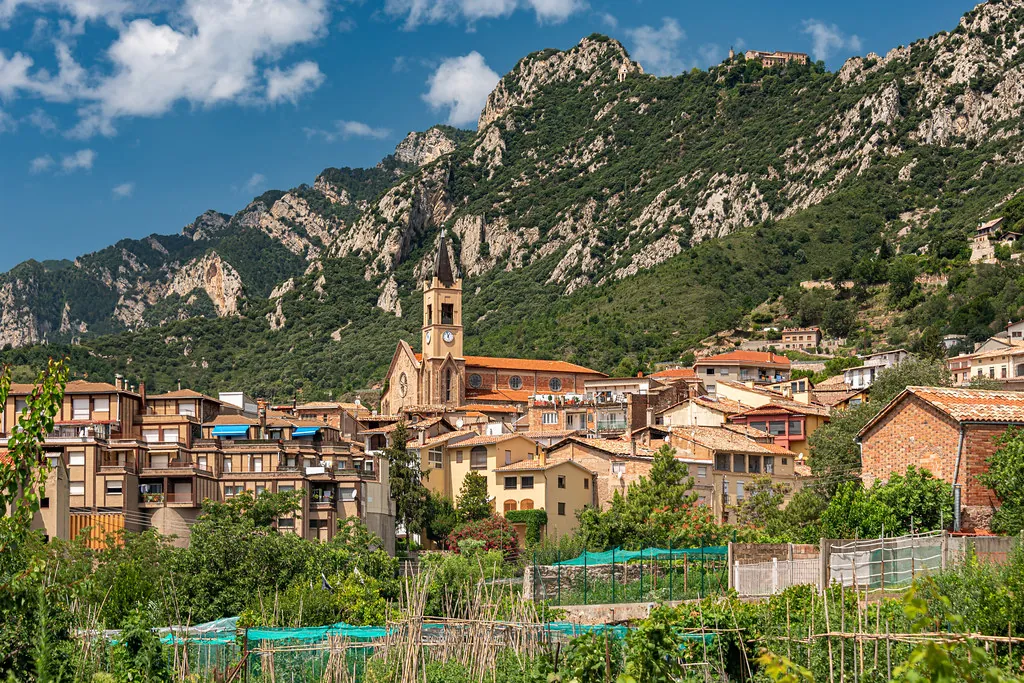
The morning sun hits the stone arches of Plaça Porxada and throws striped shadows across café tables where locals are already on their second coffee. At 785 metres above sea level, the air is thin enough to make the espresso taste stronger, and the Pyrenean wind carries the scent of pine rather than salt. This is Baga, a Catalan mountain village that once collected tolls from mule trains heading into the high passes, now a place where house numbers have been replaced by family names painted in black letters on ochre walls.
A Medieval Grid That Never Needed Updating
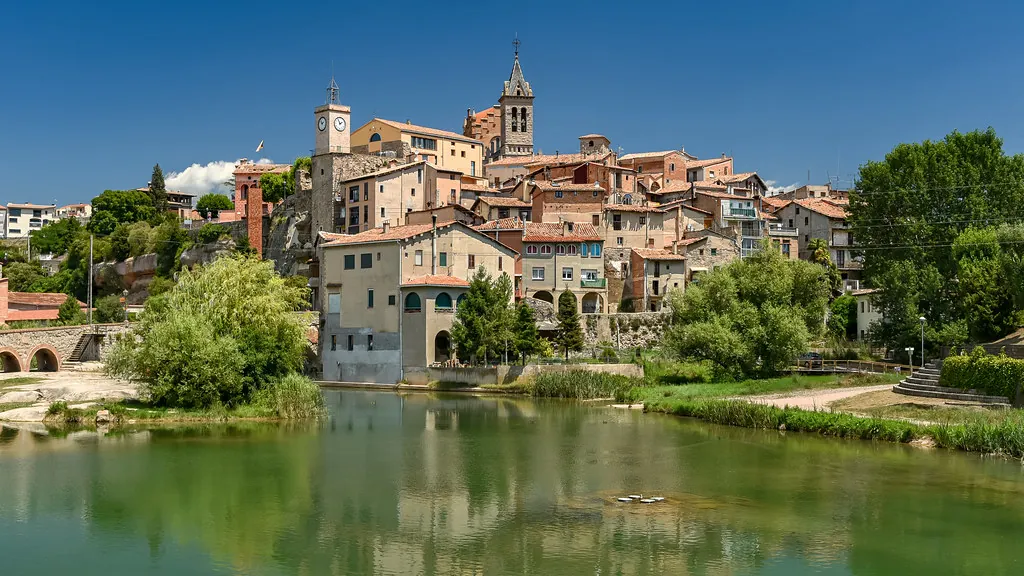
Baga’s centre is the only complete medieval street system left in the Pyrenees, and it feels it. Alleyways barely two metres wide twist uphill between stone houses; drainage channels cut in the 14th century still work after heavy rain. You can walk every lane in under an hour, yet the place rewards a slower pace. Look up and you’ll see iron rings where merchants tethered their animals, or the double-windowed gallery of the 14th-century Palau dels Pinós, its sandstone tracery sharp enough to read from the opposite pavement.
The parish church of Sant Esteve anchors the highest point. Romanesque at its core, Gothic in its later additions, it carries a bell-tower you can pick out from kilometres away on the C-16. Inside, the cool darkness smells of candle wax and damp stone; the retable is 16th-century Flemish, vivid still, but the real interest is the mix of architectural layers—each century left a different coloured stone, a different style of arch. Entry is free; silence is expected.
Outside, fragments of the old walls survive, but they’re fragments only: a corner tower now holding up a mobile-phone antenna, a stretch of battlements used as a garden boundary. History here is lived-in, not cordoned off.
Mountains on Every Side, France on the Horizon
Three minutes’ walk from the bakery, the tarmac ends and the map turns green. The Cadí-Moixeró Natural Park rises almost vertically to 2,648 metres, a limestone wall that keeps the village in shade until mid-morning in winter. Way-marked paths leave from the cemetery gate; within 45 minutes you can be among black-pine woods where jays argue overhead and the only other footprints belong to wild boar. Serious walkers aim for the Port del Comte, a 3½-hour climb that drops you into the next valley and, if you time it right, a bus back from La Seu d’Urgell.
Snow arrives early. By November the peaks are white, and the road to the ski pistes of La Molina and Masella—25 minutes by car—is regularly gritted. Locals buy a half-day pass, ski until lunch, and still make it home for a late three-course menú del dia at €14. In summer the same road becomes a cyclist’s playground: the climb to Coll de Pal is 11 km at 7 %, featured in the Volta a Catalunya and merciless under the midday sun.
What to Eat When the Altitude Hits
Mountain hunger is different: it arrives suddenly and demands salt, fat, and something hot. Baga’s restaurants keep things straightforward. Trinxat—a griddled cake of potato, cabbage and bacon—arrives sizzling in its own little skillet; think bubble-and-squeak that has been to finishing school. Canelons de la festa, stuffed with the previous day’s roast and smothered in béchamel, taste like comfort food even if you have no Catalan childhood to reference. Pudding is usually crema catalana, caramelised to order with a blow-torch that doubles as conversation.
For breakfast, the bakery on Carrer Major turns out ensaïmada de crema, a spiral pastry the size of a dinner plate, filled with custard that is still warm at 8 a.m. Coffee is taken standing at the counter; ask for a tallat (a Catalan cortado) if you want milk, but don’t expect oat milk anywhere.
Wine drinkers should note the altitude: two glasses feel like three when you’re already 900 m up. Local craft beer—look for Birra 08 brewed down the road in Gironella—comes in 33 cl bottles, sensible sizing for a lunchtime pint that won’t send you straight down the cobbles.
Getting There, Getting Round, Getting Cold
Baga sits just off the C-16, the main Barcelona–Andorra highway. From the UK, fly to Barcelona, pick up a hire car, and you’re here in 90 minutes—quicker than reaching the Costa Brava at rush hour. Public transport is trickier: one early bus leaves Barcelona’s Estació del Nord at 7 a.m., reaches Baga at 9.15, and the return is mid-afternoon. Miss it and you’re spending the night.
Once in the village, everything is walkable, but wear shoes with grip. Rain turns the medieval stones into an ice-rink, and the gradient from square to church is 1 in 6. Parking is free on Avinguda de les Escoles, a three-minute flat walk to the centre; arrive after 11 a.m. at weekends and you’ll circle with the day-trippers from Lleida.
Temperature swings are brutal. A May morning can start at 4 °C, reach 22 °C by lunchtime, then dive again at sunset. Layers are non-negotiable; the souvenir shop sells fleece emblazoned with a chamois if you arrive unprepared. Bank machines are outside the old town only—withdraw cash in Berga or at the motorway services before you turn off.
When the Day-Trippers Leave
By five o’clock the coach parties have boarded and the square returns to its default soundtrack: church bells, swifts, and the clack of walking poles as hikers return from the ridge. The bakery shutters half an hour later; by eight the streets are lit by wrought-iron lamps that give everything a tobacco glow. Evening options are limited: one tapas bar showing the football, one restaurant serving dinner until 10, and the night sky so clear you can read Orion’s catalogue number.
Stay if you can. Accommodation is small-scale: three stone houses turned into casas rurales, one three-star hotel with 22 rooms and a lift that still smells of 1998. Prices hover around €90 for a double mid-week, breakfast included. Ask for a room at the back and you’ll wake to the smell of pine and the sight of cloud peeling off the Cadí cliffs like wet paper.
Leave next morning by the same road, but notice how the village shrinks in the rear-view mirror: first the church tower disappears, then the walls, then only the mountains remain. Baga doesn’t do drama; it simply goes back to being a working place whose best trick is to look unchanged since the Middle Ages while quietly getting on with the 21st.