

Full Article
about Berga
County capital famous for its La Patum festival, a UNESCO World Heritage event.
Ocultar artículo Leer artículo completo
The drums start at dawn. By teatime the plazas are ankle-deep in spent firework cases and the air tastes of gunpowder. This is La Patum in Berga, a Pyrenean town where medieval demons—gigantic papier-mâché beasts spitting sparks—dance above crowds who have been drinking since breakfast. If you arrive any other week of the year the place feels almost sleepy, but the residue of that five-night frenzy is everywhere: scorch marks on stone, a permanent fireworks shop on the main street, and locals who greet strangers with the cheerful warning, “You should see it when the fire’s on.”
A Town That Tilts Uphill
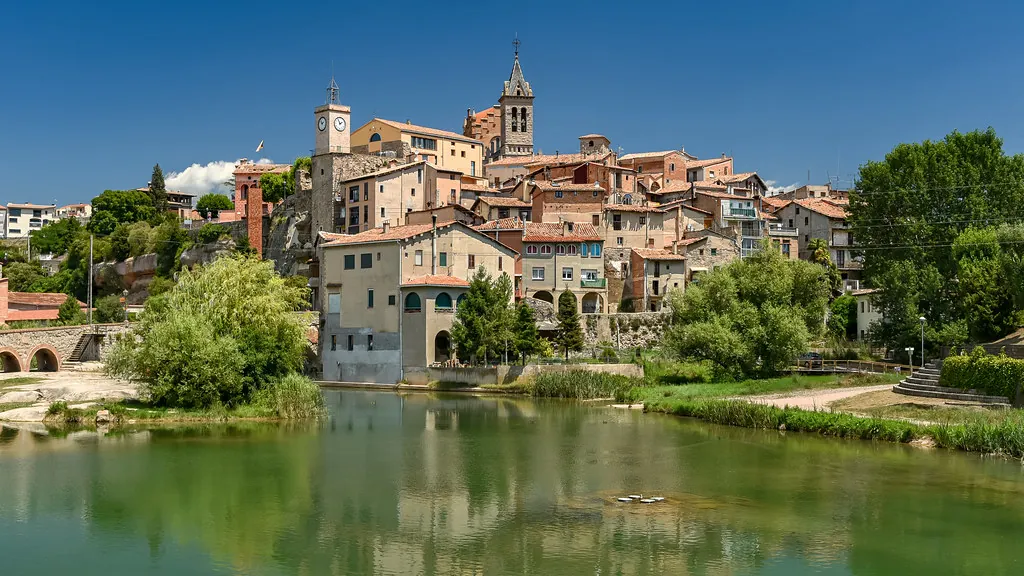
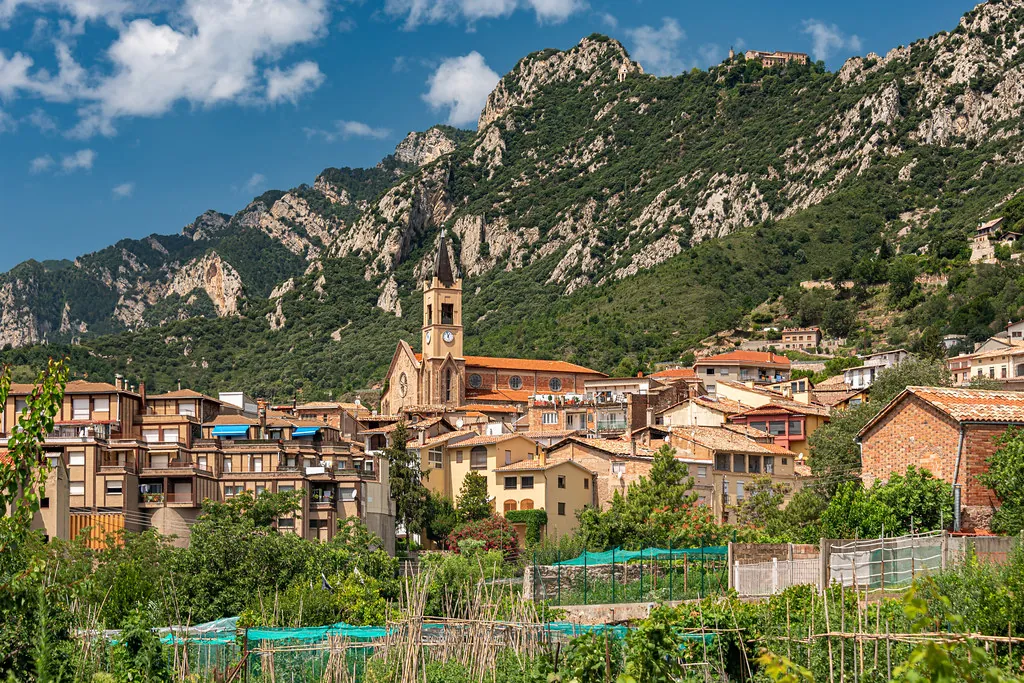
Berga sits 704 m above sea-level at the meeting point of two Pyrenean spurs. Everything worth seeing is uphill. The old quarter climbs so steeply that what the tourist office calls a “gentle stroll” is really a calf-burning ascent through lanes barely two metres wide. Park in the free ring-road car park (signposted “pàrquing gratuït”) and walk; the historic centre is residents-only and the Guardia Urbana ticket with Catalan efficiency.
Start in Plaça de Sant Pere, the medieval heart. The bars open onto stone arcades where pensioners play cards under heat lamps even in March. From here Carrer Major snakes upward, past the 14th-century church of Santa Eulàlia whose bell-tower acts as the town’s compass—if you can still see it, you haven’t got lost yet. Halfway up, a fragment of Romanesque wall leans outward, propped by modern iron struts; kids use it as a goalpost. At the top the lane flattens onto Plaça de Sant Joan, wider and sunnier, with proper restaurant terraces and a bakery that sells pa de pessic (a lemon-scented sponge) at €2 a slab.
Allow ninety minutes for the circuit, including the five-minute detour to the ruined castle that nobody bothers to signpost. The views stretch south across the Llobregat valley and the C-16 motorway disappearing into the Cadí tunnel—Barcelona is 90 minutes away if the toll booths behave.
Sanctuary Above the Smoke
When the town feels too cramped, drive the switch-back road to Queralt sanctuary, 7 km and 500 m higher. The tarmac is smooth but single-track; pull in at the passing places or the locals will hoot. At 1,200 m the air is noticeably cooler; bring a jumper even in July. The 16-century basilica is nothing special inside—gold leaf and tired frescoes—but the balcony is the best picnic spot for miles. On clear days you can pick out the concrete ribbon of the Andorran road and, if the tramuntana wind has scrubbed the sky, the distant glitter of the Costa Brava.
Several footpaths start from the car park. The easiest is the 45-minute loop through holm-oak woods to the nevera, an 18th-century ice pit where monks once stored snow for ice-cream. Serious walkers can continue east along the GR-107, a long-distance path that reaches Andorra in two days; the tourist office sells 1:25,000 maps for €8.
Food Without the Fanfare
Berga’s restaurants don’t do tasting menus; they do weekday three-course menús for €14–16 and will swap chips for salad without drama. Typical starters are pa amb tomàquet—toast rubbed with tomato, garlic and enough oil to drip onto your plate—and trinxat, a cabbage-and-potato cake bonded with streaky bacon. Mains are mountain staples: rabbit with rosemary, pork cheeks braised in ratafia liqueur, or river trout simply grilled. Pudding is recuit (a light ewe-milk curd) drizzled with local honey. House wine comes in 50 cl glass jugs and is usually better than the Rioja by the glass.
For self-caterers the Thursday market lines Plaça de Sant Joan: two stalls sell fuet (thin Catalan salami mild enough for British children), one stall sells wild mushrooms when the weather’s right, and everyone sells formatge de tupí, a soft cheese matured in earthenware pots that smells stronger than it tastes.
Base Camp for High Pyrenees
Outside festival week Berga sells itself as an adventure hub. The reality is more modest. Yes, there are 600 km of marked bike trails, but the topography is unforgiving: gradients start at 6% and rise to 18% within a kilometre. Hire an e-bike from Berga Bici (€35/day) or stick to the greenway that follows a disused railway south to Gironella—flat, gravelled, ideal with kids.
Hikers do better. Ten minutes’ drive north the Cadí-Moixeró Natural Park begins; trails leave from the hamlet of Gósol (25 min by car) and climb through pine and silver birch to alpine meadows still snowy in May. The classic day-hike is the 12 km loop to Coll de Jou and back, 700 m of ascent, rewarded by lammergeier sightings and a cold beer at the refugi if you time it right.
Winter brings Nordic skiing at Tuixent-La Vansa (35 min) and downhill at Port del Comte (40 min). Both are small, cheap and queue-free compared with the Pyrenean big guns, but check snow reports: artificial snow is non-existent and a warm southerly can strip slopes bare in 48 hours.
When (and When Not) to Come
Spring and autumn are the sweet spots. April turns the surrounding hills an almost violent green; October brings mushroom hunters and the smell of woodsmoke from village chimneys. Summer is hot—34°C is common—but the altitude keeps nights bearable; cafés stay open past 10 pm and the municipal pool (€3) is floodlit until midnight. Winter daylight is short; many restaurants close Monday and Tuesday, so phone ahead.
Unless you crave noise, avoid Corpus Christi week (variable, usually early June). Accommodation triples in price, ear-plugs become essential and even the supermarket plays drums over the PA. If you do come, book months ahead and pack old clothes—dry-cleaning will not cope with the soot.
The Bottom Line
Berga is not a chocolate-box village frozen in time; it is a working county town where teenagers loiter under medieval arcades and the mayor still reads the budget aloud in Catalan every April. You will leave with calves aching, shoes dusted with pyrotechnic residue, and the realisation that Catalonia does not end at the Barcelona ring-road. One night is enough to see the stones, two gives you a mountain day, three lets you slow down and hear the bells of Santa Eulàlia mark the quarters. After that the road to Andorra beckons, and Berga shrinks to a smudge of terracotta between the limestone ridges—memorable precisely because it refuses to perform for visitors.