Full Article
about Capolat
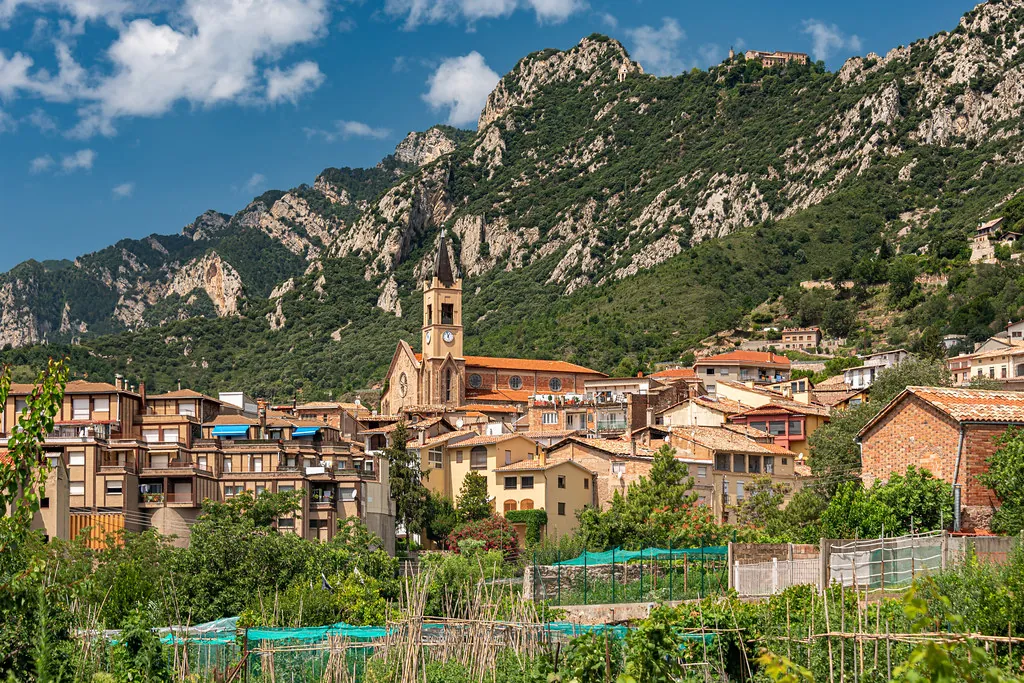
Scattered mountain municipality with spectacular scenery and dense forests.
Ocultar artículo Leer artículo completo
The road to Capolat climbs so steeply that even local diesel vans sound asthmatic. At 1,279 metres, this scatter of stone farmsteads is closer to Ben Nevis's summit than to Barcelona's beaches, and the air carries a high-altitude snap that makes British lungs feel they've wandered into someone else's weather system.
Stone, Silence and Sudden Altitude
Most visitors reach Capolat by accident: they follow the C-16 towards the ski resorts, peel off at Berga for petrol, and keep climbing on the B-400 until the pine trees start winning the tug-of-war against the tarmac. The village itself is less a nucleus than an afterthought—sixty-odd permanent residents, two dozen houses, one Romanesque church and absolutely nothing that could be described as a high street. Parking is wherever the verge widens enough to risk opening a door.
Sant Martí church squats at the physical centre, its stone walls the colour of wet slate, its bell-cote drilled by centuries of hail. The building is open most days; step inside and the temperature drops another three degrees. There is no gift shop, no QR code, no explanatory panel in four languages. Just a single bulb swinging above a 12th-century font, and a faint smell of woodsmoke that drifts in from somebody's chimney.
Round the church the lanes narrow to shoulder width. Houses are built shoulder-to-shoulder against the wind, roofs weighted with slabs of local grey rock that look heavy enough to press the walls into the soil. Balconies—more Yorkshire than Costa—are deep enough to store logs and December's washing at the same time. Close your eyes and you could be in a Pennine hamlet until a red squirrel scolds from a Scots pine and the illusion snaps.
Walking Maps That Assume You Can Read the Sky
Capolat's real architecture is the horizon. South-east, the Cadí ridge rears up like a serrated bread knife; west, the plateau rolls away towards Andorra, 40 km of empty skyline. Half a dozen footpaths strike out from the upper edge of the village, but way-marking is Catalan-stoic: a faded stripe on a barn gable, a cairn that might be last year's snow-pole. The most straightforward outing follows the GR-150 for 45 minutes to the mirador de la Creu de Ferro, a wrought-iron cross bolted to a limestone outcrop. From here you can trace the entire Berguedà basin, and on a clear morning pick out the shimmer of the C-16 viaduct two valleys away.
Serious walkers load GPX files and head north on the Camí Vell de la Llosa, a medieval pack-animal route that drops 600 m to the village of Castellar de n'Hug in four hours, returning via a loop through beech forest. The climb back is relentless; carry water because streams are summer-trickles and the only bar between here and France closed in 2008.
Winter converts the same paths into snow-shoe itineraries. There is no ski resort—no lifts, no hire shop, no ticket office—so you bring your own gear and accept the gamble of a weather front that can arrive in the time it takes to eat a sandwich. When the snow arrives the access road is ploughed once a day, around dawn. Miss the slot and you wait twenty-four hours, or you walk the final five kilometres with your weekend bag on your back.
Where to Eat: Drive Downhill
Capolat itself has zero restaurants and one vending machine inside the town-hall porch that sells cans of Estrella at airport prices. Food happens elsewhere. The nearest reliable table is in Castellar de n'Hug, twelve minutes by car down a road that feels like a helter-skelter. Cal Perxach fires oak under grilled rabbit and serves a mountain rice thick with wild mushrooms; three courses with wine hover around €28. Closer, the rural complex Can Caubet offers half-board to guests but will feed outside visitors if they phone before 11 a.m.; the menu is whatever is growing in the garden and whatever the host shot last week. Vegetarians are politely tolerated, vegans gently advised to bring supplies.
Self-caterers stock up in Berga before the final climb. The Plus Fres supermarket on the C-16 ring road has a surprisingly decent cheese counter—try the local tupí, a soft goat's cheese marinated in brandy that tastes better than it sounds—and sells dry logs by the crate. Most holiday lets include wood-burners; nights up here drop below freezing from October to April.
Beds, Broadband and the Art of Lowering Expectations
Accommodation is scarce by design. The pick is Complex Rural Can Caubet, a stone farmhouse divided into four apartments sleeping four to ten. Radiators are oil-filled, Wi-Fi actually works, and the garden has a trampoline that squeaks in high winds. Prices swing from €90 a night in March to €220 at Easter and August; dogs stay free, which explains the paw-print hash on every white wall. Outside those walls you will hear owls, church bells and, during hunting season, the occasional shotgun. Ear-plugs are provided in a labelled ceramic dish—Catalan practicality at its most charming.
If Can Caubet is full, the nearest conventional hotels are 20 km away in Alp, a purpose-built ski base that looks like a 1970s Milton Keynes transplanted to the Pyrenees. Hotel Guitart la Molina has a spa and underground parking, useful when the car thermometer reads -8 °C, but the décor is tired and the buffet breakfast runs out of croissants by eight. Most British guests treat Alp as a fallback and keep checking Can Caubet for cancellations.
When to Come, When to Stay Away
April brings meadows the colour of Instagram, plus the risk of a late blizzard that can collapse the electricity line and leave the entire village dark for two days—torches, candles and a full phone battery are non-negotiable. May and June are safest: daylight until 21.30, wild asparagus along the verges, and daytime temperatures in the low twenties that feel warmer because the sun is a kilometre closer than you are used to.
July and August turn Capolat into a commuter dormitory for Barcelona families who spend the day beside the pool and the night arguing over which Netflix series the rural broadband can handle. Parking spaces vanish, but the woods empty after 9 a.m. when the heat drives everyone back to the coast.
September is gold-standard: mushrooms in the forest, clear air, zero crowds. October can be spectacular until the first tramuntana wind arrives and strips the leaves in a single night. After that the village closes like a clam. November to March is for the self-reliant only; if you wouldn't fancy a cottage in the Cairngorms with the heating on timer, don't try Capolat in winter.
Last Word: Bring a Sense of Scale, Not a Sense of Entitlement
Capolat does not do hand-holding. The bakery is 18 km away, the weather forecast is approximate, and the only thing that arrives on time is dusk. What you get instead is space measured in ridgelines, silence deep enough to hear your heart beat, and a nightly sky so dark that Orion seems to have moved in next door. Pack decent boots, download offline maps, and accept that if the snow blocks the pass you may spend an extra night whether you planned it or not. The village asks for patience; it repays with altitude and almost nothing else. For some of us, that is exactly the transaction we crossed a continent to find.