Full Article
about Casserres
Rural municipality with a rich heritage of farmhouses and the Romanesque church of San Pablo.
Ocultar artículo Leer artículo completo
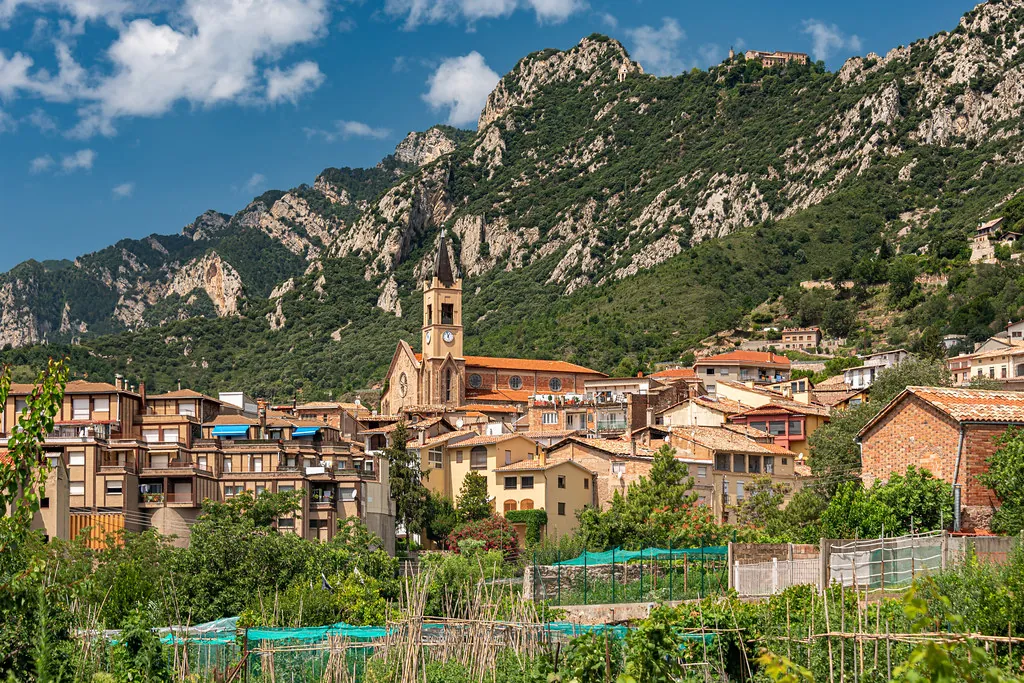
The reservoir glints 611 metres below like polished steel, and the only sound is a farmer shouting across the valley in Catalan. Casserres sits on its ridge as if it has forgotten the twentieth century, let alone the twenty-first. Below, the Baells dam holds back a lake big enough for kayaks yet small enough to swim across; above, oak woods climb toward rock ribs that announce the Pre-Pyrenees. The altitude means nights stay cool even in July, so bring a fleece for the terrace—midnight temperatures can drop to 12 °C while Barcelona swelters.
A village that refuses to play resort
British tour operators still print “Cáceres” when asked about Casserres; Google obediently offers Extremadura. That confusion keeps the coach parties away. TripAdvisor lists 132 reviews, almost all from Catalan weekenders who drive up after Saturday football. The result is a place that works on local time: shops pull metal shutters down at 14:00, reopen at 17:00 if the owner feels like it, and stay shut on Sunday. Plan accordingly. The single ATM in Plaça Major runs dry on Friday evening; fill your wallet in Berga, fifteen minutes down the C-1411a.
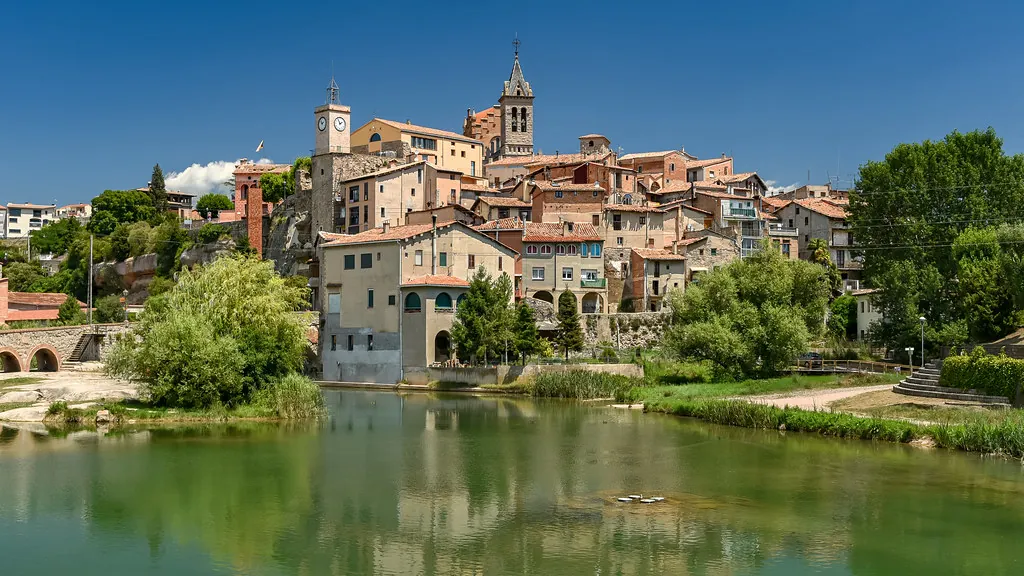
The village has 1,600 permanent residents, not 5,000—another number that keeps life manageable. They produce olive oil from three cooperative presses, run one bakery and two bars, and still speak Catalan first, Spanish second, English only if you look truly stuck. No souvenir stalls, no Irish pub, no zipline. What you get instead is a ridge-top grid of stone alleys built for mules, not cars, and views that stretch across two comarcas without a hotel crane in sight.
Walking the water’s edge
The Baells reservoir is the obvious playground, but it is not Center Parcs. Access points are unsigned farm tracks; one reliable trail starts behind the cemetery and switch-backs through holm oak to a cove where a rope swing hangs from a pine. The full 26-kilometre circuit around the lake is a serious day—eight hours, 600 metres of ascent—best ridden on a mountain bike if you want to finish before dark. Shorter option: park at the Mirador de la Baells (track passable in an ordinary hatchback), descend twenty minutes to the water, then climb back up for a beer at Bar Castell before the 19:30 shutter.
Kayaks and paddleboards are available, but not in the village. Drive ten minutes to the Club Nàutic on the eastern shore; half-day rental is €25, cheaper if you haggle in Catalan. Water levels fluctuate: in drought summers the beach becomes a moon of cracked mud, and the club posts red flags. Phone ahead (+34 938 220 312) rather than trust Google’s opening hours.
High-level hikes start from the church door. Follow Carrer del Rectorat uphill until tarmac turns to stone, then take the signed path to Sant Martí de Capsec. The hermitage crowns a sandstone bluff; from its porch you can trace the Ter’s gorge north to the snowline. Allow ninety minutes up, an hour down, and carry water—there is none on the ridge. The same trail continues into the Serra de Queralt, turning a village stroll into a 1,200-metre ascent that ends in Berga with a train home if your legs give out.
Calories and credit cards
Restaurant Cal Pau has fed travellers since 1932. The menu is chalked on a board: grilled lamb, chips, salad, half-bottle of house red for €16. They will swap chips for vegetables if you ask before the order hits the grill. Vegetarians should arrive early—once the escalivada (roast aubergine and peppers) runs out, it is gone. Payment is cash only; the card machine “only works on weekdays” (it doesn’t).
For breakfast, Bar Castell opens at 07:00, earlier than anything in Berga. Coffee is €1.20, croissant €1.40; eat standing at the bar like the farmers nursing brandy after the dawn milking. If you are self-catering, the bakery on Carrer Major bakes Coca de recapte, a flatbread topped with escalivada, at 10:00 sharp. Queue early: village law limits output to thirty trays, after which you get plain baguette or nothing.
Evening options are limited. Celler del Miracle, five minutes’ walk from the square, pairs local wine with mountain sausage. Guests in the attached Airbnb get a free bottle; the host speaks fluent English after a decade in Manchester and will draw you a map of tomorrow’s hike on a napkin. Everything shuts by 23:00—even in late August the loudest noise is the church bell counting the hour.
Seasons and how to reach them
Spring is prime time. Almond blossom appears in late February, hikers have the ridge to themselves, and daytime temperatures sit in the high teens. Autumn is equally good: mushrooms push through the oak leaf litter, the reservoir glows copper at dusk, and the Fiesta del Bolet in Berga means menus heavy with wild fungi. Summer brings reliable sun but also the weekend invasion from Barcelona; arrive Sunday night and you will share the mirador with six selfie sticks. Winter is quiet, occasionally snowy, and beautiful—daytime 8 °C, nights below zero. The C-1411a is gritted, but the final climb into the village can catch out hire cars on summer tyres.
There is no railway. Fly to Barcelona or Girona, pre-book a car, and take the AP-7 to exit 9, then C-16 toward Puigcerdà. Leave at Berga Sud; Casserres is signposted 15 km uphill. Without wheels you are stranded: the last taxi from Berga costs €35 and refuses luggage bigger than a Ryanair carry-on. Public buses stop at the industrial estate below the dam; from there it is a 5-kilometre uphill trudge with no pavement.
What could go wrong
Mobile signal vanishes in the old quarter. Download offline maps before you leave Berga. The village mini-mart closes Saturday afternoon and all Sunday—stock up on milk and loo roll on Friday. Pool season runs Easter to October, but in drought years the town hall drains communal splash pools early; confirm if you have children banking on a swim. Finally, Casserres is not cute—it is lived-in. Expect barking dogs, tractors at dawn, and the smell of pig manure drifting up-valley when the wind turns. If you want rose-covered cottages and craft gin, stick to the Cotswolds.
Worth the detour?
Casserres will not change your life. It will give you a ridge to watch the Pyrenees turn pink, a lake to kayak without a licence, and a bar where the coffee costs less than the cup in Gatwick. Stay two nights, walk the hermitage trail, eat lamb at Cal Pau, and drive on before the silence feels like habit. Just remember to fill the tank in Berga—there is no petrol station on the mountain, and the next village is twenty kilometres of corkscrew road away.