Full Article
about Castell de l'Areny
Small mountain village perfect for unplugging in nature
Hide article Read full article
A tiny village in the Berguedà
Castell de l'Areny is a very small municipality in the Berguedà, a mountainous comarca in Catalonia. This is not a place packed with attractions or services. You arrive, park, have a short walk and move on.
If you come by car, the usual thing is to leave it near the small square or in one of the wider spaces beside the houses. There is very little traffic, but there is not much room either, so it is important not to block entrances or access routes. There are no shops and no tourist services in the village. No cafés, no visitor centre, no facilities designed for travellers. What you see is what there is.
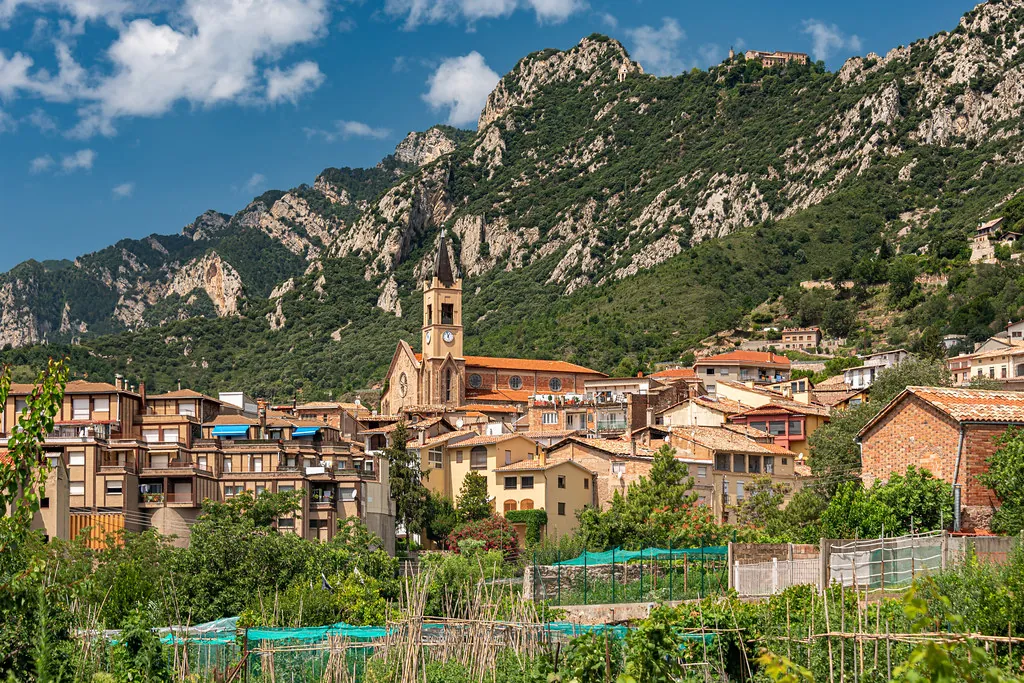
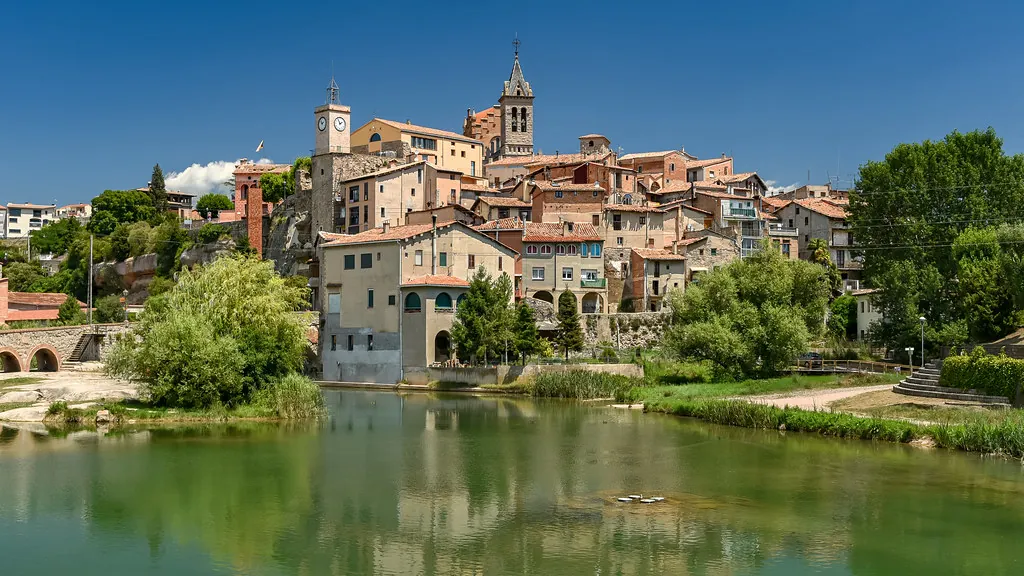
The village core is minimal: a handful of stone houses grouped around the church. The streets are short and some are unpaved. You can walk through the whole settlement in a short time. Castell de l'Areny is less about ticking off sights and more about stepping briefly into a rural setting that has changed very little in appearance.
The heart of the village: Sant Vicenç
At the centre stands the church of Sant Vicenç. It is a simple rural temple, without striking architectural elements or decorative flourishes. Its value lies in what it represents. This is the kind of parish church that once served small mountain communities across Catalonia: functional, discreet and built for a modest population.
There are no major monuments and no prepared viewpoints within the village itself. A visit to the nucleus takes only a few minutes. You stroll between the houses, approach the church, and that is essentially it. The experience is quiet and straightforward, with no interpretation panels or curated routes.
The sense of place comes less from individual buildings and more from the overall setting. Stone walls, compact streets and the surrounding slopes define Castell de l'Areny far more than any single landmark.
Forest tracks and open views
What becomes interesting starts when you leave the village. Several forest tracks and paths head out towards mountain passes and scattered masías, traditional rural farmhouses typical of this part of Catalonia. Some of these masías have been restored; others have been abandoned for years. They are traces of a time when these mountains supported a larger population and more agricultural and livestock activity.
The village is surrounded by woodland. There are pines, and in the cooler areas you will find beech trees. It is generally very quiet. Rather than a destination for sightseeing, this is a place for walking for a while and looking at the landscape.
As you gain a little height along certain paths, views open up towards the ranges of the Berguedà and, on clear days, towards the Cadí. These are not formal viewpoints with signs and railings. They simply appear as the track climbs and the trees thin out. You reach a bend or a rise and the panorama reveals itself.
The easiest way to make the most of a visit is to follow one of the tracks leaving the village for about an hour and then return along the same route. There is no need for complex planning. If you prefer longer walks, the area has a good number of routes linking passes and masías. Some of the tracks are long but technically easy, without particular difficulty.
This is open countryside rather than a managed natural park. There are no designated wildlife hides or structured interpretation areas. With some patience, it is possible to spot roe deer or hear animals at dawn or dusk. Nothing is guaranteed, and that is part of the character of the place.
Practical considerations
Castell de l'Areny does not offer places to eat or drink. There are no bars or restaurants in the village. If you plan to walk, bring water and something to eat. For a café terrace or a proper meal, you will need to head down to larger towns elsewhere in the comarca.
In autumn, many people come to these forests to look for mushrooms. It is common to see cars parked along nearby forest tracks during the season. As in similar areas, it is important to respect local regulations and avoid disturbing the woodland more than necessary.
If you only have a short amount of time, the visit can be very brief. Park, walk across the small nucleus and approach the church. Then follow one of the tracks towards the forest for a few minutes to gain a bit of perspective over the landscape. In half an hour, you will have seen it.
With half a day, you can extend your walk along the paths that surround the municipality. They are usually quiet and not overcrowded. Bring water and think through your route in advance, as there are no services where you can stop midway.
When to go
Spring and autumn are generally the most pleasant seasons for walking. Temperatures tend to be moderate, and the forest is particularly enjoyable at these times of year.
Summer can also be fine if you start early. Many stretches of the tracks are shaded by trees, which helps in the warmer months.
In winter, snow can fall in the higher areas. The main roads are usually kept passable, but forest tracks may have mud or ice after several cold days. It is sensible to check the weather conditions before heading up into the mountains.
Castell de l'Areny is not a destination filled with attractions or activities. It is a small settlement surrounded by forest, a quiet pause in the Berguedà landscape. You come for a short walk, a glimpse of Sant Vicenç and the mountain views beyond the trees, and then you continue on your way.