Full Article
about Cercs
Mining town on the Baells reservoir with an industrial museum.
Hide article Read full article
A Small Place Built Around What Is No Longer There
There is a particular feeling that comes with arriving in a small place where everything seems to revolve around something that has already gone. That is the impression Cercs gives. For decades, mining set the rhythm of life here. The mines closed long ago, yet the village still feels organised around that underground world, as if it were quietly present beneath the mountain.
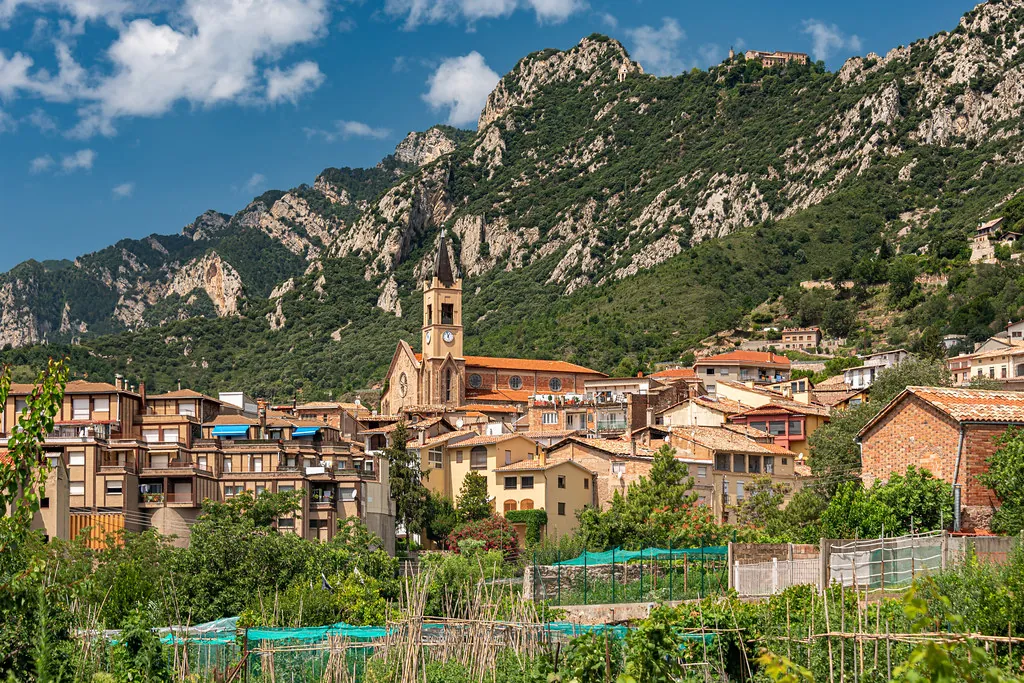
Cercs lies in the comarca of Berguedà, in Cataluna, where industrial mining and mountain landscape have learned to share the same space. Pines and holm oaks cover the slopes, and the reservoir sits close by. Between them are neighbourhoods that were built for mine workers. The place does not attempt to polish its image. It presents itself as it is, shaped by work, terrain and time.
The Mining Museum and a Community’s Memory
Anyone hoping to understand Cercs needs to start with mining. It frames the story of the village, its layout and its identity. The museum dedicated to the mines provides context that makes sense of everything else.
A typical visit includes original material from the period when the mines were active, along with spaces that show what working underground was like. Tools, wagons and machinery are displayed without theatrics. At first glance they may seem unremarkable, yet it takes little effort to imagine the long shifts spent below ground and the conditions miners faced.
This is not a large city museum with doors open all day. It is worth checking opening times in advance rather than assuming access will be constant.
The museum does more than explain technical processes. It anchors the village in its recent past. In a place where whole districts were built to house mining families, the link between daily life and the industry remains visible.
Sant Martí de Cercs and the Shape of the Slope
The historic centre of Sant Martí de Cercs is small. It is the sort of place you walk through almost without noticing, perhaps mid-conversation, perhaps simply following the incline of the street.
The church of Sant Martí has medieval origins and retains Romanesque details. For visitors unfamiliar with these terms, Romanesque architecture in this part of Cataluna often means solid stone walls and simple decorative elements that date back many centuries. Yet the building is only part of the story. The houses around it reveal just as much.
They adapt to the slope in ways that are immediately clear once you look up. Some seem almost wedged against the mountainside. The terrain dictates their position, and the result is a compact cluster of streets that reflect how the village gradually took shape.
The walk is short, but it helps explain how Cercs formed and why it looks the way it does today. The setting is not ornamental. It is practical, adjusted to the incline and to the needs of those who lived and worked here.
The Baells Reservoir and the Presence of Water
A few kilometres from the village lies the Baells reservoir. A glance at a map shows how closely it sits to Cercs, almost as if it were part of the everyday scenery.
Water changes the atmosphere of the area. In summer, the shade from the nearby pines offers relief from the heat. In autumn, the slopes around the reservoir shift in colour and the whole setting becomes especially quiet.
There is no need for elaborate plans. Sometimes it is enough to stop the car, stretch your legs and look out over the valley for a while. The reservoir does not demand an itinerary. It simply exists alongside the village, altering light and mood with the seasons.
Its presence reinforces the contrast that defines this part of Berguedà. Industry once dominated the area, yet nature is always close: forest on the hillsides, water collected in the basin, paths tracing the river’s course.
Paths Along the Llobregat and Into the Hills
The surroundings of Cercs offer straightforward walking routes. They are not epic treks or high-adrenaline challenges. These are paths suited to a couple of hours outdoors, a way to switch off rather than to conquer distance.
One common route follows the course of the river Llobregat. The sound of water accompanies much of the walk, and the landscape shifts with the seasons. At certain times of year the vegetation feels dense and green, at others more open and subdued.
Forest tracks in the area attract mountain bikers. Secondary roads are also used by road cyclists, though some caution is sensible because heavy vehicles pass through from time to time. The mix of industry and open country remains part of daily life here, and that is reflected even on the quieter routes.
These walks and rides do not redefine the region. They complement it. They offer a way to experience the same terrain that once framed mining activity, but at a slower pace and above ground.
Straightforward Food and a Lively Festa Major
Food in Cercs and the wider Berguedà area is direct and substantial. When the cold sets in, spoon dishes take centre stage. Local embutidos, or cured sausages, are common, and mushrooms appear when in season. Hearty stews feature regularly. The approach is uncomplicated and rooted in products from the comarca.
Expect solid portions rather than elaborate presentations. The cooking reflects climate and tradition more than fashion. It is the kind of meal that encourages a walk afterwards, back through the village streets or along a nearby path.
Towards the end of August, the Festa Major is held in honour of Sant Martí. A Festa Major is the principal annual celebration of many towns and villages in Cataluna, combining religious tradition with community events. In Cercs, these days bring activity to the streets, with music and popular events that draw residents together.
It is not a vast spectacle, nor does it aim to be. The scale suits the place. People seem to know one another, and the atmosphere is created by neighbours and by those who choose to visit at that time. The celebration is simple, yet full of life.
Cercs does not reinvent itself for visitors. It remains tied to its mining past, its mountain setting and its community rhythms. The result is a village where landscape and history sit close together, and where what once happened underground still shapes what you see above it.