Full Article
about Fígols
Small mountain municipality known for its dinosaur fossil sites
Hide article Read full article
Arriving in Fígols
If you come to Fígols, the first practical matter is the car. Parking is usually near the village square and tends to be straightforward. There is little traffic and it is rare to see many vehicles. It is better to arrive early. From midday onwards, people who come to walk in the area begin to appear.
Fígols is very small. The population is only a few dozen residents, and that becomes obvious as soon as you step out of the car. There is no sense of bustle or constant movement. It feels quiet from the outset.
A Brief Look at the Village
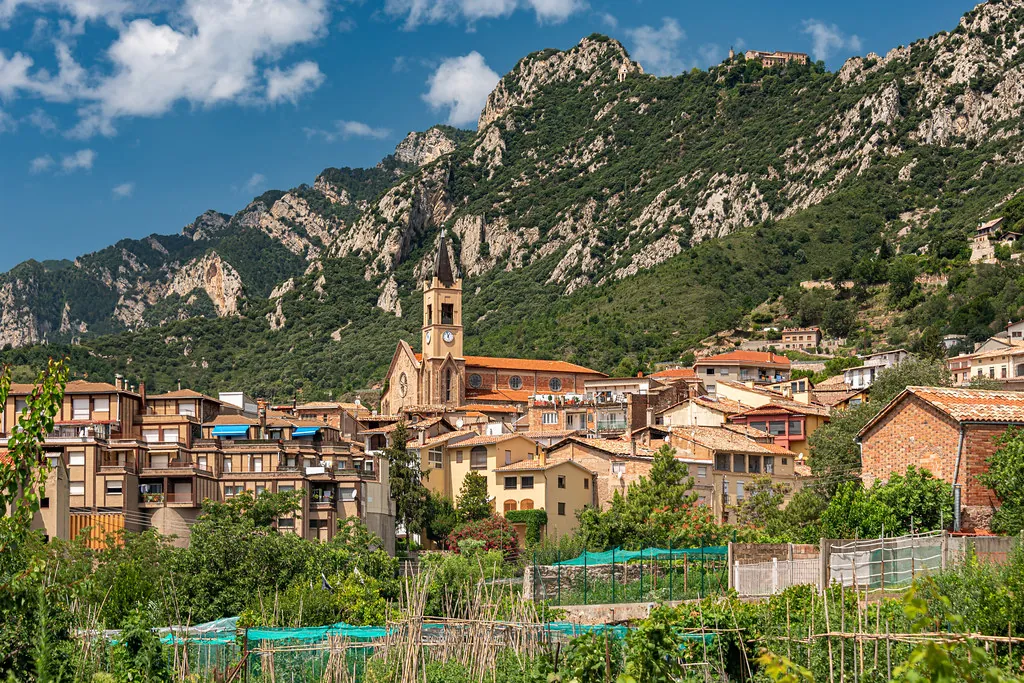
The centre can be covered quickly. A handful of short streets cluster around the square, with a few houses set slightly apart. Most buildings are stone, with dark roofs and practical alterations made with whatever materials were available.
The church of Sant Martí is just a few minutes away on foot. It is Romanesque in origin, usually dated to the 12th century, although it has undergone several modifications and not everything visible today is medieval. Even so, the basic structure remains.
There are no striking monuments or a large historic quarter. This is a place for a short stop rather than extended exploration of streets and buildings.
Walking Beyond the Houses
What draws attention in Fígols lies outside the village itself. The settlement sits in a transition zone between mid-level mountains and the higher elevations of Berguedà.
The surrounding landscape combines pine woodland with open patches of meadow in the higher areas. On clear days, the views stretch across the valley and, further north, towards the outline of the Pyrenees.
From the village begins the Camí Vell de la Gallina. It once linked nearby settlements and is now used as a walking path. Some sections are marked, while others in the area are simply tracks or paths without clear maintenance.
There are usually few people around. Even in autumn, when the hills change colour, it is possible to walk for quite some time without encountering anyone.
Paths, Wildlife and the Mountain Setting
The trails cross small springs and areas that were once used for livestock. The landscape alternates between denser woodland and open clearings where common mountain birds sometimes appear. If you pause for a while, finches or redstarts can be seen.
In winter, when there is substantial snowfall, the area becomes a starting point for routes with snowshoes or ski touring. There are no formal services or managed slopes here. Anyone heading into the mountains does so under their own responsibility.
Wildlife includes wild boar and roe deer. Tracks are easy to find, though actually spotting the animals usually requires an early start.
Eating, Staying and What Is Missing
Options are limited. There may be a simple rural accommodation or two, and little else. For food, it follows the pattern of similar villages: something quick and homemade if a place happens to be open.
There are no activity centres or companies based in the village. Visitors tend to organise themselves, whether for hiking, mountain biking on forest tracks, or simply walking.
The tracks suitable for cycling do exist, but they involve long climbs and a fair amount of loose stone. It is not gentle terrain.
A Quiet Place in Berguedà
Fígols still shows traces of earlier ways of life: a washhouse, an old fountain, and larger houses that hint at a time when the area was more active.
Local festivities continue, although on a very small scale and mainly for residents. They usually revolve around Sant Martí and the summer festa major, which in many Catalan villages is the main annual celebration. Expectations should remain modest, as these are not large events.
A simple approach works best: come if you are already in Berguedà and feel like a calm walk. For a full day spent within the village itself, there is not enough to fill the time. Here, the mountains set the pace.