
Full Article
about Gironella
Town split by the Llobregat River with a well-preserved medieval core
Hide article Read full article
Gironella: A Town Shaped by a River
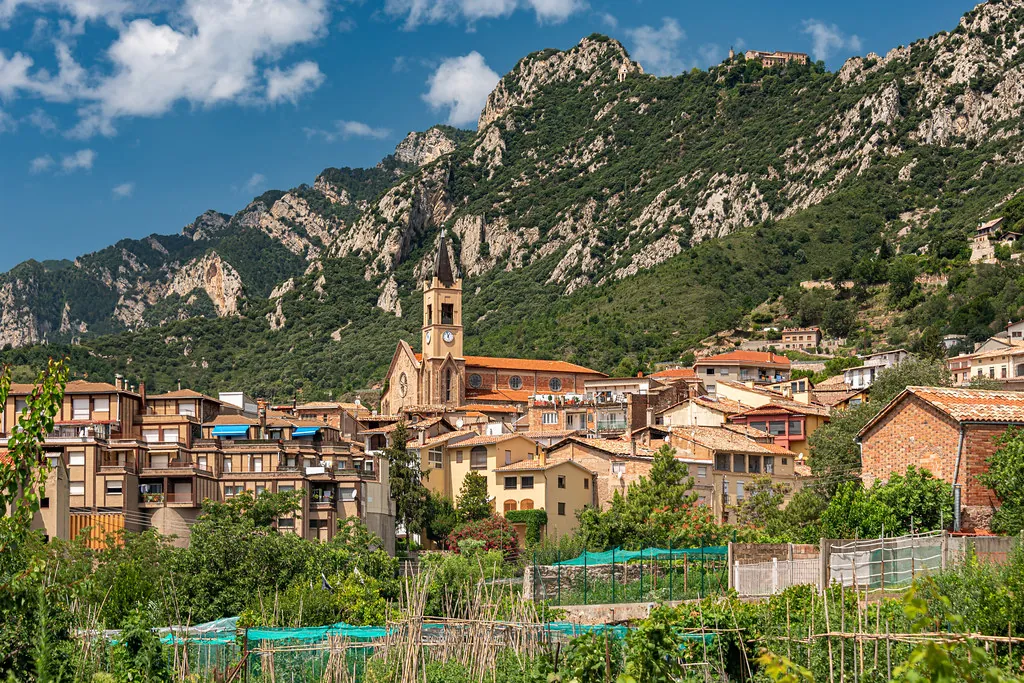
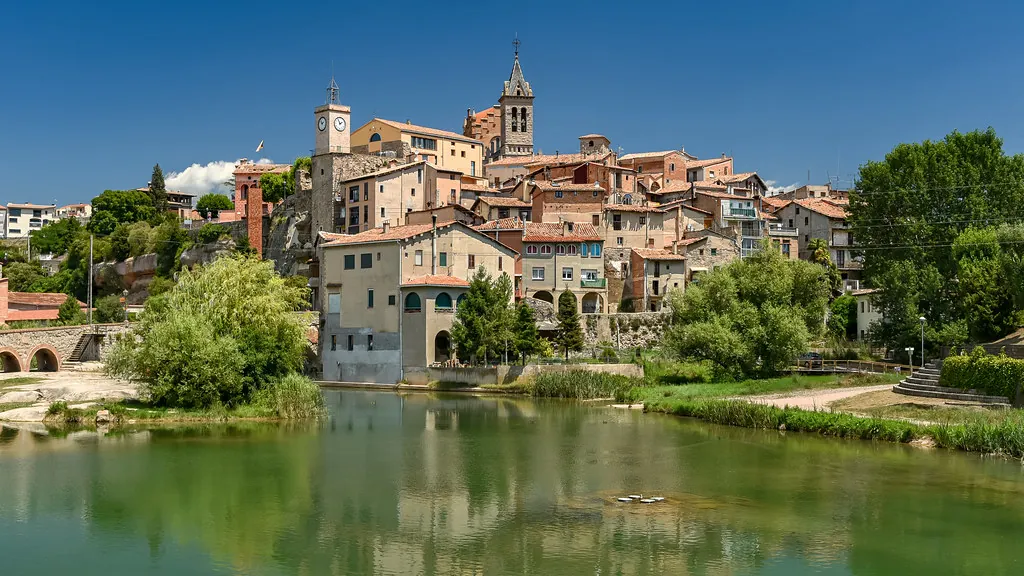
The River Llobregat defines this place. At Gironella, it makes a broad curve, and the water carved a natural passage centuries ago. The town formed on a low hill just above that crossing. From the old bridge, the view explains everything. The compact medieval quarter climbs one bank. On the opposite side, the ordered streets of former textile colonies follow the valley floor. This is not a scenic overlook; it is a diagram of local history.
A Strategic Height
The surviving town walls, now protected as a cultural asset, were practical. A hill of twenty metres was enough to control the river ford and the old road from Cardona. The castle first appears in documents from the 11th century. What remains today mostly dates from later modifications, when the growing settlement needed stronger defences.
Carrer Major climbs from the bridge. The street follows the slope, and the houses adapt to it. You see heavy stone bases supporting lighter upper floors, with doorsteps that seem to merge directly with the bedrock.
Inside the old enclosure stands the church of Santa Eulalia. Its 13th-century Gothic apse is still visible, though neighbouring buildings crowd close, leaving the interior in deep shadow. The building feels integrated into the urban fabric, constrained by the same lack of space that shaped the rest of the quarter.
A short walk outside the walls leads to the hermitage of Sant Marc. The building is simple, but its interior plaster holds faint scratches. These are medieval graffiti—outlines of castles and other forms from the 14th century. They are easy to miss, but they record the casual passage of people through this space long before it became a point of historical interest.
The Industrial Valley
In the 19th century, the river’s purpose changed. Factories needed power, and the Llobregat provided it. Four major textile colonies rose near Gironella: Cal Bassacs, Viladomiu Vell, Viladomiu Nou and Cal Metre.
Each followed a clear pattern. A canal diverted water to a factory turbine. Rows of workers' houses stood nearby, with a church, a school, and the owner’s house on a slightly higher plot. These were not just workplaces but organised communities.
A walking and cycling path now connects these sites along the river. The route is not long, but it shows how the industrial system worked. Some factory buildings house workshops today; vegetable gardens still fill plots between houses. This is a lived-in landscape, not an open-air museum.
Two Levels, One Town
The difference in height between the river and the old town is significant. A public lift now connects them. The ride up provides a clear view of the structural contrast: the medieval bridge below, the tight rooftops above, and the factory chimneys standing in the distance.
A more subtle detail is the old Farmacia Homs. It closed after a century of service, and its interior was preserved—ceramic jars, glass counters, handwritten prescriptions. It opens for visits by prior arrangement through the town hall. The space feels suspended in the mid-20th century and gives a sharper sense of daily life here than many curated exhibitions.
Local Provisions
The cuisine here relies on what the valley and surrounding hills provide. Dishes are substantial. Trinxat, a mix of cabbage, potato and pork, is a winter staple. Stews made with game appear in season. You also find tupí, a cured cheese preserved in oil or spirits, typical of pantries in this area.
Autumn often brings produce fairs to the main squares. Stalls sell local honey, cheeses, and mushrooms. These gatherings feel routine for residents, a direct link between nearby production and the dinner table.
Practical Notes
Gironella sits on the C-16 road between Manresa and Berga. Public buses connect from Manresa, which has a train station.
You can walk the old quarter thoroughly in an hour. To include the textile colonies, plan for half a day, especially if you follow the riverside path. The experience is one of juxtaposition: medieval walls, industrial planning, and contemporary life, all contained within a short stretch of the Llobregat valley.