Full Article
about Gisclareny
The smallest municipality in Catalonia, set in a spectacular high-mountain landscape.
Hide article Read full article
The road up to somewhere quieter
The drive up to Gisclareny, in the comarca of Berguedà in Catalonia, sets the tone before you even arrive. The road narrows, the forest thickens and the bends insist that you slow down. By the time the car stops and the engine cuts out, the quiet feels almost physical.
There are no broad squares or lively streets waiting at the top. Instead, there is stillness, a handful of stone houses and mountains filling the entire horizon. At first it can feel as though very little is happening. Give it a few minutes and that absence of noise begins to seem like the whole point.
Gisclareny sits high above the valley, removed from the busier towns of Berguedà. It does not try to compete with them. It operates at a different rhythm altogether.
A village scattered across the mountain
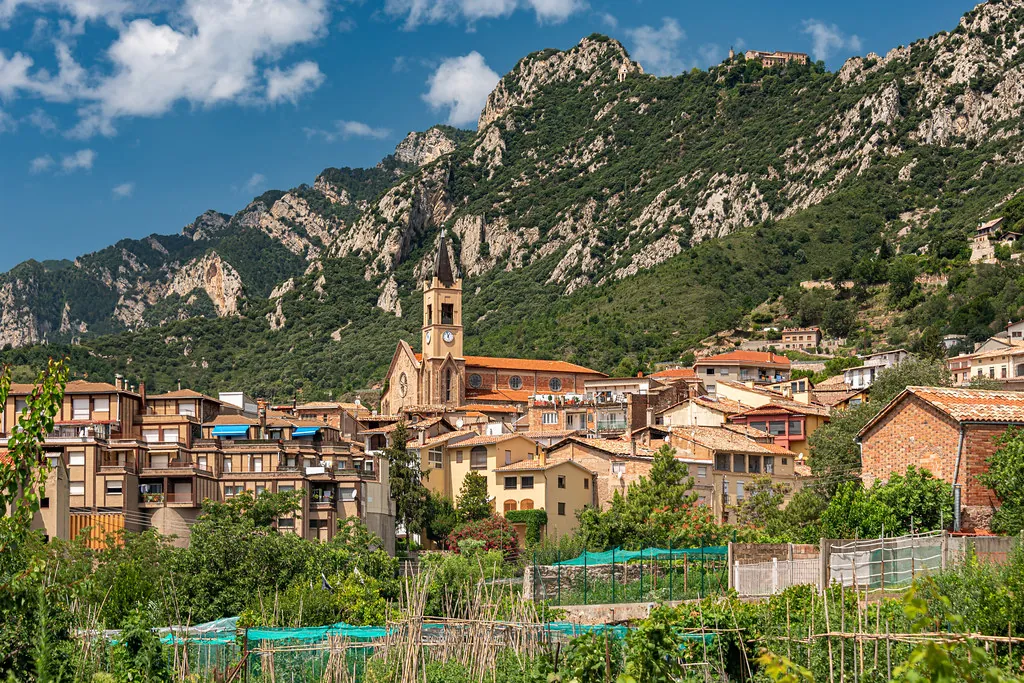
Gisclareny is tiny, with barely thirty residents spread between masías, traditional Catalan farmhouses, and small clusters of homes. This is not a compact village organised around a single large plaza. The houses are scattered, each appearing to have chosen its own natural balcony over the valley.
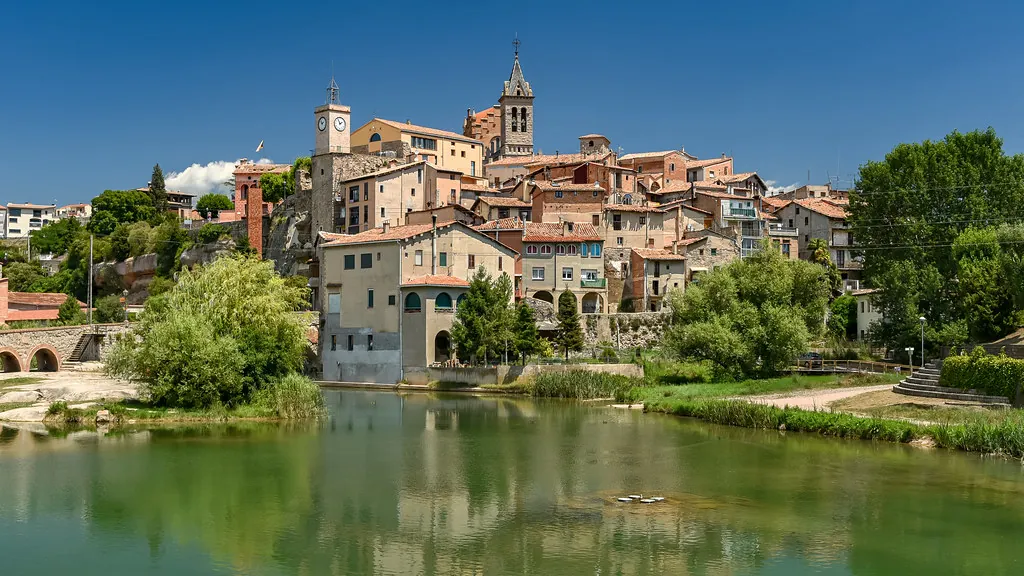
The buildings keep the mountain character typical of Berguedà: dark stone walls, sloping roofs built to cope with winter weather and balconies facing towards the forest. A short walk is enough to cover what might be considered the centre. There is no long list of sights to tick off, and that is part of its identity.
The church of Sant Martí stands at one of the main points of the settlement. It is Romanesque in origin, dating back to the medieval period, though altered over time. Nothing about it is showy. Thick walls, simple lines and a sober appearance give it the solid, practical feel common to many mountain churches in this part of Catalonia. It sits quietly within its surroundings, as though it has always belonged exactly there.
Pedraforca on the horizon
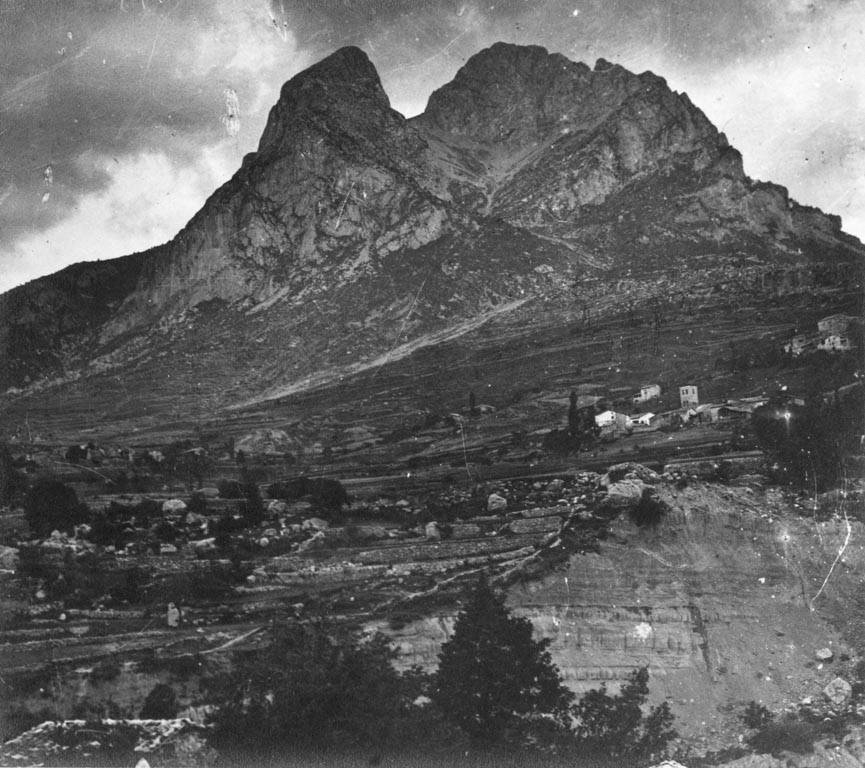
One of the main reasons people make the climb to Gisclareny is the view of Pedraforca, one of Catalonia’s most recognisable mountains. Its distinctive forked shape, like a giant saddle or horseshoe, appears on countless hiking guides and postcards.
From Gisclareny, Pedraforca is seen clearly but from a slight distance. It does not tower directly overhead as it does from other villages in Berguedà. Instead, it rises cleanly in the background, sharply outlined against the sky. The effect is almost theatrical, as if the mountain had been carefully positioned there for contemplation.
Tracks and paths leave the village and open up even wider views. Some sections follow old cart roads once used to connect masías and move goods across the slopes. Along the way there are occasional fountains, clearings in the forest and the remains of former charcoal kilns, reminders of a time when these mountains were worked more intensively than they are today.
It is a landscape that invites pauses. There is space to stand still and simply look.
Walking through forest and meadow
The main plan in Gisclareny is straightforward: walk.
The surrounding woods mix black pine, beech and fir. Each season shifts the atmosphere. In autumn the ground fills with fallen leaves and the colours change dramatically. In summer, the forest offers shade for much of the route, a relief when the heat presses down in the valley below.
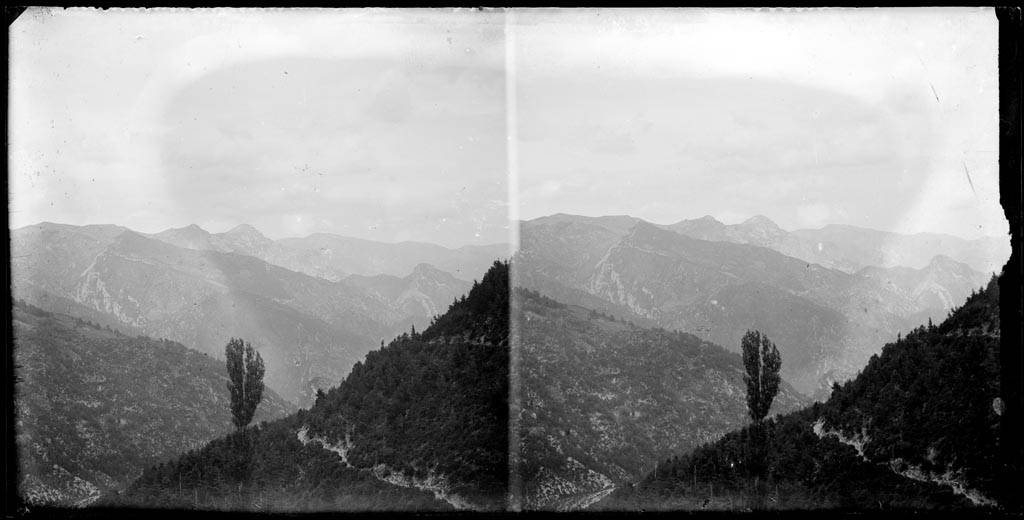
Some footpaths climb to high meadows and small mountain passes where the view stretches across the Bastareny valley. Others link old masías still scattered across the mountainside. These are not manicured promenades. They are rural paths that demand a little attention.
A map or GPS track is advisable. When mist rolls in, orientation is not always as straightforward as it seems. The terrain is not vast or extreme, yet it has enough folds and forest cover to confuse those who assume it will be simple.
Walking here is less about reaching a single landmark and more about moving through changing scenery. Forest gives way to open pasture. A ridge reveals the valley. A bend in the path frames Pedraforca once again.
Winter quiet and a different rhythm
Winter alters Gisclareny considerably. A heavy snowfall covers the forest tracks and softens the outlines of houses and trees. The silence deepens.
On certain days, animal tracks cross the paths: roe deer, wild boar or birds of prey circling above the valley. The human presence feels lighter. Snowshoes can make sense on these slopes, provided the weather is favourable and proper equipment is used. The mountains here are not enormous, but they are not to be taken lightly either. Conditions can change quickly, and the setting remains rural and exposed.
Seasonal life in the village continues at a modest scale. Calendar celebrations are simple and largely local, organised more for residents than for attracting visitors from elsewhere. There is no sense of performance. What happens here tends to happen for those who live here.
That, perhaps, is what defines Gisclareny. It is not a place for a packed schedule or a string of attractions. It is somewhere to climb up to, wander for a couple of hours, stand for a while looking at Pedraforca and then descend again towards the valley.
The impression it leaves is subtle. A brief step aside from noise, traffic and constant movement. A reminder that in some corners of Berguedà, life continues quietly among stone houses, forest paths and wide mountain views.