Full Article
about Gósol
Village at the foot of Pedraforca where Picasso once lived; stunning alpine landscape
Hide article Read full article
A Village Above the Valley
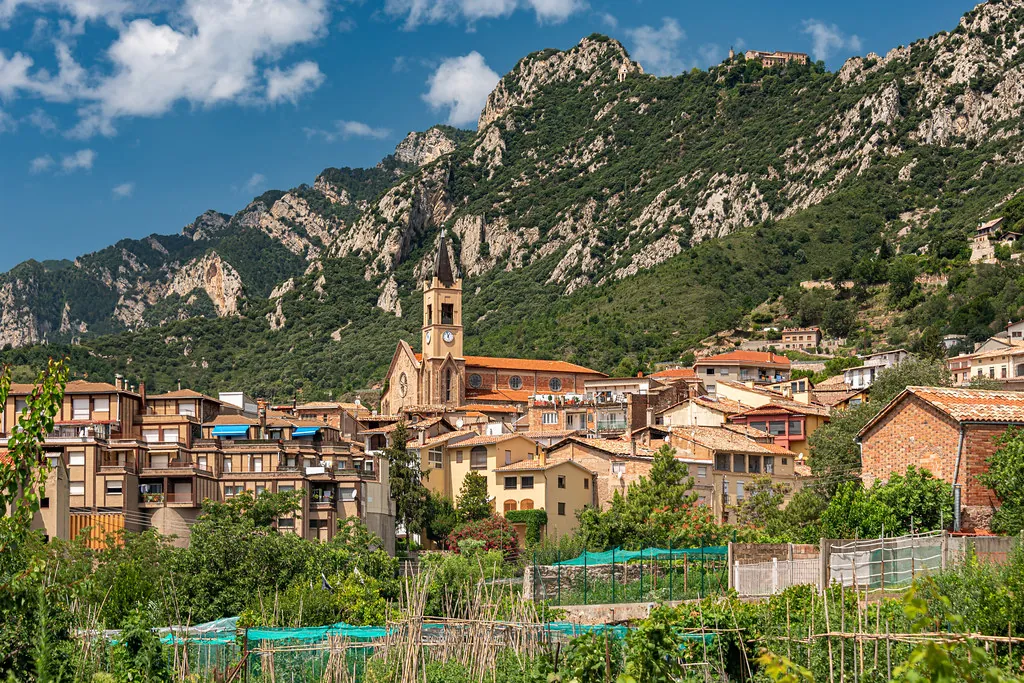
At nine in the morning, silence in Gósol breaks with the crunch of gravel under boots and the dry caw of a crow crossing the valley. The light is still cool, slipping between pine trees and bouncing off stone walls. Gósol, in the comarca of Berguedà and more than 1,400 metres above sea level, wakes slowly: half-raised shutters, the occasional chimney lit even in summer, and the outline of Pedraforca rising behind the rooftops.
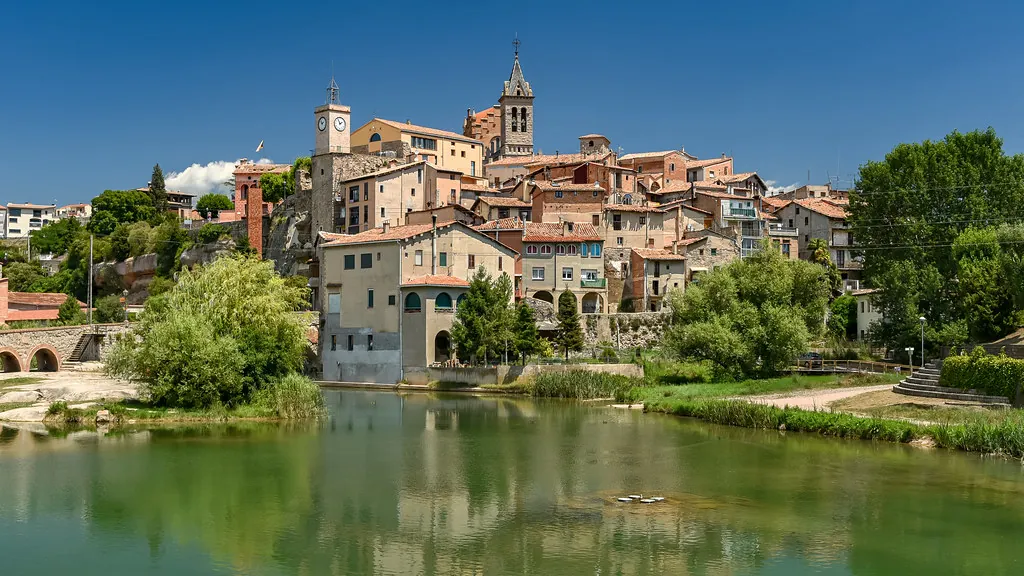
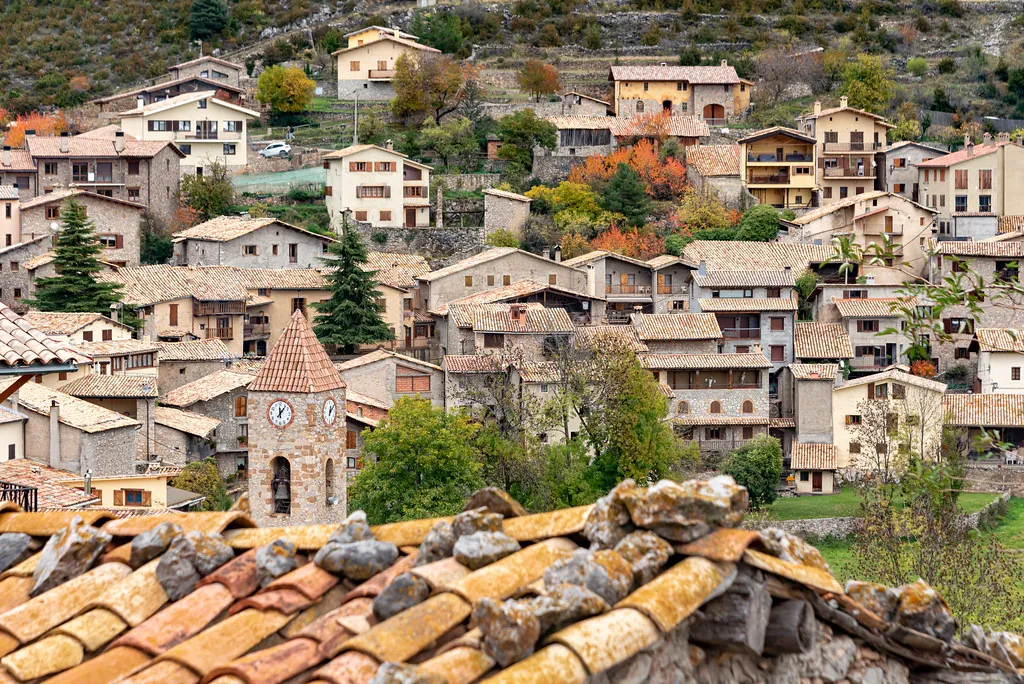
The village is arranged along a handful of steep streets that climb the hillside. Houses built of dark stone, with wooden beams and sloping roofs, follow the gradient without much apparent logic. There are no shop windows designed for visitors. Instead there is quiet, wind when the weather turns, and a steady sense of being somewhere that keeps its own pace.
Life here feels shaped by altitude and mountain weather. Even in warmer months, the air can carry a chill early and late in the day. Gósol does not hurry into the morning, and it does not perform for passing travellers. It simply carries on.
Romanesque Stone and a Summer with Picasso
The church of Santa María appears almost suddenly in a small square. Built in the 11th century in Romanesque style, it has a fairly austere square bell tower. Inside, the space is simple and remains cool even on hot days. For centuries it was one of the focal points of village life, something that can still be sensed when the bells ring out across the rooftops.
A little higher up are the remains of the medieval castle. Fragments of walls and sections of towers cling to the rock, enough to understand the strategic importance of this position. From here, it becomes clear how the village gathers beneath the mountain and how Pedraforca dominates the horizon. At sunset the rock face takes on a reddish tone, and the wind often rises from the valley below.
In one of the houses in the centre stands the Centre Picasso. It commemorates the summer of 1906, when the painter spent time in Gósol. The centre is not large or showy. There are reproductions, photographs and explanations about that stay. Even so, it helps make sense of how the stark landscape found its way into Picasso’s work of that period. For visitors unfamiliar with this chapter of his life, the connection between a small mountain village in Catalonia and a key moment in early 20th-century art can come as a surprise.
Paths Around Pedraforca
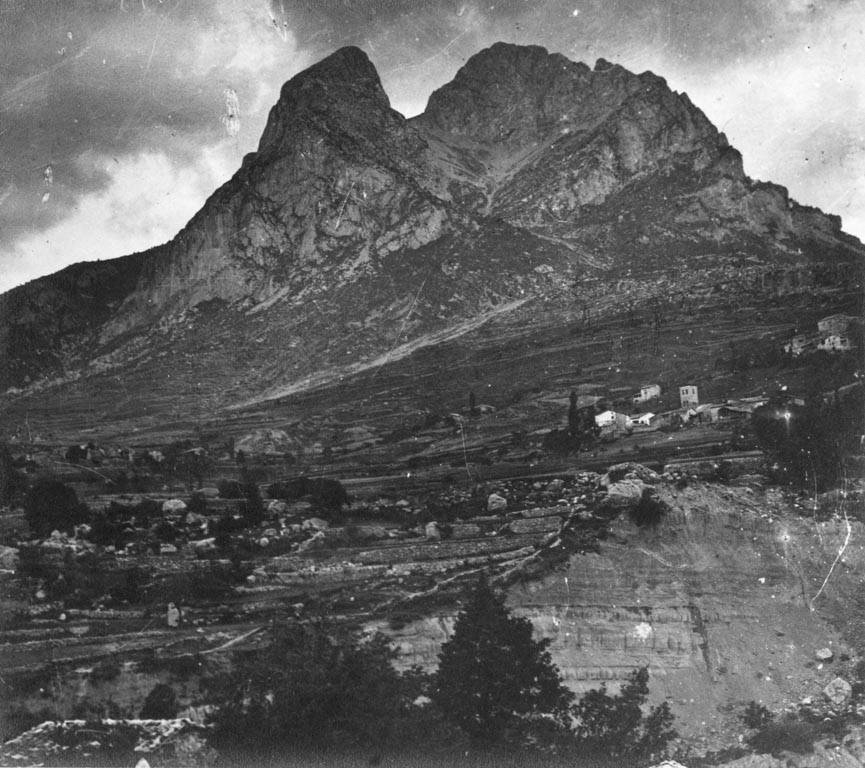
Many people arrive in Gósol because of the mountains. Pedraforca is visible from almost every corner of the village, with its two summits separated by the well-known tartera, a steep scree slope. It is a mountain with a strong reputation among mountaineers, yet it should not be underestimated. The terrain is demanding and the weather can change quickly.
Footpaths lead directly from the village towards high meadows, forests of black pine and mountain passes that look across to the Serra del Cadí. Some of these routes follow old livestock trails once used by shepherds moving animals between valleys. Walking them carries a sense of quiet continuity. Dry stone walls still appear here and there, along with scattered huts.
The landscape shifts with the seasons. In winter, snow often covers these paths for weeks at a time. Some head out with snowshoes or touring skis, though at that time of year it is important to be well informed about mountain conditions before setting off. The combination of altitude and rapidly changing weather defines much of life around Pedraforca.
Even without aiming for the summit, simply moving through this terrain gives a clear sense of how closely Gósol is tied to its surroundings. The village is not separate from the mountain. It sits beneath it, shaped by it, watched over by it.
Mountain Cooking and Local Produce
Food in Gósol reflects the climate and the land. Cooking leans towards hearty dishes, long-simmered stews and ingredients that cope well with cold conditions. Lamb and beef from the area frequently appear in casseroles or grilled over embers, and cured sausages are part of many tables.
In autumn, when the season is good, mushrooms from Berguedà find their way into scrambled eggs, stews or are simply sautéed. Small-scale cheeses are also common, often with the pronounced character that comes from mountain pastures.
There is no need to search far for somewhere to eat. In a village of this size, everything is close at hand, and often the simplest approach is to sit down wherever local people have gathered. The experience is less about choice and more about sharing the rhythms of a place where ingredients and weather set the tone.
A Small but Lively Calendar
During summer, Gósol becomes busier. The Festa Major, usually held at the beginning of August, brings more movement to the streets than usual. For a few days there is music, dancing and the return of neighbours who come back to the village for the celebrations.
Activities linked to the mountains and to Pedraforca are also organised at different times of year. These are not large-scale events. They are modest gatherings where the landscape remains the central presence rather than a backdrop.
Those who prefer to see Gósol at its quietest are better off arriving during the week or outside August. Early in the morning or towards evening, the village settles back into the high-altitude silence that defines it: wind moving through the pines, a dog barking somewhere in the distance, and Pedraforca standing watch above.